10 Freakiest Mad Scientists In Cinema

They have taken the refuse of your God's failures, and they have triumphed!
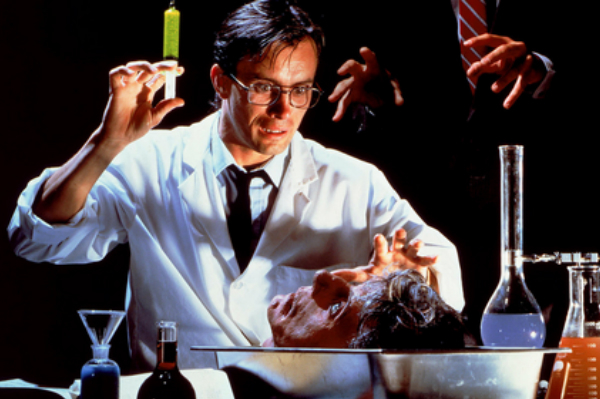
For as long as there€™s been mad science in fiction there€™s been a mad scientist behind it, wilfully rewriting the rules of physics, chemistry, biology etc as he goes along, and usually without a single thought as to the potential consequences of his actions. You know€ because he€™s insane. In compiling this article, a criteria was chosen to narrow the playing field down to a manageable ten. First, the examples chosen have to be scientists: that rules out Dr. Caligari, the insane director of a lunatic asylum who may or may not be a figment of the narrator€™s imagination. Second, they have to be genuinely mad €“ utterly amoral, psychotic, sociopathic, megalomaniacal, barking loony, whatever does the job. You€™d think that€™d be obvious, but other writing on this subject has seen fit to include, amongst others, the (at worst) mildly eccentric Doc Brown from the Back To The Future movies and Dr. Henry Jekyll, the whole point of whose story is that he is both sane and rational. Thirdly, our selection have to actually be engaged in mad science. Dr. Strangelove is a crazed Nazi scientific advisor to the President of the United states, creepily enthusiastic about the coming mutually assured destruction€ but his only plan throughout the film is for the repopulation of the earth should it be reduced to a cinder, which is a surprisingly good one and hardly the stuff of Mengele. With these standards in mind, we present: the ten freakiest mad scientists in cinema. Bear in mind that there may well be spoilers referenced here, specifically or in passing, so on your own heads be it€

10. Dr. Moreau - Island Of Lost Souls (1932), The Island of Dr. Moreau (1977), The Island Of Dr. Moreau (1996)

The mysterious antagonist of H.G. Wells€™ 1896 novel The Island Of Doctor Moreau, the story has been adapted to cinema no less than six times. A vivisectionist with a chequered past, notorious physiologist Doctor Moreau now lives in secret with his assistance Montgomery and the results of his experimentation on an uncharted island somewhere in the Pacific. His obsession is with the transformation of beasts into a more human form: why, exactly, is a little unclear. To that end, he€™s devised a system of checks and balances to prevent his bestial creations from harming him or ruining his life€™s work, crafting a system of ethics that he enforces by fear and intimidation. Moreau is a classic mad scientist of the introverted type: not for him the posturing of world-conquering megalomaniacs, for the most part he merely wishes to be left alone to conduct his horrifying, unethical studies in peace. He€™s not above using humans in his foul research should they interfere, however€ In each of the three major film adaptations of Wells€™ novel, Moreau €“ played by Charles Laughton, Burt Lancaster and Marlon Brando, respectively €“ has his work interrupted by the shipwrecked protagonist, whose presence is sufficient to upset the careful balance of power on the island between scientist-father and beast-children, leading to Moreau€™s death at the hands of the subjects of his experimentation. Given that each of the films€™ heroes is a different iteration, separated by decades, of the same shipwrecked interloper that appears, destroys and then leaves, there€™s a theory that states that Moreau€™s island is in a perpetual state of reset. Something about the island itself will not allow change: after each damaging interference Moreau is somehow resurrected, left alone to continue his doomed research, forever the head of a family of abominations€

9. Professor Mortimer Gangreen - Return Of The Killer Tomatoes! (1988)
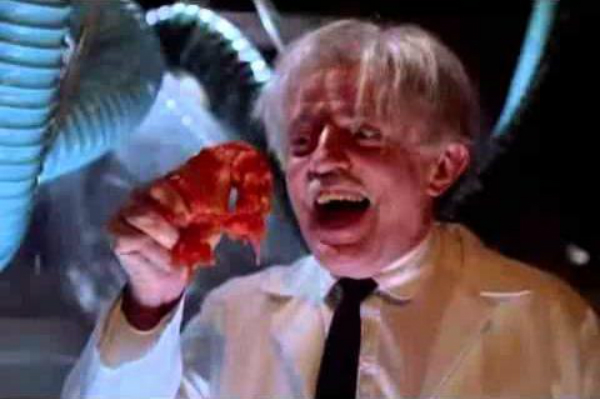
Four movies about homicidal tomatoes. Four (4). At the end of the original Attack Of The Killer Tomatoes, White House press secretary Jim Richardson was revealed to be behind the juicy red menace, but was killed before he could reveal how, or why, he came to be the power behind the invasion of monstrous fruit. Return Of The Killer Tomatoes and its sequels Killer Tomatoes Strike Back and Killer Tomatoes Eat France! have as their antagonist one Professor Mortimer Gangreen, retconned in Return€ to be the mastermind behind Richardson and the first wave of giant squishy berries. Having been foiled by the tomatoes€™ one weakness (powerlessness in the face of €˜Puberty Love€™, the worst pop song ever recorded), this time Professor Gangreen has factored music into the equation. Using a combination of tunes, toxic waste and a tomato transformation chamber, he€™s created tomatoes that can pass for human€ One thing to always remember about Professor Gangreen: he€™s not a mad scientist, he€™s an angry scientist. He€™s also a blue sky thinker: when tomatoes fail once again to solve all his problems in the sequel, he changes tack entirely. Killer Tomatoes Strike Back sees the professor and his ruggedly handsome lab assistance Igor attempt to infiltrate the media with a mind control device, while Killer Tomatoes Eat France! deals with Igor€™s mysterious resemblance to the legendary Lost Dauphin of France, Louis XVII €“ Gangreen intends to take advantage of the prophecy that the orphan prince will return to be king of all France once more. Yes, you read all of that right€ and yes, the last two films ever made about killer tomatoes aren€™t even really about killer tomatoes. Oh, law of diminishing returns, why do you mock us so?

8. Syndrome - The Incredibles (2004)

Surprisingly, Pixar€™s given us an excellent example of a classic mad scientist in Syndrome, the antagonist in animated superhero flick The Incredibles. This flame-haired supervillain, the self-appointed nemesis of our hero Mr. Incredible, first appears in the film as ten-year-old Buddy Pine, a wannabe superhero, and Mr. Incredible€™s number one fan €“ he tries to assist in the capture of supervillain Bomb Voyage using a pair of rocket boots he invented, wanting to become Incredible€™s sidekick (€˜Incrediboy€™), but accidentally gets in the way and is dismissed, returned to his family. Embittered and enraged by his rejection, Buddy turns his technical genius towards evil. A child prodigy specialising in technical engineering, he designs a variety of weapons and vehicles, geared towards his ultimate goal: the eradication of all supers. His greatest creation is the Omnidroid series, created specifically to murder supers on an island he owns for the purpose €“ a highly successful creation, as prior to the start of the film€™s narrative, Syndrome has killed most if not all of the supers that worked with Incredible and Elasti-Girl, intending to become the world€™s greatest superhero through technology and trickery, and to eventually render all superheroes obsolete by selling his weapons to the highest bidder. As he declares: €œWhen everyone is super€ no one will be.€ Cruel, vengeful and full of furious, mindless rage, Syndrome is a force to be reckoned with. The first villain in a Pixar movie to be a serial killer, opinion is divided as to whether his lack of conscience makes him a psychopath or a classical sociopath: whichever, he's a truly mad scientist. Of course, Syndrome gets his comeuppance eventually. After discovering that Mr. Incredible is still alive, and failing to kill him and his family and then to kidnap baby Jack-Jack, Syndrome is pulled into the spinning blades of a jet by his cape, resulting in his death (there€™s a lot of casual violent death in The Incredibles, for a kids€™ movie). It€™s a fitting end, testament to superhero costume designer Edna Modes€™ advice that a cape is dangerous and just not practical (even if it is a good look).

7. Dr. Julius No - Dr. No (1962)

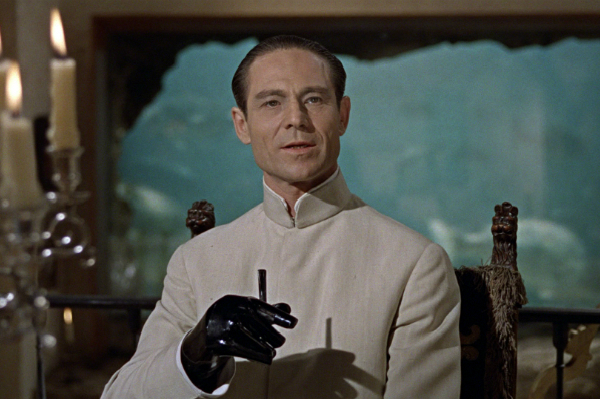
The first-ever cinematic Bond villain, Dr. No works for S.P.E.C.T.R.E., the internationally notorious criminal terrorist ring. Although S.P.E.C.T.R.E.€™s motivations are purely financial (they intend to commit supervillain-style acts on a horrifying scale against whole nations in order to command a higher price for their services and to extort money in exchange for not doing worse), Dr. No€™s are purely personal. The abandoned child of a German preacher and a young Chinese girl, No became a high-ranking official in the Chinese Tongs, before stealing a fortune in gold bullion from the crime syndicate and escaping to America, where he offered his services to both sides of the Cold War, only to be accepted by neither. He makes his base beneath an island in Jamaica, plotting revenge because of his rejection. That€™s right: Dr. No is motivated by psychotic vengeance against whole continents of people, making him a perfect fit for S.P.E.C.T.R.E. What€™s more, his scheme involves disrupting the US space programme with an €˜atomic-powered radio beam€™. You need more? Specialising in radiation technology, No has lost both hands in an accident and had them replaced by super-strong robot hands covered in black leather. Read that last paragraph back, and tell us that€™s not perfect mad scientist material. Go ahead. We€™ll wait here.

6. Dr. Septimus Pretorius - Bride Of Frankenstein (1935)
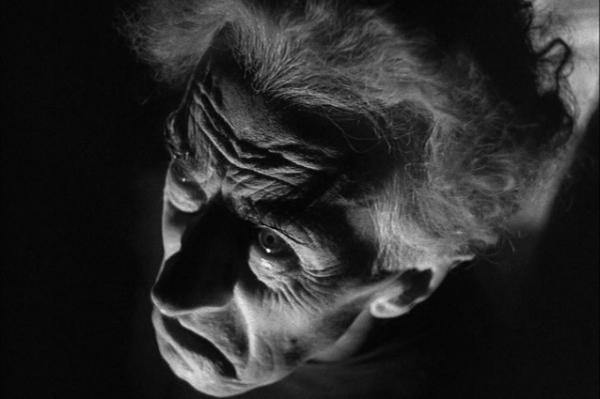
We should first point out that the Frankenstein of the first two films in the iconic Universal movie franchise €“ renamed Heinrich €˜Henry€™ Frankenstein, and played by British veteran of the stage Colin Clive €“ is very much the hero of the films, an arrogant, self-absorbed scientist who learns the error of his ways. Clive, a chronic alcoholic, wouldn€™t survive to make a third Frankenstein movie for Universal. No, if you want a proper mad scientist, look no further than Bride Of Frankenstein€™s Dr. Septimus Pretorius. Like Henry Frankenstein, his former pupil, Pretorius is intent on creating life, and thinks nothing of piggy-backing off Frankenstein€™s research and successes€ and the notable failure in his career. Pretorius has invested a kind of life into a succession of homunculi, tiny creatures he€™s dressed up like dolls, but is determined to create a mate for the monster, and pressures Henry into repeating the processes that had caused so much grief and horror, no doubt intending to take the credit for himself. Pretorius is everything that people expect Frankenstein himself to be in the Universal movies€ amoral to the point of sociopathy, an arrogant, egomaniacal narcissist, he has no interest in human life or advancement, or in the human condition at all. His unrepentant villainy does mean he gets the best lines, however. €œTo a new world of Gods and Monsters!€ Pretorius would inspire a character occupying the same role of evil mentor in Stuart Gordon€™s 1986 gorefest From Beyond. That film€™s Dr. Edward Pretorius is essentially Dr. Septimus Pretorius on angel dust, and would have qualified for this list in spades were it not for the fact that he cedes the scientific aspect of his life to become a demonic monster in the first act of the film.

5. Baron Victor Frankenstein €“ The Curse Of Frankenstein (1957)

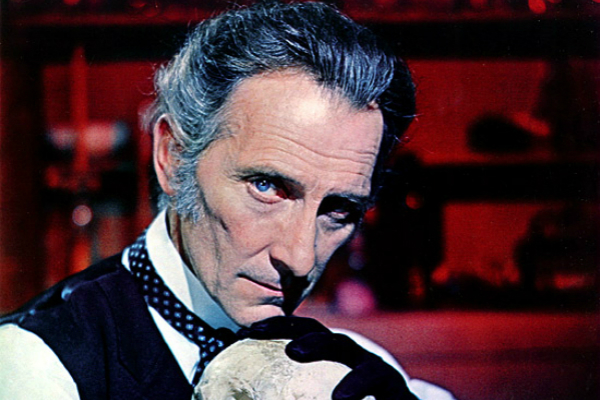
The other iconic franchise to utilise the public domain Frankenstein characters and setting is Hammer€™s series of films, beginning with The Curse Of Frankenstein and ending with Frankenstein And The Monster From Hell in 1973. In these films, Baron Victor Frankenstein (played by Peter Cushing for the most part €“ we don€™t count Ralph Bates in 1970€™s satirical remake The Horror Of Frankenstein, and neither should you) is exactly as you€™d expect Dr. Frankenstein to be: a thoroughgoing bast*rd. Cold, sinister and despicable, Cushing€™s Frankenstein doesn€™t have the patience to wait for the right bits and pieces to come along, and simply murders a kindly old professor for his enormous brain. When his creation is discovered to be a monster, he uses it to his advantage, having the creature kill for him. In later movies, Frankenstein€™s character oscillates depending on the role he€™s required to play: sometimes that of an anti-hero, sometimes that of a complete villain. In The Curse Of Frankenstein, he€™s a contemptible murderer.

4. Dr. Herbert West €“ Re-Animator (1985)

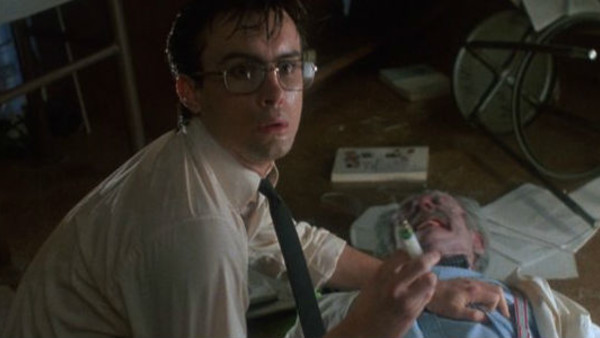
€˜Herbert West €“ Reanimator€™ is generally considered to be seminal horror author H.P. Lovecraft€™s least inspired work: ironic, given that it€™s the story he most cribbed from other people. Lovecraft wrote the short story as a serial, published in the first six issues of a friend€™s amateur magazine. By his own admission, it was a parody of Shelley€™s Frankenstein, his own character a driven, intense and arrogant young doctor who creates a reagent that can reanimate dead flesh. The story is one of the first iterations in fiction of the €˜zombie€™ as we know it today, a dead body brought back to lurching, primitive, violent life by science. The cinematic Herbert West, brilliantly portrayed by the horrendously underrated Jeffrey Combs, is pretty much the letter and the spirit of Lovecraft€™s West, but transposed from a po-faced (no pun intended) short story to a splatterfest with a surreal, almost gonzo affect to it. Combs presents the character as completely deadpan, never once playing up to the increasingly ludicrous antics occurring around him. If West is Victor Frankenstein without any ethics or moral centre whatsoever, then Re-Animator is Frankenstein without any religious or spiritual heart to it whatsoever: wilfully gory, unpretentiously upsetting and (deliberately) very, very funny. Re-Animator was followed by Bride Of Re-Animator in 1990 and Beyond Re-Animator in 2003. What€™s notable in each film is that Dr. Herbert West isn€™t the villain, but rather a completely disinterested protagonist. His only inclination is the obsessive desire to continue and perfect his research. Every action he takes is in service of that need, and no other: no matter who dies, who gets reanimated, and who, as a result, gets murdered right in the face. He€™s also bloody indestructible, apparently: both the first two films end with West trapped with his undead creations, about to be ripped to pieces, but miraculously perfectly fine come the beginning of the next instalment. The third movie€™s climax sees him, having escaped the carnage, surveying it bleakly before walking away to continue his great work elsewhere. It€™s fitting€ nothing that happens in any of the Re-Animator movies affects West emotionally or mentally, either.

3. Rotwang €“ Metropolis (1927)

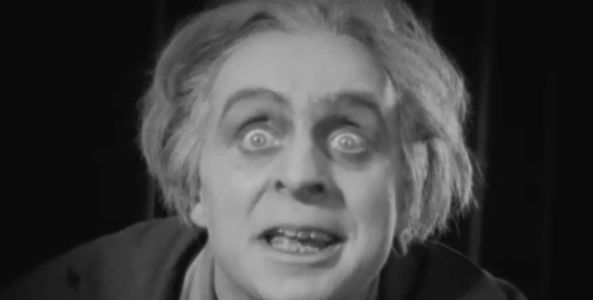
The secondary antagonist of Fritz Lang€™s silent science fiction classic Metropolis, Rotwang is tasked by the city€™s tyrannical ruler with completing a robot lookalike of Maria, the leader of the workers€™ movement, in order that he can subvert it from within. Unbeknownst to the tyrant, however, the increasingly insane and delusional Rotwang harbours traitorous thoughts and seeks revenge upon his master€ If Frankenstein is the godfather of all mad scientists, then Rotwang is the grandfather of them all, including Frankenstein himself. There€™s an oddly symbiotic relationship between the two at play: Lang based many aspects of the character on representations of Frankenstein in contemporary melodramatic stage adaptations of Mary Shelley€™s novel, while later cinematic versions of the Frankenstein story took great liberties with the production design of Rotwang€™s laboratory, all pipes and tubes, coils and instrument panels. Meanwhile, Rotwang€™s crazed expression, the manic white fright wig and sombre black clothing have become staples of the mad scientist trope in fiction of all kinds, even extending to parodies and satires based on the horror and science fiction genres: Peter Sellers based almost all of the appearance of his Dr. Strangelove character, including the mechanical hand, on Rotwang. Lost in the pop cultural shuffle is poor Rotwang himself: a genius who lost his love, builds her anew to achieve his vengeance, but loses his mind in the doing.

2. Dr. Josef Heiter - The Human Centipede (2009)
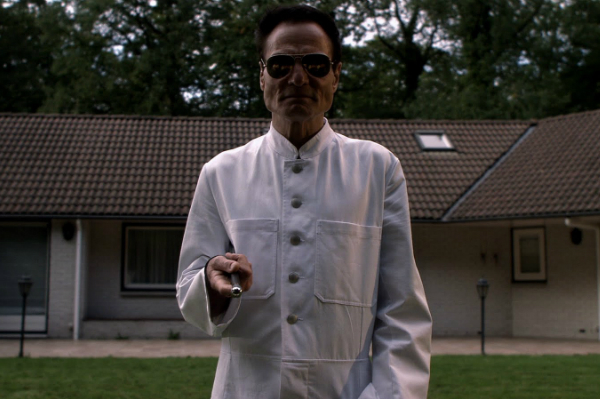
This is one of those €˜no article would be complete€™ inclusions, but we€™re almost reluctant to include Tom Six€™s films anywhere near an article on a family website, not least because of how bad they are. Whatever the case€ If mad scientists had a private members club, Dr. Heiter would demand membership and probably be barred from the premises. His career as a top flight surgeon had allowed him the opportunity to separate conjoined twins€ but Heiter always wondered what it would be like to create a conjoined creature, two or more people surgically attached to one another to form a being with one single digestive system. After retirement, the psychopath determines to make his dreams a reality, kidnapping two American women and a Japanese man in order to do so. If you€™re lucky enough not to have heard of the film or its sequels and now have a mental image that you see every time you close your eyes, then you have our sympathies. Writer/director Tom Six has made two sequels, alleging that, just like Heiter, he€™d always had a dream: that of creating a portmanteau horror movie trilogy that fitted together the way that Heiter€™s victims do by the end of the first Human Centipede movie. That€™s not weird and creepy at all. Six€™s movie is saved from being unwatchably bad by Dieter Laser€™s intense, committed performance in the €˜lead€™ role of the doctor himself€ and fair play to both Six and Laser, for creating a mad scientist that no one€™s ever going to forget, try though they might.

1. Krank - The City Of Lost Children (1995)
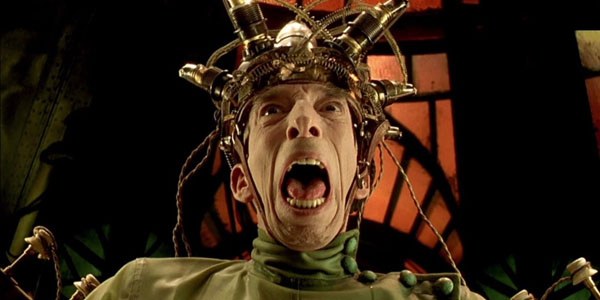
Following on from their fascinating debut together, Delicatessen, Jean-Pierre Jeunet and Marc Caro€™s astonishing steampunk fairytale drama The City Of Lost Children is a landmark in fantasy cinema €“ hey, we€™ll say it, in any kind of cinema. Utterly fruitlooped scientist Krank (no honorific for him, earned or otherwise) lives on a rig in the ocean near the port city that circus strongman One and thief Miette call home. Krank is incapable of dreaming, and that disability is causing him to age at too rapid a rate. To solve the problem, he€™s created a machine capable of stealing the dreams from children, and kidnaps local children to satisfy this need. When he steals One€™s kid brother, One determines to rescue him, with Miette€™s assistance€ and then it gets weird. We won€™t go into the peculiarities of the cult that performs the kidnappings for Krank in exchange for bespoke bionic ears and eyes that they believe allow them to experience other worlds. We won€™t touch on the thiefmaster(s), The Octopus, a conjoined twin that controls a legion of pickpocket children. We won€™t even expand upon Krank€™s odd little family, composed of the dwarf Mademoiselle Bismuth, a disincarnate brain in a tank by the name of Uncle Irvin, or his six brothers, identical clones constantly arguing amongst themselves as to which one came first. No, we€™re here to talk about Krank. Gaunt and prematurely ancient, the deranged scientist lives in a laboratory like a dozen mating Rube Goldberg machines. His plan to steal the dreams of children is flawed from conception, because the act of kidnapping them frightens them so much that their dreams become nightmares, and therefore of no practical use to him at all. Nevertheless, he continues because he€™s convinced that one day he€™ll find a child who€™s not scared€ and because he gets off on ripping off their nightmares, naturally. At the film€™s climax, we find that Krank and his dysfunctional, dysgenic family are actually the creations of mad science themselves. The maddest of mad scientists is the brainchild of a still madder scientist, the clones€™ original, who returns to destroy the rig and take his experiments to the grave with him. Who€™s your favourite mad scientist in film? Tell us about it in the comments!

In this post: 
Re-animator
 
Posted On: 
Contributor
Contributor

Professional writer, punk werewolf and nesting place for starfish. Obsessed with squid, spirals and story. I publish short weird fiction online at desincarne.com, and tweet nonsense under the name Jack The Bodiless. You can follow me all you like, just don't touch my stuff.