10 Flop Movies You Thought Were Huge Hits
These movies weren't the smash hits you thought.
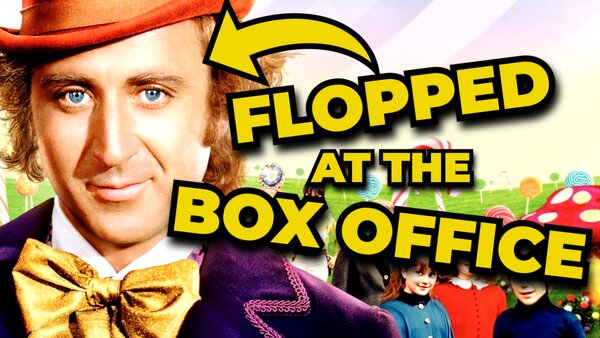
Much as armchair box office observers might believe they can see a hit or a flop coming from a mile away, the past is littered with films that, despite their prominence in pop culture today, actually sank like a stone on original release.
Sometimes a film flops with immediate audiences at the box office, only to catch on with viewers at a later date - say, on TV or home video.
And over the decades, the narrative perpetuates that the movie in question was always a beloved smash hit, which of course couldn't actually be further from the truth.
That's certainly the case with these 10 movies, each of which is a classic in its own right, enough that you may well believe they were box office juggernauts - or, at least, modest hits - when they first came out.
But each was actually rejected by big-screen audiences en masse for one of many reasons, and they were only vindicated by time and history in the years, even the decades, that followed.
The lesson here? Box office failure need not be everything, and films can have an enviable life long after they've left cinemas...
10. Fight Club

David Fincher's Fight Club is one of the most iconic films of the 1990s, and such an entertaining, exciting, and brilliantly acted work from a filmmaker at the height of their powers that you probably assumed it was at least a modest box office hit.
Not quite.
Despite the movie's marketing focusing on its adrenalised, hyper-masculine elements - namely, the fighting - and innate sex appeal of Brad Pitt, Fight Club ended up grossing just $101 million against a $65 million price tag, falling far short of immediate profitability.
Fox executives weren't fond of the film and so opted to market it in the most cynical way possible towards predominantly male audiences, rather than offering up an honest representation of the far darker, weirder movie Fincher had actually made.
This isn't to say that Fight Club would've ever been an easy sell to audiences of the time, but it's certainly telling that it became a veritable pop-culture phenomenon via word-of-mouth once it hit home video.
Factoring in DVD sales and its general enduring cultural impact, it's definitely fair to say that Fight Club became a success in the long run, but make no mistake - it tanked on original theatrical release, in part because the budget was so high for a film of this mid-sized scale.
9. Children of Men

Alfonso Cuarón's Children of Men is quite arguably one of the greatest sci-fi films ever made and, honestly, one of the best films of all time full stop.
Though it received rave reviews as well as three Oscar nominations, Cuarón's dystopian action thriller was a catastrophic box office dud, falling just shy of recouping even its $76 million budget.
It certainly didn't help that Universal decided to release it on Christmas Day in the U.S. - a time when audiences generally aren't interested in watching bleak, gloomy sci-fi movies, especially when they could've seen more frothy, easily digestible fare like Rocky Balboa, Night at the Museum, and The Pursuit of Happyness instead.
Even with its enticing post-apocalyptic premise, the grim vibe, lack of sustained action, and absence of A-listers likely also prevented it from becoming a bigger audience breakout, even if it has absolutely been vindicated by the enduring praise it's been lavished with over the last near-20 years.
8. Hocus Pocus

1993's fantasy comedy Hocus Pocus remains such a celebrated staple of Spooky Season over 30 years later that it was just assumed to be a no-brainer box office hit, right?
Well, the film actually grossed roughly $40 million globally on original release - not far above its $28 million budget.
This is an outcome largely attributed to releasing the same day as Free Willy and facing stiff competition from the likes of Jurassic Park, In the Line of Fire, and The Firm.
Despite losing Disney an estimated $16.5 million at the box office, the film enjoyed a second life on TV throughout the 1990s and 2000s, where it would air annually around Halloween, in addition to being a popular home video seller every October.
In recent years the film has also been re-released theatrically around Halloween, adding a few extra million to its box office coffers decades after it first flopped.
And of course, Hocus Pocus 2 was finally released in 2022, though perhaps sensing that audiences used to watching Hocus Pocus at home over the last 30 years wouldn't be coaxed out of their homes for the sequel, it ended up releasing direct to Disney+.
7. Highlander

Highlander is one of the most iconic fantasy franchises of all time, and yet the original 1986 film was enough of a flop that it's genuinely surprising it spawned a franchise - a franchise where all five films to date have cratered at the box office.
The original grossed just $12.8 million against a modest $19 million budget, often blamed on marketing which failed to fully convey its oddball premise and tone to audiences.
Hardly the makings of a blockbuster series, then, but Highlander was fortunate enough to become a cult hit throughout the late '80s and early '90s, entering regular TV rotation and enjoying strong home video revenue.
This led to 1991's sequel Highlander II: The Quickening, which despite the original's considerable post-release fandom only barely performed better, grossing $15.6 million worldwide on a $22 million budget.
Much like its predecessor, though, the die-hard fanbase was sizable enough that it still made money in the years that followed - a pattern which allowed the creation of three more sequels, all of which flopped at the box office.
Needless to say, with a $100 million Highlander reboot currently in development - with Henry Cavill set to star and John Wick filmmaker Chad Stahelski tapped to direct - there's much hope that this new take might finally break the series' box office curse.
6. Willy Wonka & the Chocolate Factory

Willy Wonka & the Chocolate Factory is one of the most popular and celebrated films of all time, so it's simply assumed that it must've been a gonzo box office hit on original release in 1971, rather understandably so.
Yet even with an iconic Gene Wilder performance and Roald Dahl's beloved source material, the musical fantasy film was originally an epic flop, grossing just $4 million on a $3 million budget.
This result has largely been blamed on marketing which failed to cement the film's off-kilter tone, and a general lack of interest in a candy-centric movie produced by The Quaker Oats Company.
The performance was poor enough that Paramount decided not to renew the distribution rights in 1977, after which they were sold to Warner Bros.
After spending roughly a decade in obscurity, Willy Wonka & the Chocolate Factory enjoyed an uptick in popularity throughout the '80s as it became a regular fixture on TV, cementing itself as a pop-culture mainstay.
5. The Thing

John Carpenter's The Thing is rightly held up as both one of the greatest sci-fi and horror movies ever made, and to the layperson watching the movie within the context of today, why wouldn't it have been at least a modest box office hit?
After all, it offers up a sci-fi horror riff on Agatha Christie's mystery novel And Then There Were None, touts cutting edge practical monster effects, is directed by a red-hot filmmaker fresh off three back-to-back smash hits in Halloween, The Fog, and Escape from New York, and even reunites Carpenter with the latter's Kurt Russell.
Basically, what's not to like?
But in 1982, The Thing simply failed to connect with mass audiences, in large part because it released just two weeks after the sci-fi mega-hit that dominated the entire summer - Steven Spielberg's E.T.
This is to say nothing of the other many great films released that summer - Blade Runner, Poltergeist, Star Trek II: The Wrath of Khan, Conan the Barbarian, and Tron.
And so this, combined with the bleakness of the early-80s recession, didn't exactly leave audiences in the mood to watch a nihilistic sci-fi horror film with a hopeless ending, causing The Thing to gross just $19.6 million on a $15 million budget.
But of course, it goes without saying that The Thing's legacy was secured in the years and decades afterwards, where genre fans embraced it for its sublime atmosphere, gnarly effects, and strong ensemble cast.
4. Master & Commander: The Far Side of the World

Master and Commander: The Far Side of the World is a ludicrously entertaining naval epic and stone cold classic of the nautical actioner genre.
Yet despite receiving rave reviews from critics, landing a truckload of Oscar nominations including Best Picture, and starring Russell Crowe at his undeniable career peak, it grossed an underwhelming $211.6 million considering its mammoth $150 million budget.
Beyond the historically dubious popularity of naval epics and the film's massive price tag, it also had the misfortune of releasing in earshot of The Matrix Revolutions, Elf, Love Actually, The Last Samurai, and The Lord of the Rings: The Return of the King, all of which had more clearly defined marketing and overall audience buzz.
And so, for the great many who wonder why we never got Master and Commander 2 - there's your answer.
For as beloved as it is today for its magnificent action sequences and stellar performances, audiences just didn't show up for it in the necessary numbers in 2003.
3. The Iron Giant

While 2D animation is absolutely a tough sell to the audiences of today, back in 1999 it hadn't yet been fully supplanted by 3D/CGI animation and could still be relied upon to turn a solid profit.
And given the near-universal acclaim for Brad Bird's The Iron Giant, why wouldn't it have been a smash hit?
Yet despite its gorgeous animation and heart-warming story, the film grossed a brutal $31.7 million - barely half of its $50 million budget.
The blame has been largely placed with Warner Bros., who following the box office failure of The Quest for Camelot the year prior, didn't believe The Iron Giant would be a success.
As such, they didn't even bother organising fast food tie-ins or the production of major merchandise like toys - all the basic things you'd expect for most kid-targeting animated films.
A wildly positive test screening close to release totally shocked the Warner Bros. brass, who were then left without sufficient time to give it the marketing push it clearly deserved.
The Iron Giant's reputation as an eye-wateringly beautiful masterpiece only fomented in the years that followed, and while some fans hoped that the film's later success made a sequel possible, Bird reaffirmed that the initial box office outcome was dire enough that it's unlikely to ever get a follow-up.
2. Edge of Tomorrow
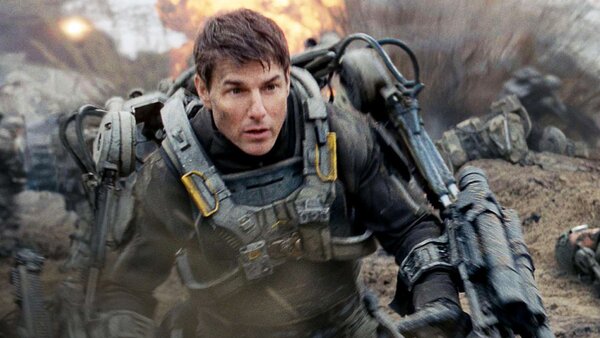
The Tom Cruise and Emily Blunt-starring sci-fi actioner Edge of Tomorrow is often hailed as one of the greatest action films of the 2010s, and its esteem has only grown over the years as fans continue to demand a sequel from Warner Bros.
But therein lies the reason that it hasn't happened in the 11 years since the original film came out - Edge of Tomorrow was a flop.
Against a mighty $178 million budget, the acclaimed blockbuster grossed a mediocre $370.5 million, and considering the typical rule that tentpole films need to gross around 2.5x their production budget to be considered a success, it fell about $75 million short of the mark.
As for why it flopped despite rave reviews? Marketing was the primary culprit - the trailer painted it as a broad, generic sci-fi film and didn't really emphasise the specialness of the time loop gimmick, nor the sizzling chemistry between Cruise and Blunt.
Releasing less than two weeks after the most acclaimed and commercially successful mainline X-Men film, Days of Future Past, probably didn't help either.
While Cruise, Blunt, and director Doug Liman continue to fly the flag for a potential sequel, it ultimately seems rather unlikely considering how much time has now passed.
1. It's A Wonderful Life

And finally, here's one that'll really bake your noodle - It's A Wonderful Life, one of the most iconic Christmas films of all time, was actually a box office flop.
Frank Capra's James Stewart-starring fantasy drama grossed a disappointing $3.3 million, only barely surpassing its $3.18 million budget, even prompting many to consider whether Capra had lost his knack for producing crowd-pleasing human dramas.
It seems baffling in retrospect considering the film's mass global appeal as well as the fact that it received five Oscar nominations, including Best Picture, while also being a card-carrying Christmas Film - perhaps the easiest of all genres to market.
But believe it or not, It's A Wonderful Life received mixed reviews upon original release, while general audiences of the post-War period seemingly had little interest in a Christmas movie with suicide as a central theme.
Interest in subsequent decades was ultimately meagre enough that its U.S. copyright wasn't even renewed in 1974.
This effectively caused the film to enter the public domain, allowing it to be broadcast without licensing fees or royalty payments, in turn causing its popularity to skyrocket as a seasonal classic.
This baffling admin decision turned out to be the best thing that could've happened to the movie, then, artistically speaking.