10 Films Whose Novelisations Took On A Life Of Their Own
Try though they will, there's just no humanising Jason Voorhees...

Novelisations can best be likened to the English candy bar Flake, which came about when a factory worker noticed chocolate shavings on a production line forming a product of their own.
Much like Flake, a film is bound to have some runoff, but that runoff need not be discarded. Initially, though, it's easy to dismiss them as cynical cash-ins.
But something strange happens once you actually sit down to read them. As they are slated to coincide with the release of the film, novelisations are often based on earlier drafts of the script. As a result, some hold descriptions of lost and rumoured scenes that never made the final cut of a picture.
It's always a pleasure to stumble on an Easter Egg such as Marty McFly witnessing his mother cheating on a test in Back to the Future, but it gets even wackier when the writers take artistic license. This is especially true of killer animal films or aliens - their need to anthropomorphise a non-speaking creature to fill pages leads to some interesting interludes.
There are other occasions where the texts somehow take a life of their own. Perhaps the novels began following a franchise faithfully, but the author suddenly took the characters his own route.
There's no shortage of examples on ebay, homeless now after years of harbouring the little known plot twists and deleted scenes some movies just opted to excise from the finished product. Here are some worth tracking down.
10. The Creature From The Black Lagoon

Unfortunately, now that The Shape of Water was a success, we'll never see Guillermo Del Toro's actual remake of The Creature From The Black Lagoon.
But there was a time when the Pan's Labyrinth director, among others, were considering a straight reboot of the last of Universal's monsters.
The Creature From the Black Lagoon received a straight novelisation in 1954 by John Russell Fearn, primarily there for children too scared to see it on the big screen. In 1977, however, Walter Harris (under the name Carl Dreadstone) wrote an updated version that wildly rebooted the creature.
It was one in a series of books intent on recreating the classic Universal Monsters, which were seeing a bit of a revival thanks to Hammer Studios and several recent Dracula adaptations.
Dreadstone's monster was considerably larger than the film's human-sized Gill Man; about ten times the size. The creature was as large as the boat that's hunting it, weighing in at 30 tons.
In addition, we learn a lot more about the Gill Man's biology, including the fact that he's warm and cold-blooded and a hermaphrodite, which can be seen to partially sabotage the film's King Kong-esque ending.
The novelisation is also much more violent, with the creature eating, stepping on and impaling humans with a tree branch (a death that was deleted from the film sequel Revenge of the Creature).
We'll likely never see an adaptation of Harris' roided out Creature, but it's certainly strange enough to warrant curiosity.
9. Jaws: The Revenge

You'd have a hard time finding a list of worst films of all time that didn't include Jaws: The Revenge. Its nonsensical plot finds the Brody family (minus Roy Scheider, who refused to appear) hunted by a shark seemingly hellbent on revenge.
For what? It's never clear. It had been implied that a shark was supernaturally drawn to Martin Brody in Jaws 2, but it was never meant seriously.
The shark, as Richard Dreyfuss put it, is just a machine. "All it does is swims, and eats, and makes little sharks and that's it."
So one can imagine the kind of workload Universal dumped on author Hank Searls, who had previously handled Jaws 2's novelization. Not only did he have to justify the shark suddenly having emotions, there were a series of plot holes that needed gapping.
The shark's motive was thankfully in the original script, apparently summoned to the Bahamas by a local witch doctor who has a beef with the Brody family.
Other plot issues, such as the fate of Mario Van Peebles' comic relief, would also be resolved (in the TV version, he lives, while theatrically and in the book he died).
More importantly, the book explains what the hell Michael Caine's pilot was up to. Turns out the "I deliver laundry" line in the film meant he was an undercover DEA agent out to avenge his daughter's O.D.
This all said, novel still doesn't explain how Caine, after landing in water, returns to the boat completely dry.
8. A Nightmare On Elm Street Part III

A Nightmare on Elm Street Part 3: The Dream Warriors is usually considered the best canon sequel (excluding Wes Craven's New Nightmare). It not only sees the return of Wes Craven as screenwriter to wrap up the arcs of the characters he created, but also saw the best writer/director combo the franchise produced in Chuck Russell and Frank Darabont.
The film was also the hit the franchise needed after Jack Sholder's oddball gay-themed sequel. The novelisation, by Jeffrey Cooper, is a series of what-ifs.
After Craven wrote a draft, Darabont and Russell made significant changes.
They retained Craven's overall narrative - that not one person fighting Freddy would be enough anymore - but kept the setting confined mostly to a mental institution, which only featured briefly at first. They also rewrote the characters to give returning hero Nancy Thompson a psychology degree.
The novelisation is not a complete book, but rather one chapter in standalone book that covers the first three films.
But while the first two were already released, the third was still in production when Cooper was working off Craven's draft. As a result, for the terminally curious, some form of Craven's original script exists.
7. Friday The 13th
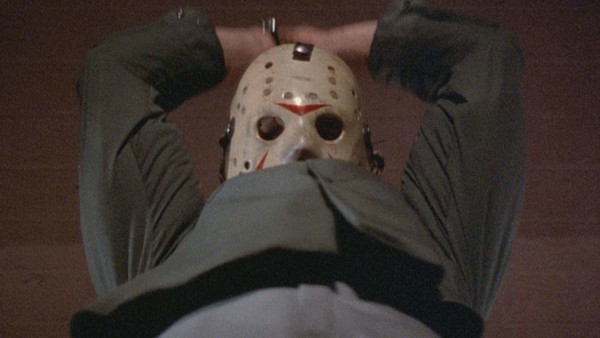
Famously, Rob Zombie tarnished Halloween by over explanation, repurposing a tale of unadulterated evil into a low rent episode of City Confidential. The dangers of explaining away the mythic stance of our boogeyman tends to take their power away, particularly it isn't already in the source material.
Michael Avallone had no such issues when adapting Friday the 13th part 3(D), the first of the films to produce a novel.
Unlike the attempts to ascribe motive to Michael Myers (which had occurred as early as the first film's novelisation), Avallone made little effort to humanise his killer. Jason Voorhees, by that point, had already been turned into an unstoppable killing machine that dealt machete-vengeance on oversexed teens.
The novelisation, however, does use the film's alternate ending in which the heroine dies.
Of the films, six of 12 have been adapted into novels, some more than once, so it's key to know who wrote what. By the Nineties, the slasher genre was faltering in favour of more youth-oriented fare, and even Jason had devolved into a series of YA fiction.
The young adult series, much like the last episode of the anthology series that bore its name, focused on Jason's alleged supernatural mask and different people being possessed by it.
Jason X sparked it's own series of sci-fi, and yet another series features Jason resurrected by a cult.
Interestingly, a lot of these ideas were in the running for Freddy Vs. Jason in it's decades-spanning history.
6. The Omen

Of the many religious-themed horror films released after the success of The Exorcist, The Omen is usually considered the best.
It's much more pulpy than William Peter Blatty's grim possession novel, but a surprisingly nuanced performance from Gregory Peck and some effective chills from director Richard Donner set it above other, less successful attempts like The Sentinel.
David Seltzer adapted his own script into the film's novelization, and it wasn't the only time he'd rewrite the same material - he wrote the remake's script as well.
The sequel, however, did not retain much of the original cast or crew. Killing off its only surviving side characters in the opening scene, the film is mostly a retread with equally overqualified actors (William Holden and Lee Grant) and a slightly older Damien Thorn aka Son of Satan.
Even Seltzer's own novelisation starts to play with details like character names and backgrounds, but the series didn't take a turn until writer Gordon McGill took over for Damien: Omen III.
After the events of that film, McGill published two follow-ups: The Omen IV: Armageddon and The Omen V: The Abomination.
There's little information online about the plots, however a brief backpage blurb explains that they do follow the death of Damien in Part III, the rise of his disciples and attempt to resurrect him around the Millennium.
The fourth Omen film, a TV-movie with a female spawn of Satan, is wisely not addressed.
5. The Funhouse
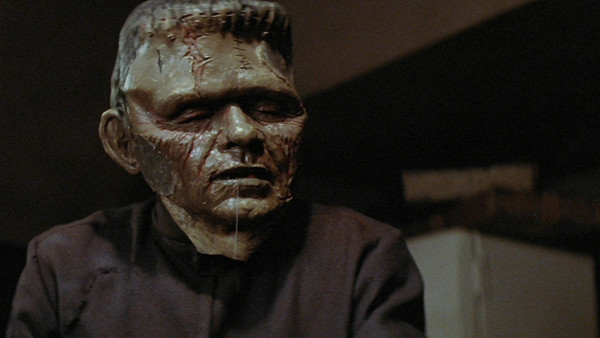
Tobe Hooper is one of the most interesting case studies in a former great director seemingly losing whatever they once had.
Be it their own lack of competence or funding or a general misreading of what younger generations are into, Hooper's later years represent the kind of decline you dread for someone once beloved.
In the Eighties, Hooper was still fresh, with a perspective on horror that was both unique and uncomfortably familiar. His three-picture deal with Cannon represents the last of his truly great creative energy.
Prior to that, however, Hooper was pegged to direct a 1981 script by Larry Block called The Funhouse. Block had modeled his script after the success of Friday the 13th, and like Harvey Weinstein before him was attempting to cash-in on the micro-budgeted slasher.
The script is your standard hack and slash set at a deranged amusement park, with the requisite gore and nudity. But Hooper was of a slightly different stock than his contemporary slasher filmmakers, he managed to crank up the atmosphere and tension to a level most slashers tend to just hover near.
When it came time to adapt The Funhouse, horror writer Dean Koontz was hired. The film, however, suffered severe production delays, and the final product differed drastically from the script.
For a more thorough, almost laboured, retelling of the deranged family that runs the Funhouse, Koontz' novel is ideal. For slasher movie fans, Hooper's film delivers what's required.
4. Star Wars - Episode III: Revenge Of The Sith

There is a whole myriad of Star Wars literature that only the biggest geeks appreciate; the special completionist that collects any memorabilia associated with their interest.
It would stand to reason that novelisations are the least essential when it comes to Star Wars. After all, there's a whole series of independent novels spun out of the faraway galaxy to explore, why bother with what's already onscreen?
That's not the case with the novelisations of the prequel trilogy, the long-awaited and oddly sort of forgiven part of the franchise when George Lucas finally returned to his original characters to, well, hurt them.
The resulting novels, by Mathew Stover, flesh out Anakin Skywalker's fall from grace in dialogue that doesn't read as if it were written by a robot trying to decipher human emotion. Or, for that matter, a bitter, divorced man with too much creative freedom.
All of the depth and nuance you expected to get "from the next one" only to be disappointed by a wooden performance reading off a teleprompter was apparently there all along, it was just in novel form.
According to some fans, you can ignore the cinematic trilogy entirely if you stick to Stover's books, which take on the kind of mythic hero posturing as the films, but with the writing to back it up.
3. Orca
The success of the first blockbuster naturally sparked a wave of imitators; killer fish of all species were striking back at unsuspecting swimmers and greedy polluters.
Piranhas, Gill Men, Barracudas, Bull Sharks, Crocodiles, Alligators - anything even tangentially related to the water were pissed off, but mostly that the Great White had taken the limelight.
Enter Orca, Paramount and Dino De Laurentiis' response to Jaws and everything that Blackfish isn't. Richard Harris plays the film's Quint-clone, a whaling fisherman who captures and kills a baby Orca only to suffer its father's rage.
Orca is an interesting miss from De Laurentiis, who wasn't a stranger to watching the most recent hit and calling his roster of filmmaker's at midnight to say, "Like that, but bigger." His bravado eccentric persona was perfectly sent up by John Belushi in an early SNL sketch.But sadly, Orca's pacing moves like the iceberg on which it climaxes. The novelisation, by Arthur Herzog, is the precise opposite; a fast-moving chase across the ocean with all the pulpy viscera (like Bo Derek's leg) included. Given that it isn't hampered by an awkward melodramatic subplot involving city corruption, it could be argued Herzog's book is better than Jaws.
2. Gremlins

Before Steven Spielberg persuaded those involved to make it more family-oriented, Gremlins was one mean script. Not only did beloved imaginary childhood pet Gizmo transform into the villainous Stripe at the film's climax, he cut off the head of Billy Peltzer's mother and sent it rolling down a staircase.
But Spielberg was right in keeping Gizmo lovable, and the film still manages to be almost absurdly black around the time Phoebe Cates regales the audience with her nightmare Christmas memory.
So one can understand where George Gipe was coming from, working off some dark material that leaned on its horror roots more than its E.T.-side. In fact, the original script has more in common with Spielberg's abandoned Dark Skies, featuring malignant aliens.
Because, yes, the Gremlins are an alien species as evidenced by the lengthy prologue in Gipe's novelisation. There isn't much in the way of additional scenes once the film's script kicks in, however we are treated to conversations between Gizmo and Stripe that help flesh out a Gremlin's M.O.
That being said, it's not a great representation of the film its selling, just a supremely interesting diversion into an alternate universe where Gremlins was an alien invasion film.
1. Alien

Novelisations are "work for hire," said Alien author Allan Dean Foster, who also adapted Star Wars. "If the owner wants a house painted bright orange, you're painting it bright orange."
Foster has had a long career creating work for hires based on the scantest material. Star Wars was written with input from Lucas (who took credit), however since the film was incomplete, there was no sense of how the Trench Run fight would play out onscreen. According to fans, Foster nailed it.
He had to do the same for Alien, whose script by Dan O'Bannon and Ronald Shushett underwent a lot of rewrites before it turned into the classic we know.
But those searching for a beat-for-beat description of the notorious ending in which the Xenomorph decapitated Ripley before mimicking her voice, you're in for a disappointment. By the time Foster started writing, they had at least worked out the film's ending.
What they didn't work out, however, was just what the Xenomorph would look like, so Foster was forced to work off brief, vague descriptions to approximate the terror onscreen.
By all accounts, it's surprisingly effective, and numerous other deleted scenes once thought lost are expertly laid out. Moreover, he has a ball exploring the stasis chambers.
Foster would handle the novelisation to Alien 3, however one would be much more satisfied tracking down the comic adaptation of William Gibson's draft.
Watch Next
Game Of Thrones Quiz That Only Book Readers Will Pass
