10 Famous Characters Who Acted Totally Out Of Character In Sequels

Because apparently, Peter Parker learnt the piano overnight.

We all do things unbefitting of our characters from time to time. Why, just the other day I listened to Mariah Carey's 'All I Want For Christmas' in its entirety without even attempting to gouge out my eardrums ('Tis the season, and all). Human beings are a complex muddle of emotions, experiences and myriad instances where we find ourselves far removed from our comfort zones. It is expected of us to act out of character now and again, with this in mind. However, when characters from the movies do just that, we are a little less forgiving. Fictional characters should be clearly, characteristically defined and often, abruptly changing how they behave without the levels of graceful character development that would assuredly bring about this change can be seen as lazy or poor writing. Worse, if it's a particularly beloved character, fans can see a change of personality as a huge disservice. Why do screenwriters do this? There are any number of reasons. Perhaps they weren't happy with how the character behaved in their first outing, perhaps the environment of their second outing warrants a different sort of personality, perhaps the actor playing the role has changed and interprets dialogue differently from the previous (that has been known to happen). Either way, let's now take a look at 10 movie characters who acted out of character in sequels...

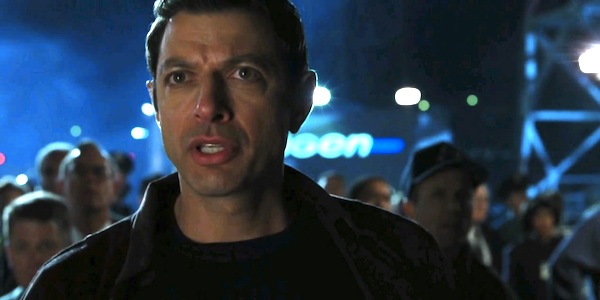
10. Dr. Ian Malcolm €“ The Lost World: Jurassic Park

Apart from perhaps those large, angry scaly things, Ian Malcolm was the best thing about the original Jurassic Park. Giggling like a hipster at Alan Grant's paleontological earnestness, uttering snarky quips in the face of a Tyrannosaur's tyranny and just being an all-round funny guy to the end, Dr. Malcolm was there for us when things got a bit grim. He was also the surprise voice of reason when the sarcasm took a backseat to his own morality €“ describing Jurassic Park as 'the rape of the natural world' and bemoaning their exploitation of dinosaurs for speedy capitalistic gain. With all of these traits to hand, it was no surprise Ian Malcolm took centre stage for the film's inevitable sequel. Fans were delighted €“ surely having Jeff Goldblum in a starring role would mean more quips, more sarcasm and more raging against the machine? Well, no €“ not really. Something must have happened to Dr. Malcolm between leaving Isla Nublar and stepping foot on Isla Sornar to once again go toe-to-toe with the prehistoric beasts, because none of his cool, rockstar sparkle survived the transition to the sequel. What we were instead left with was a bitter, earnest and reticent miser, beaming negativity and caution at every turn and leaving the cool, funny stuff to Vince Vaughn's Nick Van Owen. Malcolm has essentially become the Alan Grant of this Jurassic outing. There are shades of the old Malcolm ("Where you're going is the only place on the planet where the geese chase you") but all in all this is a far different, and less enjoyable, character to the one who won us over the first time round. Let's hope he returns as his good old self in 2015's Jurassic World.

9. Neville Longbottom €“ Harry Potter and the Deathly Hallows: Part 2

Prior to the release of the final Harry Potter novel, The Deathly Hallows, there was a pretty strong rumour among Potter-heads that hapless Gryffindor geek Neville Longbottom would actually turn out to have been the prophecised 'Chosen One' all along, with Harry himself merely a decoy to throw Voldemort off of Neville's scent. The elements were certainly there €“ they share a birthday, they've both lost parents to Voldemort and it's the sort of cheekily clever thing Dumbledore would do, but as it happens it really was just a rumour. But that didn't stop Neville from having his turn at being a badass in the final film. After a decade of quiet clumsiness, subservience to Harry et al and mumbling in the face of bullies, Neville pulls a pretty epic punch out of left field when he finds himself face to face with the biggest bully of them all: Lord Voldemort. It's a rousing moment and it's not in the book €“ Neville's speech about how his friends haven't died in vain ("but you will" he warns Voldemort) is one usually reserved for the central protagonist, and the fact that it comes unexpectedly from one of the most bumbling but likeable characters in the franchise makes it all the more spine tinglingly awesome. Of course, Neville goes on to outdo himself at the film's climax by destroying Voldermort's snake (the final Horcrux) and thus effectively saving the day. Bravo.

8. Sarah Connor €“ Terminator 2: Judgement Day

For the purposes of this article let's leave the short-lived Sarah Connor Chronicles to one side. Let's be clear €“ Linda Hamilton's Terminator heroine was never the all-out damsel in distress in her first turn in the role, but nor did she ever illicit any hint of being a Tank Girl-esque, medic-beating wayward soldier girl. That's not at all a complaint that she eventually turned into one, by the way, it's just that the transition was undeniably rather sudden. The Terminator introduces us to Sarah Connor €“ a happy-go-lucky college student living by herself in LA and working as a waitress to get by. She is, for all intents and purposes, your average American girl €“ so much so that were Tom Petty to ever meet her he'd probably attempt to sue her parents for plagiarism. Then Kyle Reese and the malevolent Terminator simultaneously show up in her life and that's when average living comes to a halt. Sarah and Kyle, who is from the same future as the machine and here to save her, go on the run. After a brief stop-off to inadvertently conceive future Earth saviour John Connor, Kyle is killed and Sarah must take centre-stage as the protagonist. She is thrust into acting alone and, through some trauma, she emerges triumphant. The edge-of-your-seat denouement to the first film would doubtlessly plant the seeds of bad-assery in anyone who survived it, but it is more likely Sarah's long stint in the mental asylum that chiseled away the last burdensome fragments of her girlishness and turned her into the rock-solid, action-movie one-liner-spitting mercenary she is by the beginning of Terminator 2: Judgement Day. It's a believable change, but given that we don't see it actually happening it's a rather jarring one.

7. Charles Xavier - X-Men: The Last Stand

Who doesn't love Professor X? The softly-spoken, welcoming beacon of solidarity throughout the X Men franchise, the (formerly) walking personification of acceptance and the one character we can trust to be there in a world of cynics that despise our long-suffering outsider protagonists. That he was. By the time the franchise was (temporarily) dumped by director Bryan Singer in favour of a mediocre Superman reboot and inherited by the decidedly less able Brett Ratner, someone decided (probably Ratner) that Charles Xavier would work better as a snarky, short-tempered douchebag. There's a particular scene in X Men: The Last Stand that serves as the perfect example of this glaring character assassination. When he and Wolverine are tending to the unconscious body of recently-discovered-to-still-be-alive Jean Grey, the story of the Phoenix - Grey's subconscious dark side - is relayed by Xavier who then reveals that he is actively keeping her unconscious mind in check. Wolverine is understandably disgusted by this and when he attempts to argue with the professor about the wrongness of manipulating someone's mind, Xavier shrugs off the concern with the line "I don't have to explain myself, least of all to you." Why be such a dick, Charles? Don't take it out on Wolverine, the poor guy is worried for his friend! Unfortunately Xavier has little screen time left before he is promptly offed by Jean, so he is denied the opportunity to redeem himself for that gutless remark. X Men: The Last Stand's biggest downfall is that it takes the beloved character of Xavier and makes his final, substantial act one of gutless refusal, before taking him away and leaving a sour taste in our mouths. It doesn't help, either, that the next time we properly see him he's 40 years younger and played by a different actor. I guess we'll have to wait for Days of Future Past to see if his former polite level-headedness has been restored.

6. Dr. Bruce Banner - Avengers Assemble

Not all abrupt character changes are for the worse. Often the producers see the change as necessary if attempting to continue a franchise that has been met with relative audience indifference in the past. That is most certainly the case with the return of Bruce Banner/The Hulk in 2012's Avengers Assemble. The Incredible Hulk's prologuing solo effort remains the least loved of all the entries in the Marvel Cinematic Universe, with criticism largely honing in on the notion that it's an all-too-earnest, serious hangover from Ang Lee's morose misfire a few years before. There's something clearly off about making a slow-burning, bleak and angsty character drama about a giant, green CGI monster who smashes helicopters, and this is mainly cited as the reason for The Incredible Hulk's lukewarm audience response. Edward Norton does his best as the grumbling, lonely Dr. Banner, lamenting his situation and reluctant to so much as crack a smile until the very final shot of the film. The Hulk side of the character fares little better €“ his set-pieces are glum, over-serious and never really make the most of the fact that a giant, green CGI monster can be quite fun. Nobody knew this better than Joss Whedon, the man charged with uniting the Marvel heroes for their first team-up outing. Bringing back the Hulk but instead having him a roaring, riotous source of visual fun and explosive action, Whedon gave us the surprise star of the show €“ which culminated in the infamous and laugh-out-loud 'Puny God' ending to Loki's villainous endeavour. This is admittedly not so much a character change as a change in how the Hulk's behaviour is portrayed, but what about Bruce? The facts behind Norton's departure from the role are rather elusive and the jury's out on why he had to go, but his exit gave us Mark Ruffalo, and by extension a very different Banner from the one who struggled to keep us awake in 2008's effort. Banner, while still bemoaning his condition (and rightly so), is witty, endearing and bereft of the charisma-sucking angst that dominated Norton's portrayal, referring to his Hulk transformations as his "party trick", gelling instantly with Robert Downey Jr's Tony Stark (can you imagine Norton and Downey Jr. displaying such chemistry?) and revealing at the optimum moment that he's got the Hulk sussed out after all. What a guy. Another solo Hulk movie is, at this stage, pretty unlikely, but Ruffalo's Banner is a fan-favourite and likely mainstay of the MCU franchise. Change is good.

5. Peter Parker - Spider-Man 3

We have the grand old MacGuffin to thank for this one. Spider-Man 3 is supposedly a parable concerning the darker aspects of human nature inherent in all of us. But let's be honest, it was really an exercise in Sam Raimi's mounting fatigue with a franchise he lovingly brought to life but which began weighing heavy on him with studio pressure. Spider-Man 3 is Raimi's "screw it" moment with the franchise €“ and Peter Parker's character change is the epitome of this. The alien symbiote which falls to Earth in the first act of the movie is said to latch onto aggression and negativity, and amplify such traits in whoever it chooses as a host. Nothing in that description or indeed the source material it was based on says anything about accelerating piano and dance skills or hoisting upon its host a sudden fondness for eyeliner and a hipster fringe (I always found the 'emo' tag a bit unfounded, having not known too many emo kids that enjoy strutting down highstreets and dancing on jazz club tables). At any rate, Parker's brief stint of actual angst and aggression can more likely be attributed to the new developments concerning his uncle's murder. Only after these downturns does the alien goo latch onto him and envelop him with his new, jazzy disposition. The problem with Parker's character change is that it isn't remotely foreshadowed in the previous films, or indeed the earlier stages of Spider Man 3. Raimi and co. spend two and a bit movies reaffirming what an inherently nice guy Peter is (and make no attempt to hint at any particular deftness at the piano, while we're at it). It's no secret that Raimi wanted to tell a different story to the one Columbia and Marvel forced out of him (he is very openly not a fan of the Venom/symbiote story arc) and the 'dark' Peter Parker we got instead evidences this in spades. Peter conveniently rids himself of these unwelcome traits for the third act, and slips back into his former life as an upstanding good guy as easily as he slipped out of it.

4. Alfred Pennyworth €“ The Dark Knight Rises

'What would you have me do?' asks Christian Bale's Bruce Wayne, while pondering hanging up the Batman cowl for good amidst the Joker's fiery terror campaign. 'Endure,' Alfred assuredly replies, knowing that Batman - as a symbol - can carry burdens that no mere man can carry alone. Throughout Wayne's emotional endurance test within Chris Nolan's acclaimed sequel, Alfred is there as the emotional leaning post he needs in times of heavy doubt. Nothing, Alfred believes, should come between Bruce Wayne and Batman. Fast forward eight years, and suddenly Alfred's not so keen. Admittedly, Wayne has been out of practice and hobbling tiredly around his mansion in that time €“ any surrogate father would show such levels of concern €“ but this isn't some teenager who's just survived a horrific road accident pleading to get back on his motorcycle, this is Batman! And there's a bloody terrorist out there threatening to raze Gotham to the ground! So what exactly is Alfred doing, having gone from unerring support for Batman's cause to threatening to walk out of Wayne Manor should Bruce so much as put the cape on again? Cases can be made for Alfred's sudden U-turn €“ Gotham no longer needs Batman, Bruce is past his prime, Bane's superior abilities warn of certain death, but it's his stubborn ferocity that makes for his glaringly uncharacteristic turn. He rants and raves at Bruce, makes a cheap shot about Rachel (his deceased, would-be significant other) and then abandons him for the remainder of the film. The Dark Knight Rises was an excellent closer to an equally excellent trilogy, but many (myself included) were waiting for Alfred to see the error of his ways and return to Bruce in his hour of need (read: final act), but it took Wayne's apparent death for Alfred to even show his face again. This isn't the Alfred Batman fans such as myself were brought up to know, and even the Alfred of Batman Begins €“ who stuck by Batman even in his earliest, most dubious stages €“ would be ashamed of such abrupt disloyalty.

3. John Connor €“ Terminator: Salvation

I know, I know - another Connor. But if there's one thing John inherited from his mother, it's a sudden, unforeseen turn to arse-kicking machismo. Terminator: Salvation has so little going for it I'm still struggling to work out what could possibly entice me in to see the imminent sequel, but for all the laughably CGI'd Arnies and yawn-inspiring set-pieces, at least John Connor is no longer an air-headed, petulant wimp of Skywalker proportions. Nick Stahl's Connor in Terminator 3: Rise of the Machines was, if anything, a step back from his 10-year old predecessor and €“ in a move echoed by Marvel Studios several years later €“ producers were understandably keen to remove Stahl from the role and give audiences the intrepid, warrior-esque Connor so tantalisingly promised throughout the first two instalments. That's where Christian Bale, fresh from The Dark Knight, comes in. After all, if you've deftly portrayed Batman in the Caped Crusader's finest outing, John Connor should be a breeze, right? Well, almost. Bale's Connor was decidedly lacking in charisma and personality, instead exuding a sense of not really wanting to be there (call it blockbuster fatigue). But he was a damn sight more suited to the role of one-man robot-apocalypse salvation than Nick Stahl. In the few years that have passed between T3 and Salvation, Connor has undergone an undocumented character change €“ stepping up to the plate in the face of adversity if you will €“ and is now unrecognisable (and not just because he literally has a different face) from the disappointing character we saw in his previous outing. He heads charges, runs into one-on-one battles with Terminators and has rekindled his love of Guns 'N Roses to boot.

2. Spock - Star Trek Into Darkness

Keeping in mind that JJ Abrams' Star Trek film series takes place in some semblance of the same universe as the Original Series, a similar case can be made for Benedict Cumberbatch's Khan Noonien Singh in this year's Star Trek Into Darkness. After all, it's kind of difficult to picture the wilful, fearless fallen emperor seen in Wrath of Khan and the earlier TV episode Space Seed working alongside Captain Kirk or agreeing to play a pawn in Starfleet's warmongering scheme, isn't it? But in the name of sanity let's keep this entry contained to the Abrams series. With that in mind, what's Spock playing at? With the obvious exception aside, there is nobody on Earth more perfect for the role of Spock than Zachary Quinto €“ criticisms of the post-2009 films have been levelled on many aspects but rarely on his portrayal. Quinto effortlessly carries the mantel of what is essentially an out-of-space Sherlock Holmes into the 21st century, suitably cold, calculated and emotionless - often at the behest and irritation of his fellow crew mates. Spock keeps his instinctual, emotional human side resiliently suppressed at all times, even in the face of impending death. But there comes a moment in Star Trek Into Darkness in which Spock behaves so out of character that it is nothing short of jarring to anyone au fait with the franchise beyond its recent reboot. This is a symptom of the film's lumbering fixation on homage €“ you already know which moment I'm talking about. 'KHAAAAN!' Yes, the "death" of James T. Kirk. Reticent to leave out the immortal bellow from 1982's Wrath of Khan, Spock is marched uncharacteristically into a seething, raging tirade, baying for Khan's blood and leaving all logic and sense at the door as he descends on the fleeing villain. This is the man who, not an hour of screen time earlier, delivered a stoic, eerily moving speech on how he must rein in his emotions for his own good. He kept a relatively level head when his home planet was destroyed and his mother was killed, ditto when he was about to be reduced to barbecue meat inside an erupting volcano. I don't want to negate Spock's bond with Kirk, but his response in this instance is akin to having Batman blow a guy's brains out with a revolver, or Captain America dropping an F-bomb. It's just not him.

1. Ash Williams - Evil Dead II

It's easy to forget that demon-blasting Evil Dead hero Ash wasn't always a badass, given how amps-up-to-11 cool and gun-slingingly groovy he is most of the time, but the evidence is right there in Sam Raimi's debut feature: Ash was a bit of a dunce in the first Evil Dead. Quiet, slightly geeky and hesitant to act most of the time, Ash emerges as the unlikely hero in 1981's Evil Dead, leaving the more self-assured, macho stuff to his friend Scotty (who dies despite himself). Even by the end, as the sole survivor of the grisly ordeal, Bruce Campbell isn't yet playing the Ash we think of today. This was because Raimi and Campbell were still yet to see the Evil Dead franchise's potential as a horror-comedy (the first film isn't as intentionally funny as its reputation suggests) and if a character is defined by his or her first appearance, then Ash's behaviour in subsequent films is uncharacteristic. Evil Dead II is uniquely both a sequel and a remake €“ scenes from the first film are recreated and extremely different €“ so an argument can be made that the first film is no longer strictly part of the canon, but where's the fun in that? Hardened beyond compare by the events of the first film €“ and after a brief stint as a deadite €“ Ash quickly reinvents himself as '80s Action Hero to the Nth degree, replacing his hand with a chainsaw, participating in the most cliched 'tooling up' sequence this side of Rambo and arming himself with an unrivaled arsenal of one-liners. The Evil Dead series is one of the greatest things committed to cult cinema, and if that gift to horror nerds was reliant on completely re-imagining the central character, then hail to the king!

Contributor

26 year old novelist and film nerd from London. Currently working on his third novel and dreaming up more list-based film articles to flood WhatCulture with.