10 Distracting Moments That Almost Derailed Recent Movies
These bizarre moments threw everyone off.

Any film is the result of thousands of creative choices made by the director, cast, and crew, all of which add up to a (hopefully) engaging cinematic experience. But as the history of Hollywood has proven, all it takes is one wrong-headed decision to irreversibly derail a movie entirely, forever tarnishing its legacy. And then there are those movies that, slightly less dramatically, only flirted with ruin with head-scratching moments that nevertheless stole the audience's attention away.
So, the following recent movie moments all led viewers away from concentrating on the main story with how utterly bizarre and unexpected they were. While some were clearly intentional, motivated choices on the part of the filmmakers, other moments were simply ill-advised foibles that unexpectedly shifted attention away from what we were actually supposed to be looking at.
From dud acting moments in great movies to bold stylistic choices, deeply dodgy deepfake CGI, and everything else in-between, these moments sucked up way more of the oxygen in the room than the filmmakers likely expected.
While they didn't derail the movie entirely, they all generated quite the spirited discourse online, to say the least.
10. Ivan's Fake Video Game Playing - Anora

Anora is one of the best films of 2024, a deliriously entertaining comedic drama that's well-crafted and brilliantly acted from top to bottom, but it didn't take long for some viewers to point out one majorly distracting flaw - some hilariously horrendous attempts at pretending to play a video game.
In several scenes throughout the film, Vanya (Mark Eydelshteyn) is seen playing video games while hanging out with Anora (Mikey Madison), except actor Eydelshteyn awkwardly manhandles the Xbox controller like he's never played a video game in his life.
While the history of Hollywood is filled with movies featuring terrible pretend-gaming, it's been less common in recent years as gaming has become increasingly mainstream, and it's especially odd to see a younger actor apparently having no idea how to use a gaming controller.
Eydelshteyn himself has spoken about the matter, however, noting that he isn't much of a gamer, and deliberately exaggerated the clunky button-presses for a laugh, which he felt was perfectly in step with Vanya's character - an inept, immature nepo baby.
All the same, it's tough for gamers to sit through these scenes and consider that a human being would ever actually use an Xbox controller this way.
9. Orlok's Mustache - Nosferatu

Though Robert Eggers' stunning reimagining of Nosferatu was widely praised by critics and scored four Oscar nominations for its incredible crafts work, much of the discourse surrounding its release centered on the polarising nature of... a mustache.
Vampire antagonist Count Orlok's (Bill Skarsgård) design was largely concealed in shadow in the movie's marketing, and so only when audiences sat down to watch Nosferatu for themselves did they see that Orlok sported a large, bushy 'tache.
Many online felt that Orlok's mustache made the character impossible to take seriously, even though Eggers insisted that it was period-accurate for a Transylvanian man to have such a pronounced lip-caterpillar.
It was certainly a strong, unique choice that made this version of Orlok stand out from prior iterations, and while it unfortunately steered a fair share of attention away from the actual merits of the movie itself, it still absolutely makes sense considering that Orlok is supposed to be an undead Transyvlvanian nobleman.
It is, at least, a choice that will probably end up ageing rather well once people get the shock out of a mustachioed Orlok out of their systems.
8. Will Ferrell & Reese Witherspoon's Lack Of Romantic Chemistry - You're Cordially Invited
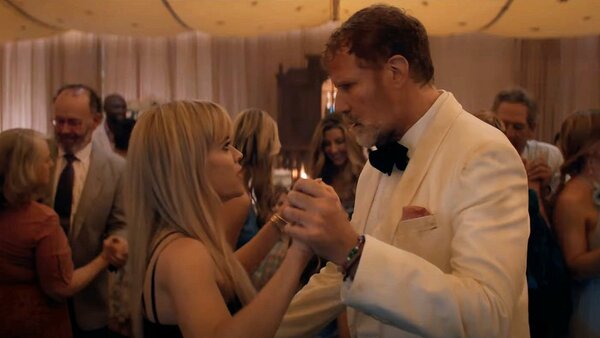
Amazon's new throwback rom-com You're Cordially Invited has received firmly mixed reviews from critics and audiences, some praising it as fun, R-rated froth and enjoying the central performances from Will Ferrell and Reese Witherspoon.
This was tempered, however, by the fact that the film makes an ill-advised third-act decision to force a romantic pairing between Ferrell and Witherspoon's characters, no matter that the two actors have basically negative romantic chemistry.
They make for a charming bickering pair throughout the film as members of two double-booked wedding parties, but it would've made far more sense for them to simply end the movie as friends. Instead, despite Ferrell and Witherspoon seeming like the most chalk-and-cheese Hollywood couple imaginable, and the film making little attempt to really convey any romantic frisson between them, their sudden love-in at the end of the story rings totally, offputtingly false.
Whether it's enough to completely unravel a film that's basically just 109 minutes of broad genre silliness, however, will depend on the viewer.
7. The "Flat" Cinematography - Wicked

As soon as the first trailer for Wicked was released, there was intense online discussion about the film's polarising cinematography, many feeling that the colour grading was excessively washed out and the lighting garish.
Given that The Wizard of Oz is renowned for its strikingly vibrant Technicolor presentation, it was certainly expected that a Wicked adaptation would push saturated colours and high levels of contrast. But director Jon M. Chu and cinematographer Alice Brooks ultimately opted for a more muted aesthetic, which Chu defended as an attempt to make the film appear more "real" to audiences, surmising that audiences wouldn't connect with the story and characters if it had a more heightened visual style.
These comments didn't really wash with vast swaths of the Wicked fanbase, though, and while the picture ultimately went on to be a stonking critical and commercial success regardless, it's probably telling that of the 10 Oscar nominations it received, its cinematography was shut out.
6. Shyamalan's Cameo - Trap
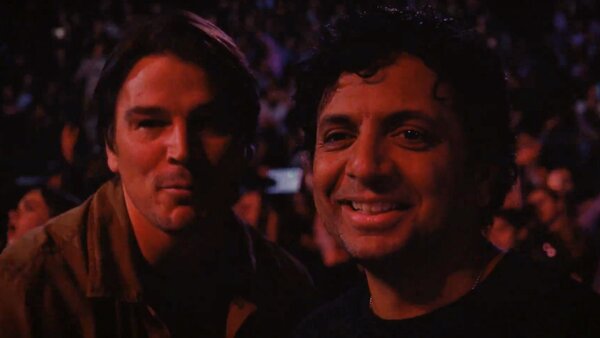
It's hardly a secret that M. Night Shyamalan makes cameo appearances in all of his movies, and while Alfred Hitchcock largely made himself an unassuming presence in his own features, Shyamalan's appearances have been surprisingly pronounced throughout his career.
Audiences have surely gotten used to this by now, but the filmmaker seemingly went out of his way to draw attention to his own ridiculous cameo in his most recent film, Trap. Shyamalan appears briefly in the thriller as the uncle of pop singer Lady Raven, who is played by his own real-life daughter, Saleka Night Shyamalan, who is herself a singer.
Shyamalan's character works on Lady Raven's concert production, serving as a "spotter" to pick out a fan from the audience to dance with Lady Raven on stage. It's an especially odd cameo given that Trap was criticised by many for feeling like a production motivated by nepotism - that Shyamalan wrote and directed the film largely to elevate his daughter's music career.
For Shyamalan himself to be playing a relative of the Lady Raven character, and a person likely only in that position because of nepotism also, is hilariously ironic, seemingly unintentionally holding up a mirror to one of the most vocal complaints about the movie.
M. Night Shyamalan has certainly had bigger and more obnoxious cameos in other movies, but few that were this uniquely distracting, by drawing such blatant attention to the film's own artifice.
5. Anna Kendrick's Miscasting - Woman of the Hour

Netflix's recent crime thriller Woman of the Hour marked a firm directorial debut for Anna Kendrick, who dramatised serial killer Rodney Alcala's (Daniel Zovatto) 1978 appearance on TV show The Dating Game with considerable aplomb.
The film's oft-noted issue, however, is Kendrick's decision to also cast herself in the lead role of put-upon game show contestant Sheryl Bradshaw, who appeared in the same episode as Alcala. Even ignoring that Kendrick doesn't bear much resemblance to the real Bradshaw at all, she more egregiously doesn't even remotely convince as a woman from the 1970s.
From her clothing to her straightened hairstyle - counter to Bradshaw's more bouffant 'do during the real episode - nothing here feels like it's actually of the period. And then there's the fact that Kendrick's entire vibe, from the way she speaks to her physical mannerisms, smack distinctly of a person existing in the 2020s.
There's little wrong with Kendrick's dramatic performance in the picture, though you'll have to suspend your disbelief to accept that this very modern-looking and contemporary-acting individual is actually from the '70s.
4. Mark Wahlberg's Bald Head - Flight Risk

Flight Risk's big end-of-first-act twist - albeit one that was revealed in the marketing - is that Mark Wahlberg's plane pilot is actually a hitman tasked with eliminating one of his passengers, an informant called Winston (Topher Grace). But the real twist is that Wahlberg's villain is actually wearing a toupee, which is ripped off during an early altercation, revealing him to be bald on top.
The film clearly plays this revelation somewhat for laughs, even though it doesn't really add much to beyond making Wahlberg's villain look rather ridiculous. And that's certainly no shade intended to the bald community.
Curiously, Wahlberg did actually have his head shaved for real to play this character, and yet the makeup applied to the top of his head to cover up the remaining stubble made most believe that he was simply wearing a bald cap.
The seam between Wahlberg's furrowed brow and instantly smooth dome is incredibly difficult not to stare at during the many close-ups of his face, ensuring it's genuinely tough to concentrate on any words coming out of his mouth. Then again, you could easily argue that Flight Risk was derailed by simply not being very good.
3. Bill Hader & Mindy Kaling's Recasting - Inside Out 2
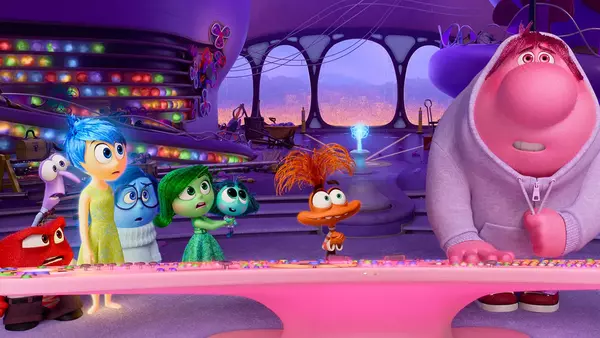
Inside Out 2 was a colossal critical and commercial success, though that didn't stop many fans complaining about the decision to recast two major characters from the first film.
In the original Inside Out, the unforgettable characters of Fear and Disgust were played by Bill Hader and Mindy Kaling respectively, but the pair opted not to return for the sequel after reportedly being offered just $100,000 a-piece to return - a mere 2% of Amy Poehler's $5 million salary to voice protagonist Joy.
And so, Fear was now played by Arrested Development and Veep star Tony Hale, while Disgust was played by Liza Lapira. Even accepting that Hale and Lapira did solid work taking over these roles from their predecessors, for some the differences were noticeable to the point of distraction, especially considering the fairly prominent roles that both of these characters have in Inside Out 2.
Does it ruin the movie? Certainly not, but it stoked a talking point about Disney's notorious cheapness with compensating their talent.
2. Deepfake Ian Holm - Alien: Romulus

The most recent Alien film was firmly praised as a return to form for the sci-fi horror franchise, though it also had to deal with significant blowback over the decision to use the late Ian Holm's likeness for a new android character, Rook, modelled off his android Ash from the original Alien.
Even though the production obviously secured permission from Holm's estate to repurpose his likeness, it ultimately reignited the ongoing conversation about the ethics of using the appearance of an actor who is unable to personally consent to it. And then there's the fact that many took umbrage with the poor visual fidelity of the effect itself, which was of a low enough standard to be distracting throughout Rook's various appearances.
Given that Rook could've easily been played by another actor, to many fans this felt like a desperate attempt at nostalgia-driven fan service - something the movie already had far too much of.
The Rook CGI was ultimately improved for Romulus' home video release, though the very idea of inserting Holm into the film at all makes it stick out like a sore thumb.
1. Justice Smith Playing A Teenager - I Saw the TV Glow
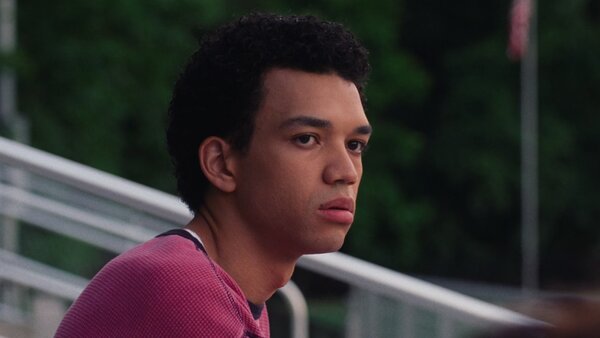
I Saw the TV Glow is one of 2024's most unforgettable films - a mesmerising psychological horror about identity that doubles as a potent allegory for the trans experience.
Justice Smith stars as put-upon protagonist Owen, with Smith ultimately being asked to portray Owen across several decades of his life, from an early teenager to middle-age. While Ian Foreman plays a 12-year-old Owen at the start of the film, Smith plays him from 14 years old onwards, and there's no getting around how distracting this is.
Smith, who was 27 years old when the film was shot, may be fresh-faced, but certainly not enough to pass as an early adolescent, especially when he's often in the vicinity of actual high school-age actors.
Yet this was clearly no accident on the part of filmmaker Jane Schoenbrun, but rather an intentional choice that works in lockstep with the picture's overall surreal tone, only further cementing how Owen doesn't feel at home in his own body.