10 Dark Films For Dark Times
Keep America Great - re-elect Greg Stillson.

If the 1950s gave moviegoers a sense that not everything was as it should be in the post-war world, then the 70s equipped them with visions of how their world might end.
Spurred on by the nuclear threat, Watergate and the oil crisis, movies like Beneath The Planet Of The Apes and A Boy And His Dog showed how civilization might fare in the wake of The Big One, and there were good reasons to be afraid. The fear never went away but learned to adapt to changing times, producing films that addressed terrorism, economic ruin and the threat of disease.
George Romero’s Living Dead series is unique for being the only franchise to comment upon several different eras, from Night Of The Living Dead’s apocalyptic vision to Dawn Of The Dead’s satire of consumerism. Even later films like Land Of The Dead contain a pointed (if unsubtle) message about social inequality.
Here are ten films that reflect the powerless and hopelessness of little people stuck in a system they didn’t create, have no control over and will eventually see tear itself apart. They’re playing somewhere near you.
10. The Intruder

Set in a fictional Southern town in the early 1960s, The Intruder tells the story of Adam Kramer (William Shatner) who proceeds to incite the white townspeople to violence in order to resist the recent court ordered desegregation of schools.
Like most demagogues, it’s difficult to know for certain if Kramer actually believes his own spiel, if he just enjoys putting on an act for an audience he knows will listen or if he really believes in nothing and wants power regardless of the cost. His supporters believe him, though, and it’s not long before the situation spirals out of control.
“You’ve got no room in your head for intelligence,” a character tells him. “If you were intelligent, you would see you’ve started something you can’t control. You think you’re the boss now? Wake up, boy, that mob is the boss.”
9. X-Men
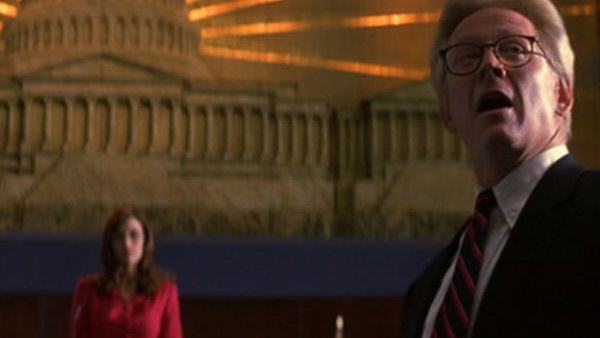
When it’s revealed that mutants live among us and possess such powers as telepathy and the ability to walk through walls, an ambitious Senator demands a simple answer to a simple question – “Are mutants dangerous?”
After all, he reasons, the American people deserve the right to decide if they want their children to be in school with mutants or to be taught by mutants. “We must know who they are,” he says, “and above all, what they can do.”
Now read those words over again, replacing mutant with your minority group of choice and you’ll realize why Bryan Singer’s X-Men is so much more than a “mere” superhero movie.
It could have given its characters soap opera motivations, but there’s something believable about the conflict between Eric Lensherr and Charles Xavier, former friends who separate into two groups with very different approaches to the prejudice they face. Xavier favours diplomacy but Magneto, a concentration camp survivor, lost his faith in human beings a long time ago.
Arriving in America in 1949, he expected to find the “land of tolerance”, but quickly came to realize “there is no land of tolerance. There is no peace. Not here, or anywhere else.”
8. The Dead Zone
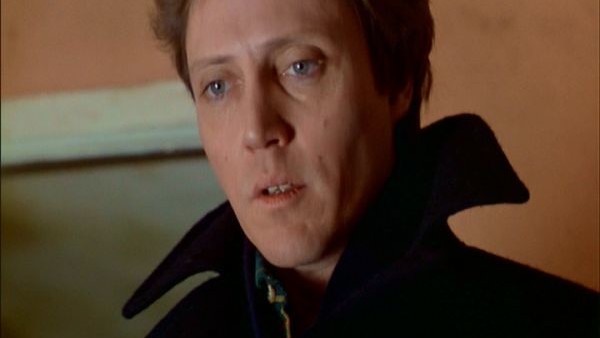
“Populist demagogues like He Who Must Not Be Named aren’t a new thing,” tweeted Stephen King in March 2016. “See The Dead Zone, published 37 years ago.”
Or you could watch David Cronenberg’s 1983 film version, where Christopher Walken gives a mesmerizing performance as Johnny Smith, who wakes from a coma to realize he can see into the future. Worst of all, his former girlfriend has “moved on” and is now a volunteer working for Greg Stillson (Martin Sheen), a senatorial candidate Johnny sees become President and order a nuclear strike against Russia.
If you knew in advance the atrocities someone like Hitler would go on to commit, Johnny asks his doctor, what would you do? When the doc replies that he would “kill the son of a bitch”, Johnny attempts to do just that, setting in motion a series of events that will change the world.
7. Fight Club

When Fight Club reached cinemas in 1999, critics took note of the film's satire of materialism, but the rest of the picture left them baffled. Writing in the Evening Standard, Alexander Walker famously called the film, "not only anti-capitalism but anti-society and, indeed, anti-God."
Like most critics, he missed the point: the film shows what happens when people lacking purpose or direction blindly follow a charismatic leader. The leader in question is Tyler Durden (Brad Pitt), the alter ego of an unbalanced office worker (Edward Norton), who blames empty consumerist culture for leading people to believe they can be movie stars and millionaires when in fact they’re corporate slaves working jobs they hate to buy stuff they don’t need.
This strikes a chord and it’s not long before Tyler is inducting people into Project Mayhem, a glorified terrorist group whose first rule is, “You do not ask questions about Project Mayhem.” By portraying corporations as the worthy target of their wrath, he’s able to convince his followers to carry out his orders even when they involve destruction on a mass scale.
6. Rampage

The first Uwe Boll movie to receive mostly positive reviews, Rampage follows Bill Williamson (Brendan Fletcher), a particularly unpleasant young man who for no clear reason decides to go on a killing spree.
Largely improvised, the film takes place in a world of minimum wage jobs and branded stores with indifferent staff, where casual misanthropy and “fake news” are broadcast 24/7 on radio and TV. Is Williamson a product of his environment? He certainly speaks like one of the radio shock jocks, pointing out that seventy million people are brought into the world each year just to suck up our resources.
“There’s too many people,” he says. “So what do we do? Just keep them around? Let’s kill them!”
Embarking on a shooting spree, he indiscriminately kills beauty shop employees as well as bank tellers, whose money he steals while telling them, “Everything you use it for is stupid and senseless – have a nice day.” He burns some of the money, but he also keeps some for himself, which seems to contradict his statement that his mission was to “clean the world” for the rest of us.
5. The Assassination Of Richard Nixon
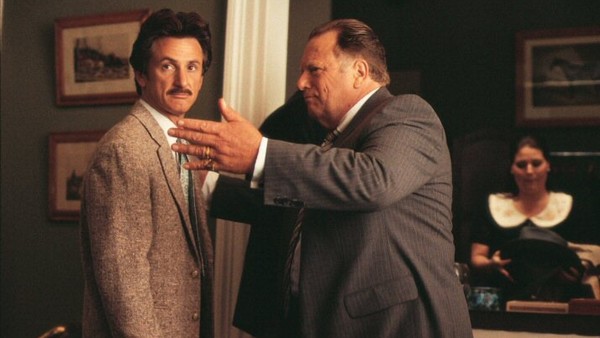
Sean Penn gives a chillingly believable performance as Samuel J Bicke, the salesman who in 1972 attempted to hijack a plane with the intention of crashing it into the White House.
If the name Bicke rings a bell, that’s because screenwriter Paul Schrader took inspiration from him when creating Taxi Driver’s Travis Bickle, which ought to tip you off to the character’s shaky mental state. Separated from his wife and such a hopeless schmuck he makes Jack Lemmon in Glengarry Glen Ross look like a winner, Bicke is the butt of every workplace joke until he finds an outlet for his rage.
As his life spirals out of control, Bicke becomes obsessed with Richard Nixon whose apparent ability to get away with telling lies (the film takes place after Nixon’s re-election but before Watergate) is in marked contrast to Bicke’s failures to set up in business. With Nixon firmly fixed in his mind as the one responsible for his problems, he boards a plane carrying a stolen gun.
4. The Purge: Election Year

Always assuming it’s not another example of “fake news” (or an early April fool joke), the Washington Post recently reported that President Trump’s legal team is attempting to trademark the slogan Keep America Great for use in his 2020 re-election campaign, perhaps not realizing that it was the slogan for a movie about a dystopian future.
Your typical story about a female Senator who ends up fighting for her life on a night when all crime is legal, The Purge: Election Year also used the taglines Purge For Your Liberty, I Purged and Purge For The Power. The film’s trailer opens like an campaign ad, with smiling Americans proudly announcing, “I purged because it’s my civic duty!” before cutting to scenes of riots, beatings and shootings.
“The soul of our country is at stake,” announces Senator Charlie Roan (Elizabeth Mitchell), who wants to do away with purging altogether. Little does she realize that some angry male colleagues are planning to “do something about that Senator”, so before long she’s running through crime-infested streets asking herself, “My God, how did it come to this?”
3. My Little Eye

Now that a reality TV star is safely ensconced inside the White House, the time feels right to acknowledge that celebrity culture is far more sinister than the harmless entertainment it’s often presented as, but if you were watching horror movies in the early 2000s you already knew that.
Series 7: The Contenders, The Task and even Halloween: Resurrection all depicted the dark side of reality television, but none of them did it better than My Little Eye, which is under no impression that celebrity culture is a force for good. It’s all about exploitation, manipulation and murder.
The story is simple: 5 young people, lured by a million dollar prize, agree to participate in a show being streamed live on the internet. If anyone leaves, everyone forfeits the cash. But what they don’t know is that one of them is a killer, and the show is a real-time snuff movie.
There isn’t a single honorable character in Marc Evans’ movie, but the greed and self-interest of these characters is nothing compared to the rich people paying to watch them die. It’s a bleak worldview to be sure and an absolutely perfect movie for 2017.
2. 28 Days Later

Many pictures claimed to be the “best British horror film since Hellraiser” but 28 Days Later is the real deal, and just like Clive Barker’s film it’s a landmark picture that ushered in a new era of horror.
Taking its inspiration from George Romero’s zombie films (though without a single walking cadaver in sight), the film offers one of the most uncomfortable (and uncomfortably believable) accounts of social collapse ever seen in a British film. Working from a script by Alex Garland (Ex Machina), director Danny Boyle remains true to the spirit of Romero’s films while eschewing their humour and pseudo-scientific explanations. The result impressed Stephen King so much that he bought out a showing of the picture in New York City.
The film achieves its extraordinary effects by dropping many of the traditional motifs associated with zombie films in favour of playing on the more modern fear of disease, and will remain the ultimate apocalyptic vision for some time – until our fears change, anyway.
1. Frontiers

Do politicians set the national mood? If they preach hatred and violence, does it send a message that it’s okay to target minority groups?
This French horror thriller argues that it does, and while it’s easy to dismiss Frontiers as an efficient massacre movie, there’s more going on here than meets the eye.
It’s the not-too-distant future, where the extreme right wing is vying for control (“We’re where America was 10 years ago,” says one character), leading to riots that leave the cities ablaze. Taking advantage of the chaos, a group of Muslim Arab youths attempt a robbery that goes wrong and leaves them running for their lives, but they can find no refuge even in the middle of nowhere.
Seeking shelter at an isolated hostel, the gang encounters a group of fascists who refer to them as “half breeds” and set about dispatching them in the grisliest ways possible, even cutting one member’s Achilles tendons before locking him in a shed with pigs.
Making his feature debut, Xavier Gens (Hitman) takes no prisoners and delivers the kind of brutal thriller he’d never be allowed to make in Hollywood. Heads explode, bodies are ripped apart by a circular saw and heads are bashed in, but its Frontiers’ fiercely charged political motivations that stick with you.