10 Criterion Horror Blu-rays & DVDs You Must Own
 If you're a film enthusiast and collector you've probably heard of the Criterion Collection. They release what they call, '...important classic and contemporary films on home video' starting back in '84 with laser disc releases of Citizen Kane and King Kong. Among this collection are horror and thriller movies that many may not have heard of until Criterion let them see the light of day. While some may consider the Criterion Collection an elitist cult of film appreciation, there is no doubting their credibility and the care that is put into every title under its label. Every film considered for release is overseen by a producer who researches what sort of supplemental features can be included: directors or actors available for commentary or interviews, television specials that may have aired around a films debut, short films by the director even music videos. Each release is also carefully tailored to the theme of the movie itself and has set the standard as to why a physical release is better than a digital one. Distributors rely heavily on the physical sale of a movie and Criterion knows this. What they offer is helping to maintain the life of the superior physical medium and countless film enthusiasts are grateful for it. *Laser Disc releases were not considered for this list*
10. Silence Of The Lambs
 Jonathan Demme's masterful adaptation of Thomas Harris' 1988 novel of the same may be discontinued on DVD from the Criterion Collection but certainly deserves a spot on this list. Considered by many to be one of the best horror/thriller films ever (not to mention a winner of 5 Oscars), the Criterion Collection honoured this release with spine #13. Despite not being enhanced for Widescreen televisions, in '98 they weren't as common as they are now, the picture quality is certainly serviceable. The same can be said for the audio component which is presented only in Dolby 2.0. The most alluring feature for this release is the audio commentary with Director Jonathan Demme, Jodie Foster, Anthony Hopkins, screeenwriter Ted Tally and more interestingly, FBI Agent John Douglas who adds a 'real world' element to everything. It really is one of the best commentaries ever recorded for any release.
 Voices of Death is another great addition, a who's who of serial killers giving word-for-word statements on murder, sex, violence, life and death.
9. Island Of Lost Souls
 Island of Lost Souls is the first film adaptation of the novel The Island of Dr. Moreau written by none other than H.G. Wells and first published in 1896. Presented in its original aspect ratio of 1.33:1, Criterion released the most complete version of the film that we know of. With the original negatives lost, this release is comprised of various iterations of the film from previous distribution as it was banned in twelve countries chopped by the censors for depictions of violence and for it's star Charles Laughton, comparing himself to God. A special feature with legendary FX artist Rick Baker, director John Landis and genre expert Bob Burns discuss how revelatory the special effects were for the it's time considering they did not have foam rubber to work with and predominately used cotton latex or cotton collodion with hair. No easy feat, apparently.
 When you hear Lugosi moan the words, 'are we not men?', your immediate retort is probably 'we are Devo'. The people over at Criterion thought the same thing and included an interview with Devo members Gerald Casale and Mark Mothersbaugh as they discuss the importance the film had to the creation of the band and their inclusion of Lugosi's plea into their song 'Jock Homo'. It may seem odd that Criterion would include this but it is a charming edition to the release. Better still, is the inclusion of the 10 minute short film In the Beginning Was the End: The Truth About De-Evolution which are the experimental music videos for the songs Secret Agent Man and Jock Homo.
8. Man Bites Dog
 Ranked high with difficult films to watch like Irreversible, Salo, or the 120 Days of Sodom and Cannibal Holocaust, Rémy Belvaux, André Bonzel and Benoît Poelvoorde's Man Bites Dog brings a vivacious face to Reality TV. Shot in black in white, the film centers on Ben (played by Benoît Poelvoorde) a charismatic serial killer who has allowed a documentary crew to follow him around as he goes about his daily happenings. What begins as morbid curiosity and the prize of being the first to get an exclusive on a real life psychopath, the crew get a more hands on approach to what life means to Ben when their naivety lands them in danger. For a film shot on a shoe-string budget with a handheld camera, Man Bites Dog looks incredible and the the inherent grain only adds to the realism of the film. Even better is the anamorphic widescreen. As far as sound goes, we can't expect anything more that a Dolby 2.0 but it is absolutely unnecessary for it to be anything superior to that.
 While the features on this particular release are few in number, their scarcity is made up for with the inclusion of the fantastically bizarre short film No C4 for Daniel-Daniel. If the dark satirical nature of Man Bites Dog has you feeling down after its viewing, watch this short about a space buccaneer who stops a dinosaur exhibit from crushing a group of students, fights monsters and saves children from sex predators.
7. Sisters
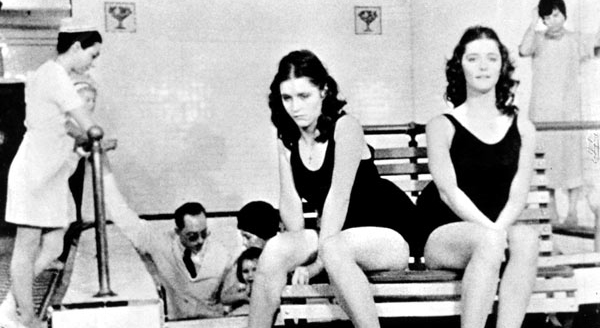 The first of Brian De Palma's onslaught of thrillers, with a wondrous score by Alfred Hitchcock collaborator Bernard Herrmann, Sisters broke new grounds with De Palma's not-as-of-yet signature split screen technique making it's foray into the world of horror. Not nearly as accepted by the general film audience as it is by the horror community (it may or may not have to do with the directors notable horror/thriller entries of Carrie, Phantom of the Paradise, Blow Out, Raising Cain) Sisters remains one of the most overlooked films in his career. The films inherent look is that of something voyeuristic, something very intimate, which actually helps the fact that the video transfer is rather lackluster. Taken from the original 35mm negative, what Criterion managed to put together was probably the best that they could do with what they were working with. At the very least it's enhanced for widescreen at a 1.85:1 aspect ratio. Audio is Dolby Digital monaural mastered from the 35mm optical soundtrack.
 There aren't much in ways of special features for this release which is unfortunate given the quality of the film. With the exception of the massive photo stills from behind-the-scenes, production and publicity shots, the rest are all text features. One of interest being an interview De Palma did around the release of the film where he discuss his influences and concerns during production of Sisters, the other being an article that appeared in Life magazine titled, Rare Study of Siamese Twins in Soviet, which inspired De Palma to shoot Sisters.
6. Repulsion
 Roman Polanski's first English movie is accepted as one of his best, and is helped by Catherine Deneuve's perfect portrayal of a woman slowly going mad. Filmed in London with unrivaled cinematography by the legendary Gilbert Taylor (Frenzy, Dr. Strangelove, The Omen, Star Wars IV) and imaginative sound design that is integral to the claustrophobic disarray that is Repulsion. It can't be stressed enough that it is the excellent cinematography and set design that makes this film work. As we follow Carol (a 22 year old Catherine Deneuve) and her almost mute performance, we experience with her the horror of her transformation. The lousy transfer in the previous North American release by Koch did not lend itself well as the film relies heavily on its visuals which is why the Criterion release for this is a must have for fans. Presented in its original aspect ratio of 1.66:1 with the Blu Ray 1080p transfer, Repulsion has never looked better. The striking black and white still retains the inherit grain (no over use of Digital Noise Reduction) and the restored transfer was approved by Roman Polanski himself. Like most titles released in this era, the audio is presented as it was originally was, a 2.0 mono format. With sound being as important as it is in the film, the Anchor Bay UK release has the film remixed in 5.1 surround so it would have been nice to have that secondary audio feature as an option.
 Unlike other studios, Criterion has the same features for both the DVD release and the Blu Ray. There is an audio commentary with Roman Polanski and Catherine Deneuve recorded separately but edited together. This commentary was originally recorded in 1994 when Criterion first released Repulsion on Laser disc. Also presented is Grand Ecran, a French television documentary aired in 1964 that was filmed on set with fantastic footage of both Polanski and Deneuve explaining the story and characters. More notably is the addition of A British Horror Film, a documentary on the making of Repulsion produced by Blue Underground in 2003. Polanski is interviewed as well as producer Gene Gutowski and cinematographer Gilbert Taylor. At 24 minutes it is rather short but a nice companion piece to the other features included.
5. Haxan
 One of the most bizarre additions to Criterion would have to be Benjamin Christensen's 1922 Swedish/Danish film Haxan - Witchcraft through the Ages. After finding a copy of the Malleus Maleficarum (The Hammer of Witches) the book describing the persecution of witches and the ill-advised notion that they do indeed exist, Christensen needed to translate the arcane depictions of witch hunting in what would become the most expensive silent film produced in Scandinavia. Told in 4 parts with varying techniques, Christensen eerily and graphically displays the persecution of witches and the religious superstition and repression of the people by the church in the middle ages. It's no wonder that this film was banned virtually everywhere when it was released. The entire film is righteously blasphemous and even for today's standards disturbing; the cooking of infants and the birthing of the devils children come to mind. Christensen himself played the devil and his execution as the pot bellied, tongue wagging fallen angel is mesmerizing. Presentation is what you would expect from a film made in '22 but Criterion's digital 'speed-corrected' transfer is superb. A 5.1 Digital Dolby surround score of the original Danish premiere by the Czech Film Orchestra is the way it's 'meant' to be heard or you can opt for the alternate and equally strange 76 minute version narrated by the eccentric William S. Burroughs with a hypnotic jazz score by Jean-Luc Ponty.
 There are several supplemental features for Haxan but nothing too tantalizing. The commentary by Danish silent film scholar Casper Tybjerg is interesting but dry. There is a still gallery and outtakes (unfortunately not as fun as it sounds) as well as something called Bibliotheque Diabolique which are photograph's from Christensen's source material. It's actually the most entertaining feature on the disc as it even includes references to Pazuzu, our good friend from William Friedkin's Exorcist.
4. Night Of The Hunter
 It's a shame that Charles Laughton only directed one movie, because Night of the Hunter is an absolute masterpiece. Based on the novel of the same name by Davis Grubb and gorgeously shot and clearly influenced by German Expressionism films of the 1920's, Laughton crafted the American idea of religion, money, sex and terror during the Great Depression. Like many great films, Night of the Hunter was a flop when it was released, and who knows, maybe that is why Laughton never directed again. Robert Mitchum gives a beguiling performance as Harry Powell, a tattooed traveling preacher and murderer who charms a widower (Shelley Winters) in order to steal the fortune her recently deceased husband has hid. When the widowers children catch on, the Preacher must hunt them down to claim his fortune but only if he can outwit farmer Rachel Cooper played by Silent Era icon Lillian Gish. Shown in its original aspect ratio of 1.66:1 and presented in a new digital transfer in 1080p on Blu Ray as well as uncompressed monaural soundtrack, Night of the Hunter is a must see on Blu Ray.
 Supplemental features are plentiful. In fact, it is more probably the most extensive collection of bonus material on any release. Disc one features a 15 minute documentary on the film featuring Robert Mitchum, an audio commentary with second unit director Terry Sanders and other notable film contributors. There is also a new documentary with Sanders alongside producer Paul Gregory, a gallery of sketches by Davis Grubb as he wanted some scenes shot as well as an archival interview with cinematographer Stanley Cortez whose work is simply formidable in Night of the Hunter. Disc two features a two and a half hour documentary titled, Charles Laughton Directs The Night of the Hunter. Once 8 hours long, this feature was cut from an enormous amount of dailies given to film archivist Robert Gitt by Laughton's wife Elsa Lanchester, the Bride herself.
3. Hausu
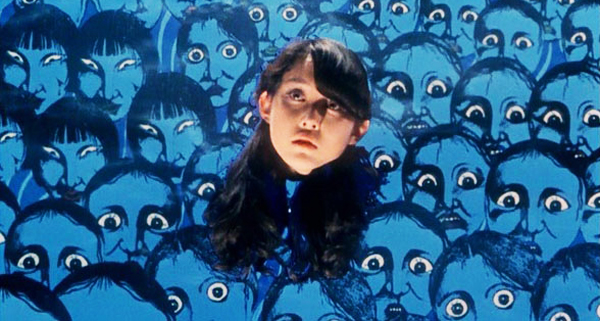 For the first time in North America, Criterion blessed us with the release of Nobuhiko bayashi's 1977 deranged masterstroke Hausu (House). Trying to describe this film to someone who hasn't seen it is an exercise in futility as bayashi throws everything AND the kitchen sink into this brilliantly orchestrated nightmare. However, the important thing that should be said about House is how Criterion summarizes the film itself on the reverse packaging of its release, like "an episode of Scooby-Doo as directed by Mario Bava". Once totting the tagline, "How Seven Beauties Were Eaten!", House's story was primarily comprised by the inventive imagination of his eleven year old daughter. Japan is known for producing off the wall cinema but what is more shocking is how Toho originally hired bayashi to create their version of Steven Spielberg's 1975 "we're gonna need a bigger boat" Jaws. How you get from Jaws to House is anyone's guess but we're glad it happened and so was Toho as it was a success. Utilizing almost every film technique in the book from stop motion, animation, crazy collages, a myriad of matte paintings and in-camera tricks galore, it's wonder to behold on Blu Ray in 1080p. Presented in 1.33:1, House was transferred from the original negative with minimal DNR maintaining it's positively surreal look. Audio is a remastered monaural soundtrack.
 There are several supplements for this release with only two being of note. The first is a 45 minute documentary called Constructing a House, with director Nobuhiko bayashi, screenwriter Chiho Katsura and Nobuhiko's daughter talking about the history of the production. More importantly, they go in depth with how most of the bizarre special effects were made. As a fun companion piece, Criterion also included a 39 minute experimental film by bayashi called Emotion. Filmed in 1966, it can be seen as a sort of stylistic precursor to House. Next is a 4 minute piece with director Ti West (House of the Devil, The Sacrament) as he unabashedly praises House for the ludicrous experimental Japanese pop-art that it is.
2. Videodrome
 This is the third David Cronenberg film released by Criterion (Naked Lunch and Dead Ringers being the others) but it's also regarded as one of David Cronenberg's best, the pinnacle of body horror. Filmed in Toronto (Cronenberg's place of birth) and taking place in Toronto, libertine cable TV programmer Max Renn (James Woods) who, in an attempt to reprogram his stations middling lineup for more ratings, stumbles upon a station called Videodrome which depicts sensationalist murder and violence. A symbiosis of flesh and machine permeates every part of this film as Cronenberg eerily predicts the future of media and our convoluted interaction with it . The original DVD release was great but fans owe it to themselves to pick up the Blu Ray as there is a notable improvement. Great clarity at 1080p, transferred from 35mm and presented in 1.85:1 aspect ratio, Videodrome has never looked better. Audio is uncompressed PCM mono track with very little obtrusive hissing. The real treat here is Howard Shore's (long time Cronenberg collaborator) engaging score which doesn't suffer from any lossless audio. Rivaling Night of the Hunter for supplemental material, Criterion doused this release with fantastic features. There are two commentaries presented, one with David Cronenberg and director of photography Mark Irwin (who consistently worked with Cronenberg until 1988), the other with actors James Woods and Deborah Harry.
 A short film directed by Cronenberg called Camera which stars Les Carlson (who played Barry Convex in Videodrome) which was produced for the 2000 Toronto International Film Festival. Disc 2 (for the DVD release of course) is where you find more interesting features. Forging the New Flesh is a half hour documentary on the makeup and visual effects with interviews from James Woods, David Cronenberg, FX wizard Rick Baker and effects supervisor Mark Lennick. Another effects feature aptly called Effects Men, is a four part audio interview with Baker and Lennick on their careers and working on Videodrome. Bootleg Video is the complete footage of transmissions from the Videodrome station in the film as well as Samurai Dreams, a soft-core porn short. There is also Helmet-Cam Test, footage of Max Renn wearing the Image Accumulator. Fear on Film which was shot in 1982 and is hosted by a fledgling Mick Garris as he moderates a round table discussion with David Cronenberg, John Carpenter and John Landis. Running at almost 30 minutes, this interview was made a time where horror was booming and Carpenter and Landis were on a high note with The Thing and An American Werewolf in London. Marketing rounds the last of the features off with several theatrical trailers, a Making of Videodrome directed by Mick Garris and a gallery mixed with production stills, promo materials and makeup tests. Finally, we have the box art itself, Criterion plays on the films motif with some unique and fanciful Betamax-esque packaging.
1. Eyes Without A Face
 Written by Pierre Boileau and Thomas Narcejac aka Boileau-Narcejac (Les Diaboliques, Vertigo) and adapted from Jean Redon's novel of the same name, Georges Franju Eyes Without a Face is a stark poetic horror-show of fantasy and beauty. A co-founder of the Cinémathèque Française, Franju had his roots in documentaries (a notable one included in this release) but his eyes were always keen on giving the fantastique genre a try and after a dozen or so years of shorts and docs, his second feature would end up being the one he would be remembered by. Disfigured in a horrible car accident, Christiane's (hauntingly played by Edith Scob) father and renowned plastic surgeon, tries to find a new face for his daughter. Tortured and motivated by guilt as he was the one behind the wheel, Doctor Genessier (Pierre Brasseur) and his assistant Louise (Alida Valli) kidnap young women in an attempt to graft their faces onto his daughters. Although we may feel pity for Christiane and her horrible circumstance, we also can't despise her father. His actions are that of love and even though he may be interpreted as a madman, we sympathize with his motives. The doctors operations are shown in graphic detail which only makes the man more of a monster but oddly enough, when the film was released a scene with him being kind to a child was removed in what can only be assumed as an attempt to mask the humanization of the character. We can't root for bad guy now can we? On top of that, when it was released in the US it was released as The Horror Chamber of Dr Faustus which only succeeds at deluding the beauty and complex narrative of Franju's movie.
 Features are relatively light compared to others (it's number one spot was heavily influenced by the quality of the film). The documentary Blood of the Beasts is a visceral look at the slaughterhouses of Paris that Franju made in 1949. Juxtaposed with beautiful scenery of Paris and the graphic slaughtering of animals, some may find it to be far more disturbing and uncomfortable to watch than the film itself. Complimenting this are excerpts from Les Grands peres du crime which is a documentary with the writers of the film and an archival interview with George Franju where he talks about the genre of horror and cinema as a whole.
What would your top 10 be? Let us know in the comments below.