10 Controversial Documentaries Since 2000 That Shouldn't Be Ignored

Because controversy begets controversy.

Controversy begets controversy. Films - and in particular, documentaries - about contentious subject matter often provoke even more of it, with those outed in the movie - whether they be corporations or religions or just sole people - eager to defend themselves, to denounce the filmmakers and and instead level at them some of their own controversial claims. These are the best kinds of documentaries, the most important ones, and history is rife with them. It just so happens, then, that the last decade or so has seen the genre of controversial documentaries flourish, with countless examples of them flooding the zeitgeist with since the year 2000. It can be said that this period has been the greatest ever for films of the kind, and we've picked ten essential ones out that must not be ignored. Ranging from exposes on beloved institutions, to family dissections, to issues on a global scale, this list will doubtless provide you with some of the most controversial documentaries of the last fifteen years.

10. Enron: The Smartest Guys In The Room

The story of the corporate crime of the century - and the defining one of the digital era - Enron: Smartest Guys in the Room sees director Alex Gibney's first of two entries on this list. Focusing on the infamous collapse of energy company Enron, which went from a billion dollar corporation to bankrupt in some 24 days (though obviously it is nowhere near as straightforward as that), Gibney collates a wealth of material - talking-heads, company footage, stock-footage - to present the downfall of a company which was ultimately the victim of it's own hubris. This really is a Greek tragedy. While ostensibly a political story, the Enron narrative ends up as something closer to a crime, with people like the deplorable former CEO and President of Enron, Jeff Skillet, and CFO, Andrew Fastow, coming across as film-style monsters, stealing from the poor to give to the rich. A little too on the nose with some of it's metaphor-making stock footage, Enron is otherwise a tempered, studied affair, one which breaks the downfall down into digestible chunks of information which highlight exactly how cunning Enron were (or at least thought they were) in their deceptions. A disaster which caused incalculable loss, Gibney's film (and the book of the same name which it is based on) is a quintessential part of a saga too often overlooked in the history of America's great controversies.

9. Bowling For Columbine

The film which won its firebrand director, Michael Moore, an Oscar for Best Documentary Feature, Bowling for Columbine is the definitive text on the case against gun ownership in America. Most famous for its harrowing video-footage of the Columbine High School massacre - in which two disillusioned teenagers opened fire on fellow students before taking their own lives - Bowling for Columbine is unflinching in its approach. Full of inspired set-pieces - Moore taking two victims of the massacre to Kmart, where the bullets still lodged in their bodies were purchased, to ask for a refund - Bowling is as satirical and humourous as it is disturbing and difficult. Indeed, the film was so powerful that, on Moore's third visit to Kmart, the company announced that it would stop it's sale of ammunition altogether. Always a partisan, Moore is never anything less than full on, something which works for the most part but can become uncomfortable at times, as when Moore is badgering former actor and former NRA President, Charlton Heston, a morally dubious man, yes, but nevertheless a sick, old man who doesn't really know what's going on. That issue aside, Bowling for Columbine is a stark rebuttal of America's obsession with guns, one which sadly still feels prescient.

8. The Jinx: The Life And Deaths Of Robert Durst

A six-part series which aired earlier this year on HBO, The Jinx (subtitled the Live and Deaths of Robert Durst) profiles affluent businessman, Robert Durst, a beguiling, enigmatic figure suspected in a series of murders. Part reconstruction, part talking-head interview, The Jinx bears great similarities to Errol Morris' influential The Thin Blue Line, both in its blend of fact and fiction and also in it the way that both have had an impact on the actual events of the real-life investigations at their centre (The Thin Blue was partly responsible for the acquittal of Randall Dale Adams, the man whose murder-charge the film was about, whereas Durst was arrested by the FBI on a charge of first degree murder as a result of new evidence presented in this miniseries). Directed by Andrew Jarecki (whom we will see again later), The Jinx makes for perhaps the most engrossing film on this list, with the filmmaker and his crew granted extraordinary access to Durst himself in the later episodes. By turns charming and repellent, Durst is one of the most fascinating creatures on show in any documentary, and by getting his own viewpoint we are drawn into his warped psyche and forced to make or own decisions about his ambiguous case (The Jinx turns the viewer into a kind-of detective). Most notable for its WTF ending - in which a still micro-phoned Durst appears to unwittingly confess to the killings while in the bathroom and talking to himself - The Jinx is a harrowing depiction of a man who may or may not be a murderer. The controversy of this one is as open-ended as it comes.

7. Blackfish

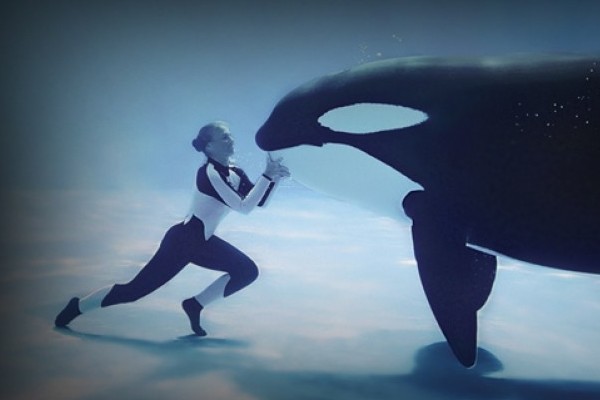
The film which began the steep decline in popularity and revenue for sea life attraction centre, SeaWorld, Blackfish follows the controversial captivity of Killer Whales (Orcas) by the company, and how said captivity can be devastating to both the whales and the trainers who care for them. Centring around one key SeaWorld attack by a whale on a human, Blackfish builds a formidable case against the company, and while Seaworld consistently refutes the film's messages and depictions, the overwhelming evidence against them is damning. Since Blackfish's release in 2013, SeaWorld has seen a near $16 million loss, and, as of November, 2014, a near 50% drop in stock. Moreover, the company has repeatedly been caught-out trying to rig opinion polls and surveys in its favour to suggest that SeaWorld is still immensely popular. One of the few documentaries in history to influence actual legislation as a consequence (June 2014 saw Congress attach an amendment to the Agriculture Appropriations Act, requiring it update the Animal Welfare Act in regards to aquamarine mammals), Blackfish is a timely reminder of the power documentaries can have in uncovering, and creating, controversy.

6. Capturing The Friedmans

Probably the most challenging, disturbing documentary on this list (and the second entry from director Andrew Jarecki), Capturing the Friedman's shows the drastic disintegration of the Friedman family, whose lives come crashing down when it transpires that father and son, Arnold and Jesse Freidman, the former of whom was a children's entertainer, have both committed child molestation. Jarecki, inititially making a harmless short film about child-entertaining clowns, was led to the Freidmans when Arnold's brother, a clown named Silly Billy, informed the director of his family's haunted history, most of which was captured on home video. A horror-story that has the added misfortune of being true, Capturing the Friedmans was nominated for Best Documentary Feature at the '03 Academy Awards, a nomination protested by the Friedmans' alleged victims and their families.

5. The Act Of Killing

One of the most bizarre, inventive, thought-provoking documentaries ever made, Joshua Oppenheimer's The Act of Killing (co-directed by an anonymous Indonesian) challenges former Indonesian death-squad members to re-enact their torturous killings in the guise of a cinematic genre. This leads weirdly - hauntingly - to a film of murderers acting out their proverbial greatest hits while acting like 30s gangsters or 80s action heroes. It's an ingenious setup, one that not only asks questions about the nature of cinematic violence and its relation to actual, human violence, but also one that confronts the murderers with their own sins, forcing them to confront their own morality in the face of what they have done. Capped off by one of the great endings in modern cinema (in any genre), The Act of Killing ends with Anwar, the general with whom we spend most time throughout the film, retching in a courtyard as he describes how he killed a man there. The sound he makes, that of vomit that won't come up because his insides are arid and baron, is one of the most atonal, discordant, horrific soundbites in all of film.

4. The Fog Of War

The film which finally landed director Errol Morris an Academy Award, The Fog of War (subtitled: Eleven Lessons from the Life of Robert S. McNamara) sees its subject, former US Secretary of Defence, Robert McNamara, talk about his work and what he has learned from a life lived in the midst of war. From Korea, to Vietnam, to the current War on Terror, McNamara, supported by Morris' unrivalled craftsmanship and collation of material, illuminates the documentary with melancholy truths about his own failings, specifically in relation to America's involvement in Vietnam (McNamara is often cited as the architect of the war there). A dense examination of one of the most controversial periods in American history, The Fog of War bursts free from its talking-head setting to become a rich and human characterisation of one of America's most divisive war-time figures. Meticulous and masterful, this documentary proved that Errol still had his inimitable finger on the pulse of America's bleeding heart.

3. Fahrenheit 9/11

One of only two documentaries to win the prestigious Palme d'Or at the Cannes film festival (Silent World the other, in 1956), Michael Moore's Fahrenheit 9/11 received what is said to be the longest standing ovation in the event's hallowed history when it triumphed there in 2004 (different reports have it at somewhere between ten and twenty minutes). A scathing, highly emotive, contentious (its facts have been questioned) take down of the Bush administration after the terrorist attacks of 9/11, Fahrenheit sees Michael Moore go even more partisan in his beliefs that the American government were more concerned about keeping the Saudi's happy after the atrocity than they were the American people - with Moore also lambasting the US's decision to invade Iraq, which he saw as a blatant attempt to further their business interest in regards to oil. As with Bowling for Columbine, Moore finds the "human angle" of the War on Terror, seeking out certain individuals (a mother who lost her son in Iraq, a former soldier disillusioned by what he saw there) to add weight to his full-steam-ahead attack on Bush, Rumsfeld, Cheney, and co. Say what you like about Moore's tactics (subtle he ain't), but they work, and in Fahrenheit 9/11 he has his controversial masterpiece.

2. Going Clear: Scientology & The Prison Of Belief

Back to director Alex Gibney now, who really is one of the great modern documentary filmmakers. His film here, Going Clear: Scientology and the Prison of Belief - based on the book of the same name - is one of the most controversial of recent times, so much so that most American networks, in fear of the "religion's" (read: cult's) belligerent nature, refused to licence the film, something the director found "astounding". A complex, in-depth look at the Church of Scientology and its founder, L. Ron Hubbard, Gibney's film is brimming with enlightening interviews with those who've turned their back on the religion (hereinafter referred to as a cult), most notably film director, Paul Haggis, who reached the upper echelons of the cult's "level" based system before realising it was a sham. (The filmmakers were denied access to the most famous of all Scientologists, Tom Cruise, who is featured heavily in archive footage which paints him as a bona-fide weirdo, at one point addressing thousands of devotees while draped in a plate-sized gold medal with a green strap as thick as the width of his shoulders.) Heavily criticised and refuted by the Church (something which proves the film's power), the film sparked a multitude of responses from the cult, who even went so far as to open a twitter account dedicated to steering people towards anti-Going Clear material.

1. Citizenfour

The current holder of the Academy Award for Best Documentary Feature, Laura Poitras' Citizenfour is one of the most important films ever made in America. Telling the story of the secret messages she received from one Edward Snowden (codename: CITIZENFOUR), Poitras, along with journalist Glenn Grewald, charts the journey from those coded messages to the pairs sprawling interview with the whistle-blower as he's holed up in a Hong Kong hotel; Snowden wanted for extradition to the States where he was responsible for the NSA privacy scandal, the biggest leak of government information in American history. Part conspiracy thriller, part expose on the powers of virtual control, and wholly relevant as a treatise on the nature of spying in the digital age, Citizenfour is an expertly crafted masterwork, one which confronts our own fears in relation to those we entrust to protect us. The film ends as it begins, with Snowden alone and isolated in the The Mira hotel, Hong Kong. Something's changed, though, and as the films eerie denouement plays out, we sense that we as a people know a little more about a power-addicted government who can track every keystroke we ever make. In that sense, Citizenfour and Snowden give a little fraction of power back to the people. And for that, the film is invaluable. Which other important, controversial documentaries deserve to be on this list? Share your favourites below in the comments thread.

Contributor
Contributor

No-one I think is in my tree, I mean it must be high or low?