10 Conspiracy Movies That Will Make You Paranoid
"Don't be afraid."

Few genres have managed to capture a zeitgeist quite like the conspiracy thriller. Although a persistent presence in the medium for decades prior, the genre only emerged as a real force during the 1970s, an American decade mired in distrust, crime, and Watergate.
And while 'paranoia' would denote a sense of the irrational - a fear to be dismissed as an intangible reality - the works of Alan Pakula, Francis Ford Coppola and others during that decade were as much reflective of that zeitgeist as they were adept at tapping into those timeless, almost imperceptible fears every person has. Their films resonate not just because they were masterful in conveying dread, but because they encapsulated the anxieties of an era that, for better or for worse, still manages to shape the world to this day.
That does not mean, however, that conspiracy thrillers are the unique preserve of Nixon's America. While that milieu certainly inspired some of the prevailing themes of the genre, or at least amplified them, filmmakers find themselves returning to it time and again, whether to pay homage, like in the Russos' Captain America: The Winter Soldier, or to tap into a resurgent malaise, like 1998's Enemy of the State.
At the very least, however, you can guarantee they'll have you looking over your shoulder more times than usual...
10. Marathon Man

Marathon Man, the 1976 John Schlesinger thriller about a history student caught up in a Nazi conspiracy, is one of the best in the genre.
Starring Dustin Hoffman, Roy Scheider, William Devane and Laurence Olivier in an Oscar-nominated performance, the film (based on the novel of the same name), exemplifies all there is to love about the seventies' love-affair with conspiracy thrillers, adopting a decidedly more violent tone to drive home its horror. Olivier, in particular, is absolutely bone-chilling as the story's Nazi war criminal, bringing his talents to bear in an excruciatingly painful torture sequence that would delay anyone's next visit to the dentist.
It was immediately controversial upon its release, but the real terror of Marathon Man lies in the way it's shot. It follows in the footsteps of Alan Pakula's 'Paranoid Trilogy', intimating an eerie atmosphere that refuses to subside up until the film's admittedly unfaithful ending, and while villains don't get any more clear-cut than, y'know, actual Nazis, the film derives its suspense from the deception of its leading characters; you, like Babe, never know who can be trusted.
Throw in a score composed by Michael Small, and you have one of the seventies best - and most iconic - conspiracy thrillers.
9. Enemy Of The State

Although the genre in its current form owes much to the works of Paul Greengrass and his seminal Bourne series, it was Tony Scott's Enemy of the State that truly marked the genre's modern-day resurgence.
Buoyed by renewed interest thanks to films like The Pelican Brief and The Firm (each directed by genre pioneers Pakula and Sydney Pollack), Enemy of the State attempted to lay bare anxieties surrounding advancements in electronic surveillance and corruption in America's intelligence community. It was even heralded as a spiritual successor to Francis Ford Coppola's 1974 work, The Conversation, thanks in part to the presence of Gene Hackman, who plays a former intelligence operative determined to save Robert Dean (Will Smith) from the clutches of a corrupt NSA outfit.
Like Coppola's film, Enemy of the State roots itself primarily in anxieties surrounding surveillance technology. It's far less effective than that film, granted, and it's Bruckheimer-inflections are plain for all to see, but there is something genuine about the film, which grounds itself well thanks to Will Smith's portrayal of an ordinary guy caught up in extraordinary circumstances.
8. Three Days Of The Condor

There is no star more synonymous with the conspiracy genre than Robert Redford. The actor, who would go on to star in Alan Pakula's adaptation of Bob Woodward and Carl Bernstein's account of the Watergate affair in All the President's Men, starred in another of the genre's most iconic films in Sydney Pollack's Three Days of the Condor, a film based on the Six Days of the Condor novel.
Released during the 'Year of Intelligence', a period which saw intense public scrutiny fall under the CIA and FBI, Three Days was very much a product of its time, reflective of those anxieties much like other thrillers of the period. It's no less resonant today however, with its story of CIA corruption, assassination and conspiracy ticking all the boxes when it comes to matching the genre's best efforts.
The film, along with other works of the period, even inspired 2014's seminal superhero thriller Captain America: The Winter Soldier, with Redford again returning to the genre he so stylishly entered four decades earlier as the head of S.H.I.E.L.D.
The true strength of Three Days lies in how helpless it makes the audience feel; you truly get a sense for how Redford's character is battling against one of the most intricate and efficient intelligence apparatuses in the world, and, in light of the scandal that was then befalling America's own, Three Days' horror only hits closer to home.
7. The Insider

One of the true horror stories of our time that most people seemingly haven't heard of is the one involving Jeffrey Wigand and Brown & Williamson, a whistleblower who lifted the lid on the American tobacco industry and the methods they went to make a more addictive - and dangerous - cigarette.
The Insider, Michael Mann's 1999 drama detailing those events, makes for sobering viewing. Starring Al Pacino as Lowell Bergman, a journalist for CBS' famous 60 Minutes, and Russell Crowe as Wigand, the film depicts Bergman's investigation and the subsequent harassment Wigand endured at the hands of his former employers. He's targeted maliciously, made to fear for his life, and he still comes through, in the end, having been subjected to the full might of one of the country's most powerful industries.
It's a film made in the Pakula mould, and while the validity of Wigand's claims of harassment have been drawn under close scrutiny in subsequent years, it in no way nullifies the tension that dominates Mann's film.
6. The Parallax View

The second entry in Alan Pakula's Paranoid Trilogy is perhaps its weakest, but it's no less unsettling in its approach.
Released in the wake of the Warren Commission and in the run-up to the House Select Committee on Assassinations, Parallax roots itself squarely in anxieties surrounding the high profile deaths of JFK, his brother Robert and Martin Luther King. Conspiracies abounded, and Parallax - starring Warren Beatty in the leading role - is a conspiracy film through and through, featuring reporter Joseph Frady as he uncovers an international cabal dedicated to assassinating leading political figures.
The atmosphere created by Pakula is uniquely unsettling, with Parallax playing out like some weird distortion of an action film and less as a traditional thriller. There's still dread, and Pakula's story is just as unnerving as his others, but it's a different kind altogether, exemplified in full by the horror of the film's infamous montage sequence, which is always worth a watch regardless of whether you're yet to see it or not.
Oh, and that ending is fantastic. Terrifying, but fantastic all the same.
5. Blow Out

Brian De Palma's spiritual successor to Blowup (and in a way the Conversation too), is one of the director's best, and a conspiracy film bound to get even the steeliest of viewers shuddering with nerves.
Centred around a sound effects technician (John Travolta) who unwittingly records the murder of an aspiring presidential candidate, Blow Out has become a veritable cult classic, embodying the spirit of early Hitchcock while also following in the footsteps of seventies-era conspiracy fiction. It's just a great film and one that also manages to capture a really unsettling atmosphere that poses a constant threat from start to finish.
Despite garnering a positive critical reception, Blow Out struggled to find an audience during its initial release. It has since, however, gone on to develop something of a cult following, and with it being as spine-chilling as it is, it's easy to see why.
4. JFK

Oliver Stone is about as divisive a filmmaker as you can get, but there's no denying that JFK - his adaptation of Jim Garrison's book, On the Trail of the Assassins - is really quite special.
Part political thriller, part courtroom drama, JFK captured the attention of those who always felt there was more to the assassination of the 35th President than met the eye. It was embroiled in controversy right from the very get-go, but regardless of its inaccuracies, Stone's film makes for a suspenseful watch. Costner is convincing as the controversial Garrison, a New Orleans D.A. determined to prove the conspiracy that ostensibly felled Kennedy, but there are others - such as Donald Sutherland and Tommy Lee Jones - who make the film even better.
There's something almost unnerving in the way Stone, and by extension Garrison, assemble their case for a conspiracy having been responsible for the President's assassination. It might be riddled with inaccuracies, inconsistencies and certain contrivances, but the film was a cultural phenomenon, sparking renewed interest in the deliberations of the Warren Commission and with it JFK's death.
No matter your thoughts on the Kennedy assassination, Stone's film is worth watching for its assemblage of Garrison's work as well as for its cultural salience. That and Donald Sutherland is magnetic as Mr. X.
3. All The President's Men
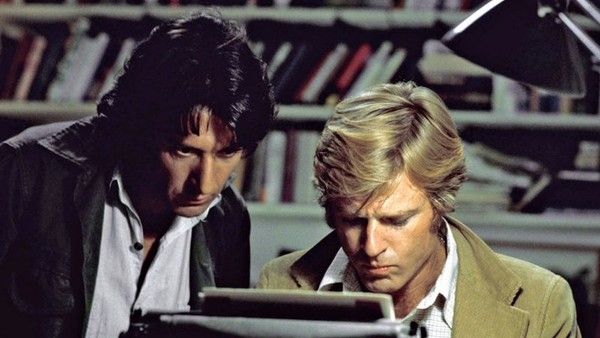
Plenty of conspiracy films lend themselves well to fiction, but with All The President's Men, its fear lies in its accuracy.
Alan Pakula's finale to the Paranoid Trilogy is an adaptation of Bob Woodward and Carl Bernstein's novel of the same name (the Washington Post journalists who first investigated the Watergate scandal), and in many ways, it's actually the trilogy's most terrifying work. That stems from the fact that pretty much all of the film follows the actual history of the Watergate affair, right through to Richard Nixon's resignation in 1974.
The film itself is Pakula's finest work, as the director lays bare the machinations of Nixon's 'plumbers' and the threat that loomed over Woodward and Bernstein during their investigation. Also commendable is Hal Holbrook, who plays 'Deep Throat', the FBI informer later revealed to be Mark Felt, who helped the reporters break the case.
All the President's Men is the quintessential conspiracy epic and one that proves that the most effective type of terror is the kind derived from real history.
2. Klute
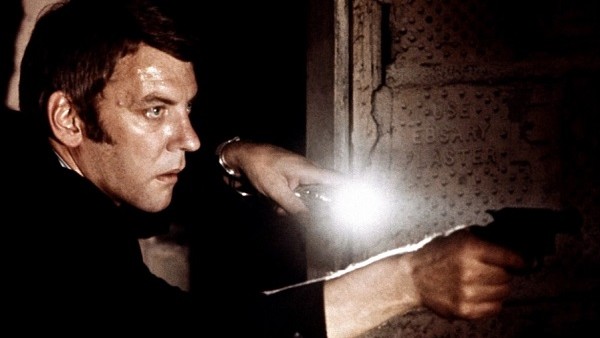
There are few scores more haunting than the one Michael Small composed for Klute, and it's to his credit that Pakula's first thriller remains one of the director's best.
Released in 1971, the same year the Citizens Commission to Investigate the FBI broke into the Bureau's Pennsylvania offices, and as its practices of surveillance and harassment gripped the public's attention, Klute stood out as one of the decade's first truly authentic thrillers.
Centred around the eponymous PI John Klute (Donald Sutherland) as he investigates the disappearance of a wealthy businessmen, an investigation that brings him into the path of sex-worker Bree Daniels (Jane Fonda, herself a victim of Bureau harassment), Klute ticks all the boxes when it comes to suspenseful cinema; it has an eerie score and a bone-chilling atmosphere to match, compelling performances from its leads and an anti-establishment undertone that set a precedent for other works in that genre.
What the film does so effectively, however, is orchestrate its own kind of paranoia. You can't help but feel helpless in so many of its moments, but equally, that's just what good - nay, great - thrillers do.
1. The Conversation
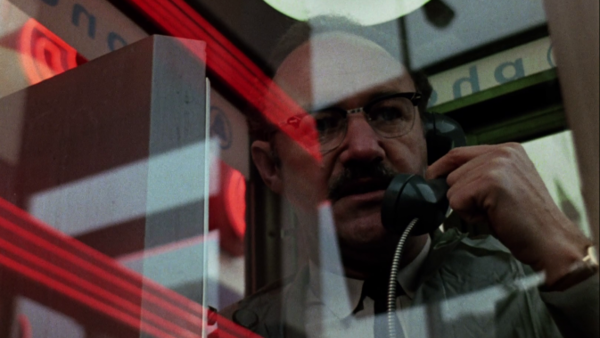
The real tragedy of The Conversation isn't its ending (which is devastatingly effective), but the fact it released the same year as The Godfather Part II.
1974 was the year Francis Ford Coppola took the Academy by storm, and while The Conversation was well received, its Blowup-style tale of a surveillance contractor uncovering a conspiracy stood no chance of matching the drama of the Corleone family.
That isn't to say that Coppola's other 1974 classic wasn't well received either - it was. During awards season, The Conversation was nominated for three Oscars (including best picture) and five BAFTAs, and while awards alone won't intimate the film's genius, it does go some way in illustrating just how magnificent Coppola's critique of the Watergate era truly was.
Following the exploits of Harry Caul (Gene Hackman), an isolated surveillance expert with a shady past caught up in even shadier circumstances, The Conversation excels in driving home the terror of surveillance technology. Bugs, wiretaps and more are all used to devastating effect, and in driving home the point that nowhere - not even your home - is safe, The Conversation is a tour-de-force in storytelling excellence.
What conspiracy thrillers manage to get under your skin? Be sure to let us know in the comments below!