10 Completely Unexpected Films By Famous Directors
Because Clint Eastwood's films can't all be cowboy movies.
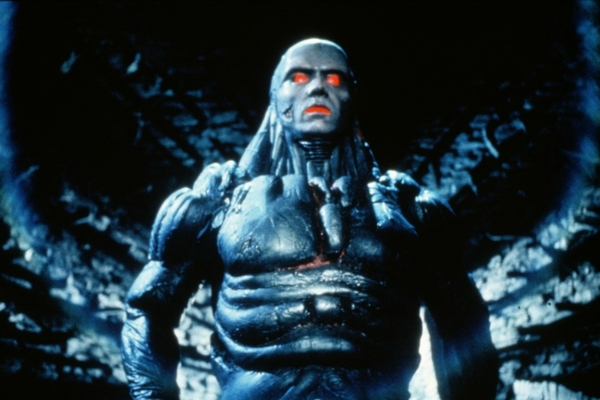
Some famous moviemakers - think the likes of Steven Soderbergh and John Boorman - have throughout their careers prided themselves on exploring a plethora of genres and styles. Those are the types of director it's virtually impossible to pin down.
But they're rare - most filmmakers, including the great ones, have a tried and tested formula that leaves fans knowing more or less what to expect. Just look at Wes Anderson - he hasn't ventured outside of whimsical, high-stylised comedy yet, and there are no signs he intends to leave his comfort zone any time soon.
However, there are other directors, who, though fairly consistent in their choices of project, every so often like to go off-roading and do something entirely different.
Here are ten completely unexpected films from famous directors you wrongly thought you had pegged.
10. Hugo - Martin Scorsese's 3D Kids' Film
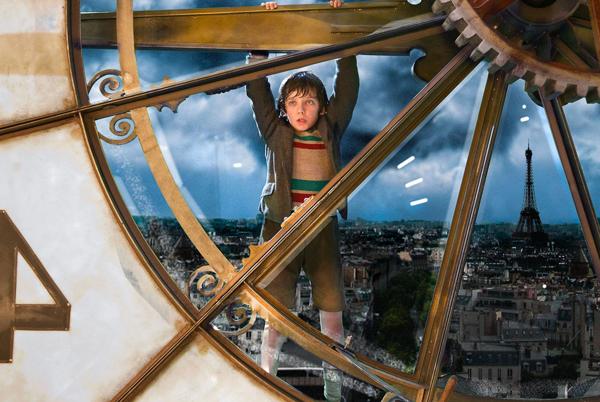
Martin Scorsese is known as the director of gangster movies, which is unfair - of the 23 features he's made, only five have explicitly been about gangsterism. His reputation as a purveyor of violence is earned, though; from low-level mob movie Mean Streets, through boxing drama Raging Bull and religious fable The Last Temptation Of Christ, all the way up to his latest, Silence, Marty hasn't held back on spilling the claret, whatever the genre.
He's a man who's only ever made movies with an adult audience in mind. Except for that time he did Hugo, a 3D extravaganza and G-rated fantasy about a boy who lives in a clock, has a broken automaton for company, and who befriends cinematic legend George Melies after bumping into him in a French toy shop.
Hugo's a major departure for Scorsese - anyone coming to the film fresh would have no idea the filmmaker behind Taxi Driver had it in him to make something so warm, friendly and colourful - but there are still hints as to the author, particularly in the film's passion for cinematic history.
9. Hulk - Ang Lee's Superhero Movie
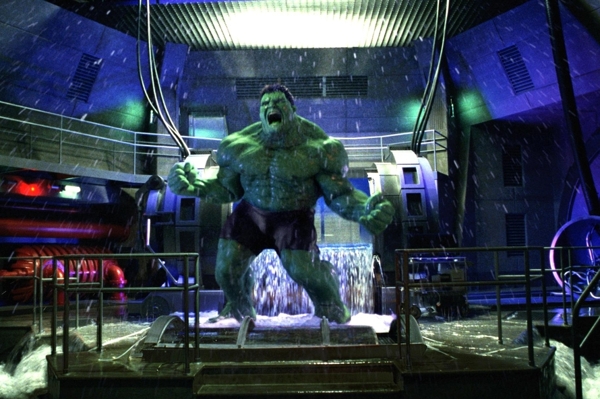
You can see why Universal decided to hand their Hulk movie over to Ang Lee. After considered, glacially-paced dramas like Sense And Sensibility, The Ice Storm and Ride With The Devil, it really must have seemed like there was no one else that could have taken the reins.
Sarcasm aside, the decision to give Lee the pre-Marvel Studios Hulk film pre-empts the now in-vogue predilection for seeking out auteurs to helm comic book projects. But even now, Ang Lee taking on Hulk seems like a peculiar move - Lee and comic book movies was never all that ideal a fit, something that was strongly evidenced when Hulk was released in 2003 as a talky superhero saga with questionable effects.
Since Hulk, Lee has gone back to doing what he does best, dropping a couple of masterpieces in Brokeback Mountain and Lust, Caution, and an Oscar favourite in Life Of Pi.
His post-Hulk filmography might have looked slightly different, however, had Hulk been a bigger success - Lee and writer James Schamus were apparently prepping a sequel until the plug got pulled.
8. The Curious Case Of Benjamin Button - David Fincher's Gump-ian Fairytale
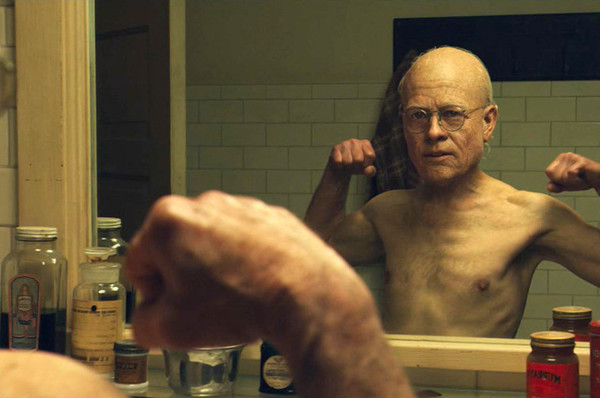
The Curious Case Of Benjamin Button is exactly what you'd expect from Eric Roth, the writer of Forrest Gump - basically because Benjamin Button uses the same 'unique soul lives through historical events', quasi-fantasy template all over again. What's less obvious, though, is who's behind the camera.
Aesthetically, Benjamin Button still looks like a David Fincher movie, the green-gold-brown chiaroscuro photography providing the biggest clue as to who's at the helm. But otherwise, this is distinctly un-Fincher, being not dark, grimy and violent like his most famous work (Se7en, Fight Club, Zodiac), but sentimental, magical, and near-enough family-friendly. It's almost as though Fincher spontaneously grew a soul whilst making Benjamin Button, and actually grew attached to his characters for a change.
He lost it shortly after, obviously, following Button up with stinging nihilist's biopic The Social Network and horror-thriller The Girl With The Dragon Tattoo, so The Curious Case Of Benjamin Button now sticks out like a sore thumb amidst the Fincher filmography.
7. The Straight Story - David Lynch's Quirky Disney Dramedy
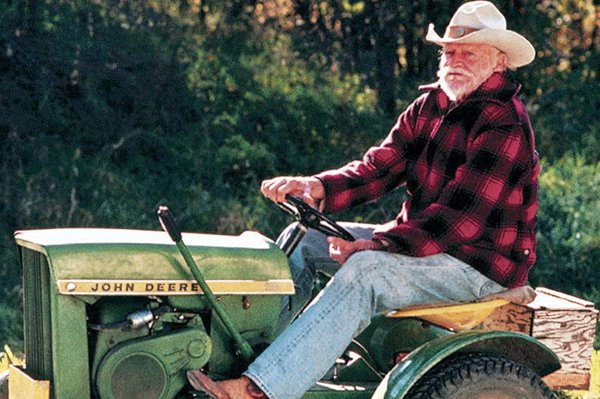
The sight of an elderly man riding a lawnmower across America to visit his dying brother in a dramedy backed by Walt Disney Pictures would typically send most cineastes scurrying for the hills. Rarely has a movie on paper sounded more twee and self-consciously quirky than The Straight Story. Except it becomes much less so when you factor in the director: David Lynch.
Yes, seemingly made as some kind of palette cleanser in between the oneiric madness of Lost Highway and Mulholland Drive, The Straight Story is Lynch's ode to Alvin Straight, an Iowan WWII veteran who really did travel 240 miles on a lawnmower to be by the side of his ailing brother in 1994. It's not quite Lynch's only biopic - he made The Elephant Man early in his career after all, though even that didn't quite break away from Lynch's penchant for dream logic and adult themes.
The Straight Story is a departure in that the whole thing is supposed to be set in reality; Lynch called it his "most experimental movie", which should offer some indication of how normal it is.
6. The Bridges Of Madison County - Clint Eastwood's Middle-American Romance
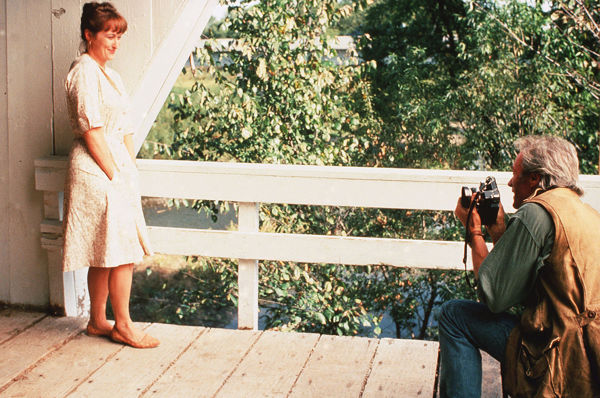
"This romantic stuff is really tough. I can't wait to get back to shooting and killing." Clint Eastwood there on 1995's The Bridges Of Madison County, a film he directed seemingly after he lost some kind of Hollywood bet, because there's basically nothing tough or otherwise traditionally Clint Eastwood about it.
Starring Meryl Streep as a lonely housewife and Eastwood as the visiting photographer wooing her into an affair, The Bridges Of Madison County is basically the antithesis of every other Clint Eastwood movie. Achingly romantic and lovingly lensed where the likes of Unforgiven, Mystic River and Million Dollar Baby are gritty, murky and generally full of death, Madison County is so uncharacteristically thoughtful you question whether Clint Eastwood is really a natural gun-slinging man's man at all.
Like a secretly sensitive jock ashamed for revealing his feminine side, Eastwood returned to making macho films in 1997 with the thriller Absolute Power and never looked back.
5. Punch-Drunk Love - Paul Thomas Anderson's Adam Sandler Comedy
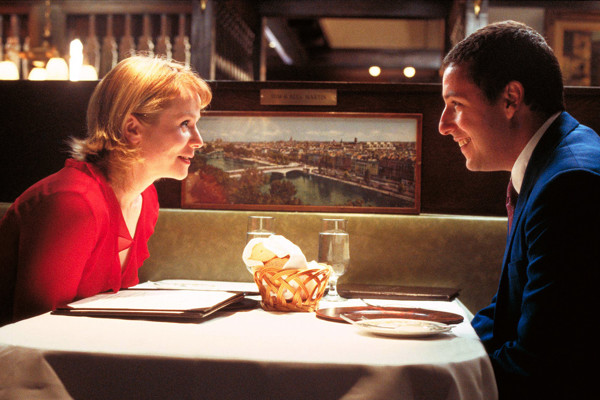
After Boogie Nights, Magnolia, There Will Be Blood, The Master and Inherent Vice, it's fair to say that Paul Thomas Anderson is one of the greatest - if not the greatest - American filmmaker working today. His films are mature, character-driven, technically immaculate, often visually-stunning pieces of work. So what the hell was he thinking when he made an Adam Sandler comedy?
First announced at a press conference whilst promoting Magnolia at the Cannes Film Festival, journalists actually laughed off Anderson's claim that his next film would be a rom-com starring Sandler, because, given the enormous gap in quality between the two men's films, that is a genuinely hilarious joke. Turns out Anderson was entirely serious, and the result was one of Anderson's best movies, not to mention Sandler's best ever film by a fair distance.
Punch-Drunk Love may be unlike anything else Anderson has so far made, but it is characteristically hypnotic and well-made, plus it has an enigmatic sort of symbolism and depth that's unlike any other film.
4. A Dangerous Method - David Cronenberg's Straightforward Period Piece
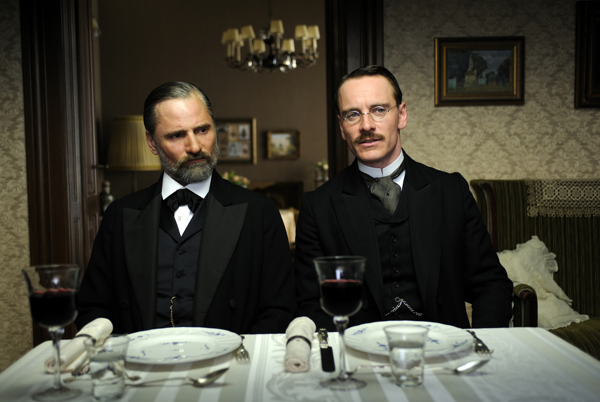
Cronenbergian is not a term reserved for filmmakers of the faint of heart. 'Cronenbergian' conjures up images of James Woods reaching into the hole in his stomach for a handgun, of Jeff Goldblum dissolving a man's hand with his acid vomit, of automobile fetishists making love (polite euphemism) to a woman's leg wound. It was surprising, then, when the man who spawned this term decided to give the violence and the ick and the psychological assaults a miss in 2011.
That was the year that saw the 19th David Cronenberg movie unleashed, and what would be that Canadian monster's latest gift to the world be but a fairly standard period piece about Sigmund Freud and Carl Jung. Instead of being infused with uncomfortable psychology, A Dangerous Method is a movie about psychology, specifically its modern foundations.
Michael Fassbender and Viggo Mortensen chew the fat as Jung and Freud, and aside from scenes of Fassbender trying to spank Keira Knightley's damaged patient back to sanity, the film is conventional, talky and a little bit, well, dull.
3. The Keep - Michael Mann's Occult Horror Movie
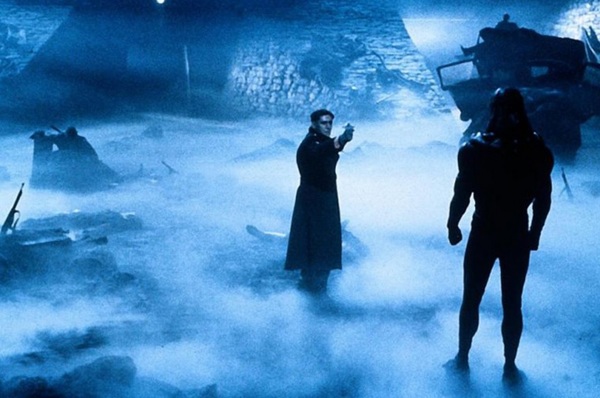
At the beginning of his cinematic career, before he'd even shot a frame of film, Michael Mann had a reputation as a crime guy. Prior to writing and directing his first feature, Thief, Mann had worked as a director and screenwriter on TV shows like Starsky and Hutch and Police Story, while his big break came with creating detective show Vega$ in 1978.
Then Thief came around in 1981 and confirmed that Mann's interest in the criminal world would follow him to the big screen, paving the way for crime classics such as Manhunter, Heat and Collateral later on down the line. But following up Thief with his second film in 1983, Mann veered in another direction entirely - full-throttle towards pulpy occult horror territory.
The Keep currently can't even be found on DVD in the UK or US, which would explain why so few have even heard of it - not to mention the fact it isn't something Mann looks upon as his finest hour. But if you want to see an evil ancient entity named Radu Molasar battle Nazis and a magical Scott Glenn, consider this your latest eBay mission.
2. Bad Lieutenant: Port Of Call New Orleans - Werner Herzog's Nicolas Cage-Starring Cop Procedural
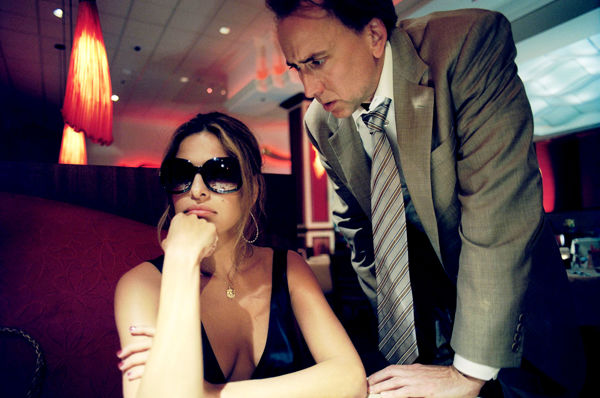
There are few directors quite as 'out there' as Werner Herzog, a man who once saved Joaquin Phoenix from a car crash before running away, who ate his own shoe because he lost a bet, who continued an interview with Mark Kermode despite being shot. Herzog's films reflect such eccentricity; they're almost invariably about some form of madness, or about extreme personalities doing odd things.
On paper, Herzog's 2010 movie Bad Lieutenant: Port Of Call New Orleans seemed like everything the director had avoided throughout his career. Starring Nicolas Cage, a Hollywood actor who of late had just been acting for the paycheck, and based on an existing cinematic property, making it a sequel/reboot of sorts, Port Of Call New Orleans was written like a slightly higher-quality episode of a TV cop drama.
Of course, Herzog managed to sneak in some of his own offbeat personality (singing iguanas and breakdancing corpses feature), and allow Cage a brief vacation from himself so he could give an engagingly madcap performance, his best in years.
1. Miss Marple: Nemesis - Nicolas Winding Refn's Miss Marple Movie
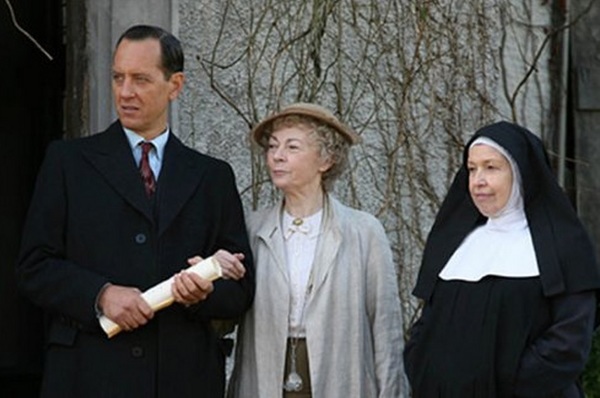
It sounds like a report by The Onion that accidentally got misinterpreted as fact, but it's true - Nicolas Winding Refn, back in 2007, really did direct a Miss Marple movie. Entitled Miss Marple: Nemesis (which sounds like an appropriate subtitle for a Refn film), Refn directed the feature-length episode in between completing his ultra-violent Pusher trilogy and writing and directing Bronson.
A bit of background: Refn was apparently strapped for cash at the time, having been made bankrupt by his self-funded box office bomb Fear X, so a paid hack-for-hire gig like Marple was a blessing. He doesn't like to discuss it - "I did Miss Marple because I needed the money, pure and simple", is his most enduring line on the Marple movie. And why wouldn't that be his attitude?
Nicolas Winding Refn is a director of hyper-stylisation and violence, more at home stomping heads and greasing Tom Hardy up for a brutal naked fight than guiding Geraldine McEwan through a doddering English teatime mystery.
Which completely unexpected movies by famous directors did we miss off the list? Let us know in the comments below.