10 Comic Book Creators Who Hate Comic Book Movies

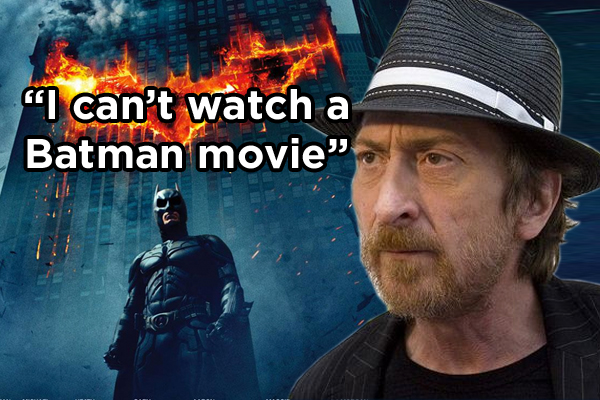
Frank Miller really doesn't like The Dark Knight.
Comic books have been infiltrating worldwide cinema screens for decades and in the last few years, we€™ve seen more moviemakers than ever attempt to bring those primary coloured panels from the pages of comic books to the shiny sheen of the silver screen. In this day and age the right comic book property, with the right film director attached, can quickly become a license to print money.

But this does come with a cost, at times - not every comic book creator likes seeing their work fiddled en route to the cinema. Changes are often made, in the name of creative licence, which can lead to a falling out between the originator of the material and the filmmaker that€™s trying to wrangle it into a two hour film.

Writers and artists still often support the films based on their comic book creations, no matter what. But, every now and then, they take vocal opposition with the filmmakers, the studios behind them, and the changes made to the original source material. Some comic book creators have even slammed the very idea of comic book movies, taking their disdain for film adaptations to the next level.

Here are ten comic book creators, then, and the unhappy remarks they€™ve made about comic book movies€


10. Alan Moore

Many of Alan Moore's comics - including Watchmen and V For Vendetta - have been adapted to the big screen. And, quite often - especially with Watchmen - the resulting film is actually pretty good. Despite that, Mr Moore is hugely vocal in his dislike for comic book movies at a whole. €œThe main reason why comics can€™t work as films,€ the comics legend told Total Film in 2009, €œis largely because everybody who is ultimately in control of the film industry is an accountant.€ "These people may be able to add up and balance the books, but in every other area they are stupid and incompetent and don€™t have any talent,€ he continued, displaying a firm dislike for the penny-counters within major film studios. Continuing with the theme of money, Moore also thinks that comic book movies are an outright waste of cash. "Do we need any more shi**y films in this world?" he's quoted as saying. "We have quite enough already. Whereas the 100 million dollars could sort out the civil unrest in Haiti. And the books are always superior, anyway.€ So I take it he wasn't happy with the loss of the squid monster then?

9. Mark Waid

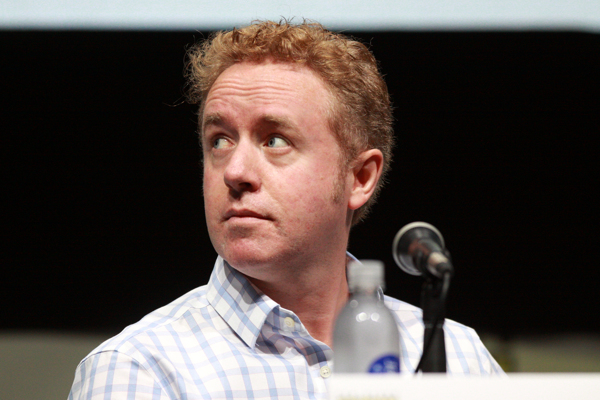
Mark Waid is a prolific comic book writer noted for his work on Daredevil, The Flash, Superman and Captain America. Speaking to Den Of Geek, he revealed his strong dislike for DC Entertainment€™s gritty, moody approach to superhero cinema that we've seen in the likes of The Dark Knight and Man Of Steel. "You€™re a superhero. Shut up and enjoy having superpowers,€ he said, outlining his opinion pretty clearly, before going onto further explain that "people being morose about lives that are much more interesting and exciting" than his really winds him up. For these very reasons, he€™s particularly un-keen on Man Of Steel, Zack Snyder€™s take on DC€™s big blue boy scout that Waid has written for many times in the comics. He wrote this in his review for Thrillbent, €œSome crazy guy in front of us was muttering €œDon€™t do it€don€™t do it€DON€™T DO IT€€ and then Superman snapped Zod€™s neck and that guy stood up and said in a very loud voice, €œTHAT€™S IT, YOU LOST ME, I€™M OUT,€ and his girlfriend had to literally pull him back into his seat and keep him from walking out and that crazy guy was me.€ If I ever meet him, I'll ask if he prefers the more brightly coloured Superman Returns.

8. Mark Millar

Kick-Ass and Kingsman scribe Mark Millar has written for Marvel, DC and pretty much every other comic book company. He€™s been heavily involved in bringing his own ideas to the screen, and helps oversee Fox€™s X-Men and Fantastic Four film franchises. However, one comic book film really didn€™t impress him €“ Man Of Steel. He was so distressed by Snyder€™s moody Superman movie that he wrote an article for Total Film about how much it traumatised him. €œI love cartoonish ultra-violence as much as the next Glaswegian,€ he admitted, before later admitting that when he saw Superman kill Zod in the third act of that film, he really wasn't pleased. "This was Superman. This was like seeing Sylvester the Cat finally getting his hands on Speedy Gonzales. Elmer Fudd blowing away Bugs Bunny," he explained. "I loved Superman as a kid not because of his edginess or his potential for a fatal solution, but because he could do anything he wanted and still chose to be nice.€ Millar wrote his next comic €“ Huck €“ as a direct reaction to the gritty morbidity of Man Of Steel. It's about a superhero with learning difficulties, who does good deeds every day. Presumably, Huck doesn't go around snapping necks and levelling cities then.

7. Gerry Conway

Gerry Conway is the writer who - among many other credits, at both DC and Marvel - penned the famous The Night Gwen Stacy Died comic that Sony later incorporated into their The Amazing Spider-Man 2 film. Speaking to the Superior Spider Talk podcast after the movie€™s release, he admitted that he isn€™t fully convinced by comic book cinema. €œMy overall reaction to the piece, is that it reflects the problems that are kind of inherent in doing these big budget single movie adaptations of serial comic book stories,€ he explained, before elaborating on the topic that "you have months on months on months where you can develop characters" in the comics, whereas movies lack that opportunity for depth. €œIn a movie, you€™re basically trying to cram two or three years worth of story into two hours,€ he lamented. He also believes that "there€™s an argument to be made that television might be a better fit for certain longform comic book stories.€ €œI think they handled the death of Gwen very very well,€ Conway also made sure to mention, although it€™s clear that he€™s not the biggest fan of comic book movies in general. He does enjoy Arrow, on The CW, though.

6. Martin Pasko

Writer and editor Martin Pasko worked extensively for DC Comics between 1975 and 1981. In more recent years, he helped shape the oft-acclaimed Batman: The Animated Series and its theatrically-released feature film spin-off, Batman: Mask Of The Phantasm. It€™s a bit of a surprise, then, that he hates comic book movies. He's got it in for Sin City, in particular. "The two media aren€™t the same,€ he wrote about comics and movies on ComicMix.com. €œEach has a grammar of its own," he believes, and by mixing them "you dilute the unique appeal of both.€ "The live-action stuff used to make me giggle,€ Pasko admitted. Now, though? Not so much. He's particularly nonplussed by the fact that "you can€™t figure out WTF is going on in any of these things unless you€™ve seen the previous five entries in the series." "I won€™t be too pissed off to fall asleep on it,€ he said of Sin City: A Dame To Kill For, which was on its way to cinemas at the time. "If Frank and Rodriguez light this one the same way they lighted the first one, I won€™t be able to see WTF is going on there, either, and won€™t have to care.€ Given the success of Mask Of The Phantasm, it's always been a bit of a mystery to me why Pasko didn't end up writing big live action superhero movies. Now we know why.

5. Jonathan Letham

Although he€™s better known as a novelist (check out his semi-autobiographical book, The Fortress Of Solitude €“ it€™s excellent), Jonathan Lethem has dabbled in comic book writing on numerous occasions. Notably, his Omega The Unknown Volume 2 series for Marvel takes the superhero mythos in some very interesting directions. However, Lethem isn€™t fond of comic book movies (he particularly dislikes, again, Sin City). "The movies insist on transforming a form into another form,€ he explained to TheAtlantic.com. The result of this transformation is, in Lethem's words, that €œthe results fall into a hideous void between them." He also thinks that movies are incapable of conveying the "mystery of the evocativeness of a comic book panel, the stillness-in-action, and the secret silence of the gutter between the two panels.€ He continued: "The nearest I've ever seen to someone really reaching for that was that really aggressive and sort of horrible Frank Miller movie, Sin City. Which was still compelling because they seemed to be aware of the problem, and were trying to seize control of it. But it's a little bit like, playing rock and roll on a harp or something. Movies are actually a very, very poor fit for the comic aesthetic.€ Lets not hold our breath for an Omega movie, then. At least not with Lethem's involvement. That's a shame, really, because Lethem's Omega - which revitalised an almost-forgotten Marvel hero - could make for a great film.

4. John Byrne

John Byrne is a comic book writer who has worked extensively for Marvel, DC, IDW and Dark Horse Publishing. He helmed Marvel€™s Fantastic Four comics for five years between 1981 and 1986, where he brought She-Hulk into the team for a time and notably increased The Invisible Woman€™s control of her abilities, making her a more powerful character. He's got big problems with the latest Fantastic Four movie, though. When Josh Trank€™s 2015 Fantastic Four movie cast Michael B. Jordan as the traditionally Caucasian Johnny Storm character, though, John Byrne took serious offence. Byrne wrote on his own forum site that the casting decision marked "a degree of historical ignorance at work that is insulting to Stan Lee and the memory of Jack Kirby ." "When Johnny is race-swapped the inevitable response from some segments of fandom and the media is that this is "necessary" due to comics in the 1960s being hotbeds of White supremacy €” while nothing is further from the truth.€ Byrne later expressed further worries with the casting, which don't make the best reading (you can read the entire forum, which escalates rather drastically, here). Josh Trank reacted badly to Byrne€™s statements, effectively calling him a Neo-Nazi by comparing him to Stacy Keach from American History X via Twitter. It's fair to say that neither Trank nor Byrne came out of the public feud smelling of roses.

3. Chris Claremont

Chris Claremont wrote the Wolverine comics series that inspired Fox's The Wolverine - the second Hugh Jackman solo X-Men spin-off movie. He wasn't fully convinced by the transition his ideas underwent from page to screen, though. €œThe first two acts were kick-ass, and they set this up to be a really exceptional, different movie,€ he said to Vulture. But, as the film careened towards its ending, he was less impressed. €œThat moment he starts motorcycling up the 400 kilometres € he was almost riding into a different movie,€ Claremont pointed out. He also wasn't keen on the film's use of what he calls 'superhero tropes.' Specifically, he cited scenes like "the Yakuza against Wolverine, the Viper imprisoning Wolverine, the Silver Samurai cutting off Wolverine€™s claws" as problematic. The summarised his views very succinctly with this next sentence: "the point is not how many artful ways can he cut someone to shish kebab.€ He's not a hater of all comic book movies, though. In fact, he called out the moment in Iron Man 3 with "Tony Stark watching what he thinks is Pepper Potts€™s death" for particular praise, in that same interview. He might've been more pleased if The Wolverine packed a similar emotional punch.

2. David F. Walker

David F. Walker is the writer of Shaft, a Dynamite Comics series inspired by the classic Blaxploitation movie of the same name. When news of a movie reboot €“ with a new comedic tone €“ came to the fore recently, he wasn€™t impressed. This film isn€™t even out yet, but he€™s taken offence at the very concept of a Shaft comedy. €œIt is clear to me that you have no real concept of the John Shaft character," Walker wrote in an open letter to New Line Cinema, hosted by BadAzzMofo.com, "or why he and all the other black action heroes that emerged in the 1970s were so important to so many people€”myself included,€ Walker is convinced that, should the Shaft reboot become a comedy film, it "will be terrible [...] It will suck. It won€™t make money. And in doing so, it will ruin the chances of there ever being a decent Shaft movie in the remainder of my lifetime.€ At the time of writing, New Line Cinema has not issued a response to Walker. They have tried to stress the importance of drama, not just comedy, though. We doubt he'll be fully convinced until he sees the end product, though.

1. Frank Miller

And finally, Frank Miller, probably the highest profile comic book creator on this list. His Batman work alone has earned more adoration than most writers or artists garner over their entire career. However, the creator of the iconic The Dark Knight Returns comic doesn€™t enjoy watching comic book films. Especially Batman ones. "When people come out with movies about characters I€™ve worked on, I always hate them,€ he revealed to Playboy. €œI have my own ideas about what the characters are like. I mean, I can€™t watch a Batman movie. I€™ve seen pieces of them, but I generally think, 'No, that€™s not him.' And I walk out of the theatre before it€™s over." "It includes all of them,€ he confirmed when asked if he didn€™t even like the much-adored Christopher Nolan films. €œI€™m not condemning what he does. I don€™t even understand it, except that he seems to think he owns the title Dark Knight. He€™s about 20 years too late for that. It€™s been used," he joked. It remains to be seen how Miller will respond to Batman V Superman: Dawn Of Justice, which has seemingly been heavily influenced by his work. More so, it would seem, than any previous Batman film. Perhaps, this could be the one he won€™t walk out of. Either way, Miller clearly isn€™t alone as a comic book creator who hates the movies. It€™s clearly more common than many might initially think. Which other comic book creators hate the movies they inspired? Share any missed down in the comments.

Contributor
Contributor

Film & TV journo. Quite tall.