10 Classic Kids Films With Deeply Dark Inspirations
 Maybe it's because we're getting a little too paranoid about the "fragile" state of our children's minds, or maybe it's just that creepy stories make the best kids films, but it seems many of our favourite cinematic experiences from our pre-teen years were inspired by dark and sinister books and experiences. As a child, you never look at a film like Dumbo and say "Gee, those crows are pretty racially insensitive depictions" or a film like Snow White and say "Gee, that poor unmarried girl will never be complete without a man." Instead, you just watch and enjoy the movies, secure in the knowledge that the girl always gets the prince and they live happily ever after. But that doesn't mean there aren't some REALLY dark inspirations behind those movies. Come with me now into the sinister world of classic children's movies. But remember, what you are about to read cannot be unlearned...
10. Pinocchio (1940)
 Pinocchio is a 1940 animated film produced by the Walt Disney company. The plot revolves around a puppet named Pinocchio who is created by Geppetto, a poverty-stricken wood carver. Pinocchio is brought to life by the Blue Fairy who informs the puppet that he can become a real boy if he proves himself worthy. Pinocchio's quest to become a human being takes him through many locations and many tribulations until he is ultimately successful in the end. Along the way, we are introduced to a large group of characters with varying degrees of morality including Jiminy Cricket (Pinocchio's conscience). Dark Inspirations? Disney's Pinocchio is based on the 19th century book The Adventures of Pinocchio by Carlo Collodi. The book version of Pinocchio is quite different from Disney's toned-down tale.
 As a result of his selfish and lazy tendencies, Pinocchio often finds himself in dire straits. On one occasion, he is convinced by a pair of bandits (the infamous pair known as The Fox and the Cat) that planting gold coins in a field will result in a money tree to greatly increase Pinocchio's wealth. Always one to take the easy way out, the naive marionette is relieved of his money and hung by the neck in a tree. Pinocchio survives the hanging thanks to The Fairy With Turquoise Hair (The Blue Fairy). The Fairy With Turquoise Hair is intended as a benevolent character in the book. Introduced as a suicidal little girl who tells Pinocchio she is dead and waiting for her coffin, the Fairy is next referenced when Pinocchio returns to the Fairy's home to find a tombstone blaming him for her death. Eventually the once-dead Fairy (is she a ghost or a zombie?) appears at opportune moments in Pinocchio's life and rescues him from his foibles, finally turning him into a little boy. Other dark imagery includes a block of wood screaming in pain as it is carved into the puppet, a talking cricket squashed by Pinocchio with a hammer, Pinocchio biting off the paw of the Cat, Pinocchio burning off his own feet, a giant shark that swallows Pinocchio and Geppetto (along with a tuna that tells the wooden boy to sit back and wait to be digested), a guy who wants to drown the Pinocchio donkey and use its skin to make a drum, and a bunch of fish sent by the Fairy to eat away the flesh of the Pinocchio donkey. The inspiration for the movie Pinocchio? The overall tone of The Adventures of Pinocchio is one of a dark and vile world populated with an endless supply of evil beings intent on destroying those who refuse to conform to societal norms. Along the way we get a suicidal fairy-zombie, a murdered talking cricket and his ghost, a drum made from donkey flesh, the donkey flesh being eaten by fish, screaming blocks of wood, a killer shark, and abject poverty. Wow.
9. Peter Pan (1953)
 Peter Pan is a 1953 animated film produced by the Walt Disney company. Peter Pan is a lovable but mischievous young boy who has learned to fly. He lives in Neverland with the fairy Tinker Bell, the Lost Boys, Indian princess Tiger Lily, a batch of mermaids, and the villainous Captain Hook (and his band of pirates). Wendy Darling and her brothers are taken by Peter to Neverland, where they have a series of adventures while attempting to avoid the malevolent Captain Hook, who himself is continually on the lookout for the crocodile that ate his hand. Eventually the children miss their parents and return home to London. Dark Inspirations? Disney's Peter Pan is based on the play of the same name and the book, Peter and Wendy, by J. M. Barrie. There is also a previous book, Peter Pan in Kensington Gardens, that helps explain Peter's origins in a little more detail.
 Although the book Peter and Wendy has its share of dark moments - Peter kills Hook by throwing him to the crocodile, the mermaids are known to kill anyone who visits their lagoon except Peter, Peter likes to make headstones for children who get lost in Kensington Gardens at night, and Peter quite possibly nailed several generations of women in Wendy's family - when you get right down to it, the darkest fact from the original Peter Pan stems from the death of author J. M. Barrie's brother at the age of 14. Barrie's brother David was killed in a skating accident, which slashed such a deep wound in his mother that it never healed. As the theory goes, Barrie concocted the idea for Peter Pan because David, having died as a young boy, was eternally a young boy in his mother's eyes. The inspiration for the movie Peter Pan? We have a play and books filled with murder, violent pirates, ravenous crocodiles, attempted murder by mermaids, dead children and their headstones, incest of a sort (or perhaps just a major stud in Peter Pan), and a story written out of sorrow for the death of the author's brother.
8. Alice in Wonderland (1951)
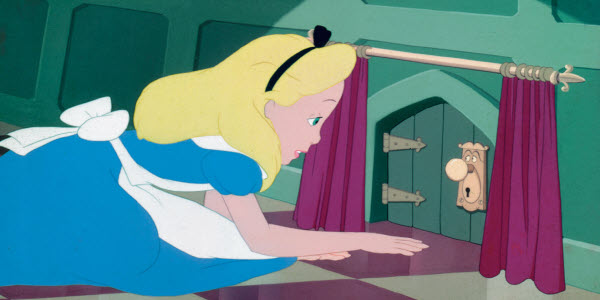 Alice in Wonderland is a 1951 animated film produced by Walt Disney. Based Lewis Carroll's books Alice's Adventures in Wonderland and Through the Looking-Glass, the film has delighted children for generations with the story of Alice and her adventures down the rabbit hole. Featuring such characters as the Mad Hatter, the Cheshire Cat, the White Rabbit, the March Hare, and the Red Queen; Alice in Wonderland is possibly one of the best-known and well-loved children's movies of all time. Dark Inspirations? Lewis Carroll is the pseudonym of English author Reverend Charles Lutwidge Dodgson. His most famous character, Alice, is loosely based on Alice Liddell, a young girl with whom he had formed a caring relationship. Alice in Wonderland offers a great many seemingly dark scenes (such as a cake that proclaims "EAT ME") for such a well-loved children's story. Theories have persisted that Alice in Wonderland contains an undercurrent of drug use. Beginning with the potions and cakes that Alice eats to change her physical characteristics, Alice is repeatedly exposed to situations that scream "DRUGS" to those of us living in the 21st century - the most obvious being the hookah pipe and magic mushrooms in the caterpillar scene.
 Other seemingly dark moments in the books occur each time the Red Queen makes an appearance. With her trademark phrase "OFF WITH HIS HEAD", the Queen gives us a villain whose striking lack of sanity and compassion make her all the more malevolent. And finally, there are the (hopefully) ridiculous rumours of paedophilia on the part of Lewis Carroll (Dodgson). While it's hard to deny the large portfolio of partially-clad children among Dodgson's personal photographs, we must also look at the rest of the circumstances surrounding Dodgson before making such a judgement. One analyst, whose name currently escapes me, claimed that living a life of celibacy that he believed was ordained by God, Dodgson can hardly be blamed for seeking the company of children, who to his mind might be an asexual respite from grown women who could entice him sexually. Let's hope this was the case. The inspiration for the movie Alice in Wonderland? We have a tale POSSIBLY filled with hallucinogenic drug use, a murderous queen, and all written by a potential pedophile.
7. Bambi (1942)
 Bambi is a 1942 animated film directed by Walt Disney and based on the book Bambi, A Life in the Woods by Felix Salten. The main characters are Bambi, his mother, his father (the Great Prince), the rabbit Thumper, the skunk Flower, and Bambi's future mate Faline. The movie takes us through Bambi's childhood as he learns what it means to be a deer in the forest, and what it means to live near man. This film is one of those key moments of childhood that everyone remembers - especially when Bambi's mother is shot and killed by a hunter. Dark Inspirations? Much like the movie, the book by Felix Salten traces the life of Bambi from fawn to buck, but the details of that life are far more striking in the written form. For example, when Bambi's mother is killed by a hunter, his friend Gobo goes missing. Eventually Gobo returns having been captured and raised by man. Gobo now thinks he is a friend of mankind until he is shot and killed by a group of hunters from whom he thought he was safe. We are also treated to Bambi viewing a dead human body as a lesson that mankind is not immortal.
 The inspiration for the movie Bambi? We have a book that, through the actions of Bambi and his cohorts, show us that children are whiny and too reliant on their mothers, men always leave their women to raise their kids alone, puberty is something to be made fun of, mankind is evil and treacherous but not all-powerful, and parents always die. Boy, am I depressed.
6. Sleeping Beauty (1959)
 Sleeping Beauty is a 1959 animated film produced by, you guessed it, Walt Disney. It is based on a variety of fairy tales all with the same basic theme. Primarily, Disney based its story on "The Beauty Sleeping in the Wood" written by Charles Perrault in 1697. In the Disney version, a king and queen are celebrating the birth of a long-awaited child when three good fairies come to bless the child with magical gifts. Before the third fairy can bequeath her gift, a wicked fairy arrives and curses the baby princess to prick her finger on the spindle of a spinning wheel and die at the age of sixteen. The final good fairy then uses her gift to change the curse so that the princess will merely fall into a deep sleep until awakened by love's first kiss. Despite efforts to protect the girl, the princess fulfils the curse. But it all works out well a day or two later, when a prince falls in love with the girl, battles the evil fairy, and releases the princess from the spell. This tale, along with many on this list, is one of those stories that transcends many cultures and is known by children from a multitude of countries. But of course, Disney has toned down the original tale a little. Dark Inspirations? Written and published by Charles Perrault in his book Histoires Ou Contes Du Temps Passé in 1697, the tale of Sleeping Beauty is much more ominous than the popular Disney version. The basic story of the evil fairy cursing the child takes place as in the Disney film, but instead of fuming over not being invited to the celebration of the child's birth, she is instead peeved because the other fairies received gits of gold and jewels but she did not. After the princess receives the curse from the evil fairy, the remaining good fairy uses her gift to say the girl will fall asleep for 100 years and be awoken by a prince. I've never understood why she didn't just change the curse to say the princess would get diarrhoea for three days and then be fine, but what the heck.
 After the curse is placed, the tyrannical king forbids spinning wheels in his kingdom, obviously ruining the livelihood of many a spinster and the fortunes of all sheep farmers in his kingdom. Nice. Of course, the selfish king's ban on spinning wheels fails and the girl pricks her finger on the lone remaining wheel in the kingdom. The good fairy that changed the curse then realizes the poor young girl will suffer greatly when she awakens 100 years hence and finds her entire family mouldering in the grave, so she puts everyone in the castle under a sleeping spell. A hundred years later, a prince spies the castle. When he finds the sleeping princess, he quickly falls in love with the under-age girl, which breaks the spell. The prince and princess are married, but they don't quite live happily ever after. First, they must overcome the half-ogre step-mother of the prince. The evil step-mother attempts to eat the princess and her new children, but she is fooled by her cook and instead dines on a lamb, a goat, and a hind. The ogre-queen is then defeated and casts herself into a pit she'd prepared with a plethora of ravenous and poisonous creatures. She of course, dies in the pit. An even earlier version called Sun, Moon and Talia is found in a 1634 collection of stories by Giambatista Basil. In Basil's version, the princess is cursed by a poisonous piece of flax. When the prince finds her body, he rapes the supposed corpse and impregnates the princess. She gives birth to twins and is awakened when one of the twins sucks on the thumb of the princess, thereby dislodging the flax. Unfortunately for her, the prince is already married but he lets sleeping beauty live in his house with his ogress wife, who also tries to eat the children. Once again, the ogress is killed and they live happily ever after. The inspiration for the movie Sleeping Beauty? We have greed, murder, cannibalism, paedophilia curses, incredible selfishness with people's livelihoods destroyed, rape, necrophilia, potential bigamy, and someone being eaten alive. Oy.
5. Willy Wonka and the Chocolate Factory
 Willy Wonka & the Chocolate Factory is a 1971 musical film based on the book Charlie and the Chocolate Factory by Roald Dahl. The movie tells the story of Charlie and a group of four other children who receive a Golden Ticket as an invite to the mysterious chocolate factory of Willy Wonka. Once in the factory, the kids are slowly eliminated from the tour in manners befitting their own personal vices. Charlie is the only remaining child, and he wins over the heart of Willy Wonka and acquires the grand prize of future ownership of the factory. Based on a much more recent book than the other movies on this list, Willy Wonka and the Chocolate Factory is much less dark than the other films, but it still has its moments (such as the beheaded chicken during the boat ride). Dark Inspirations? Charlie and the Chocolate Factory is a 1964 children's book by British author Roald Dahl. The story was inspired by Dahl's experiences as a schoolboy in England. At the time, Cadbury and Rowntree were the two largest chocolate makers in England. The companies regularly sent Dahl's school samples of new products in exchange for the kids giving their opinion of the candy. The corporate competition between these two companies became so inflamed that they each employed spies to infiltrate the other factories. As a result, they became incredibly secretive with their own chocolate-making processes. The movie follows the book quite well, with much of the poverty and hopelessness of Charlie making its way onto film. All of the children are eliminated from the tour of the chocolate factory in the same ways seen in the movie - Augustus falls into the river, Veruca goes into the nut room (instead of the golden egg room) and is dropped down the garbage chute by squirrels, Mike shrinks himself, and Violet turns into a blueberry.
 The only real criticism of the book was Dahl's original portrayal of the Oompa-Loompas as black pygmies. The book was subsequently changed in later editions. The inspiration for the movie Willy Wonka and the Chocolate Factory? For me, the creepiest part is the real-life corporate spies and protectionism displayed by Cadbury and Rowntree. Stuff like that never ends well and I can just imagine the violence done to one another. Just like in the movie, the book also gives us poverty, greed, crippled old folks, spoiled brats, gluttony, a psychotic and sadistic Willy Wonka, and other sins by the children. For good measure, we get to see Charlie's unemployed father, some minor racism, and a batch of murderous squirrels.
4. The Little Mermaid (1989)
 The Little Mermaid is a 1989 animated film by Walt Disney. It is based on the fairy tale of the same name by Hans Christian Andersen. In the movie, Ariel is a sixteen-year-old mermaid princess (what is it with Disney and under-age girls?) who is dissatisfied with her life and wants to visit the human world. Naturally she falls for a human prince. Overcoming a series of obstacles, including her father and some downright evil actions by the sea witch, Ariel wins the heart of the prince and they live happily ever after. Dark Inspirations? "The Little Mermaid" was originally written as a love letter by Hans Christian Andersen and sent to Edvard Collin. Andersen became upset upon the engagement of Collin to a young woman and after Collin spurned his love, he wrote the fairy tale as a symbol of his inability to possess Collin.
 In Andersen's story, the Little Mermaid saves a drowning prince and carries him to shore. She leaves when a girl from a nearby temple arrives. Hopelessly in love with the prince, the Little Mermaid consults the Sea Witch who makes her give up her tongue in exchange for a chance to win the heart of the prince and acquire a soul. The Sea Witch sells the Little Mermaid a potion that causes incredible pain as it creates a pair of legs for the mermaid. The legs make her the best dancer in the world, but she will always feel as if she's walking on sharp swords while dancing. As an added caveat to the Sea Witch's deal, if the Little Mermaid fails to win the heart of the prince, she will die and turn to sea foam. The Little Mermaid drinks the potion and proceeds to intoxicate the prince with her beauty and dancing. The prince often has her dance while she remains quiet about the incredible pain she endures during her performances. One day the prince is ordered by his father to marry a neighbouring princess, which he refuses to do. However, when he meets the neighbouring princess and sees it is the girl from the temple who he believes saved his life, he falls in love and marries her. The Little Mermaid is crushed. Awaiting her death and subsequent transformation into sea foam, the Little Mermaid is surprised when her sisters come up from the sea and give her a knife sent by the Sea Witch. If the Little Mermaid slays the prince and lets his blood drip onto her feet, the spell will be broken and she will again be a mermaid. She refuses to kill the prince and throws herself into the sea and dissolves into foam. Oddly enough, the Little Mermaid, instead of dying, becomes a "daughter of the air" and is given a chance to eventually win a soul - but only if she can make children be good. If the kids are bad, time is added to her sentence without a soul. The inspiration for the movie The Little Mermaid? The story, written as the result of an unrequited love, includes under-age sex objects, implied bestiality of a sort, a girl who can only gain a soul if kids (presumably those reading the story) are good, incredible self-inflicted pain, mutilation of a girl's mouth to make her silent around her man, a girl who painfully dances at the whims of the man she loves, and a girl who feels "incomplete" unless she denies her race for the love of that man. It's no wonder feminists have defaced the Copenhagen statue of the Little Mermaid - the tale stands for everything they despise.
3. Cinderella (1950)
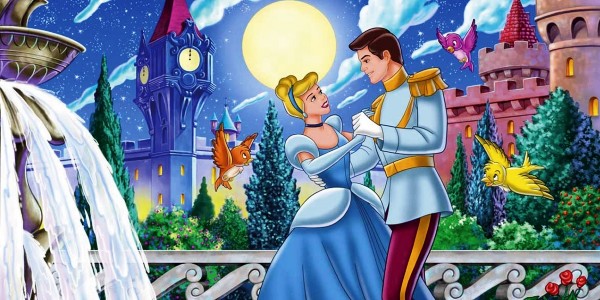 Cinderella is a 1950 animated film by Walt Disney based on a legend that has existed in many cultures throughout the centuries. Cinderella is the story of a young girl whose widowed father remarries in order to give his child a mother's care. The step-mother is, of course, evil and after Cinderella's father dies she heaps abuse on the poor girl. Meanwhile, the local prince needs a wife and so arranges a ball for all of the eligible women in the kingdom. Cinderella, after having her gown destroyed by her step-family, attends the ball with the help of her Fairy Godmother. Naturally, she wins the heart of the prince but must race home at midnight lest her beautiful gown and coach expend their magic and disappear. In her flight from the castle, Cinderella drops a glass slipper. The ensuing hunt for the owner of the glass slipper eventually leads to Cinderella. The prince and Cinderella live happily ever after. Dark Inspirations? "Cinderella" is a story by Charles Perrault that combines and expands on the many elements of the Cinderella story from history. While most cultures have a story of a child abused by her step-sisters or step-brothers who somehow is rewarded with great wealth, Perrault was the first to add the aspect of a pumpkin becoming a coach and a slipper made of glass. It is from this mostly innocent story that Disney makes its film Cinderella. However, the legends of Cinderella are not as sweet and simple as told by Perrault.
 In the 19th century, the Brothers Grimm recorded the tale of Aschenputtel, which is a much darker version of the tale. In the Brothers Grimm version, Cinderella is abused not only by her step-mother and step-sisters, but by her father as well. Sitting at her mother's death bed, Aschenputtel (literally, "Cinder-fool") had promised her mother she would remain kind and gentle. After his wife dies, the father marries a woman with two beautiful but wicked daughters. Together they banish Cinderella to the kitchen to perform as their slave. Cinderella often cries and prays at her mother's grave, but continues to be kind and gentle. One day, the father visits a fair where Cinderella asks him for the first twig from a tree that knocks her father's hat off his head. He complies and gives her a hazel twig, which Cinderella plants at her mother's grave. It grows to a large and beautiful hazel tree and each day a white dove arrives at the tree and gives Cinderella anything she wishes. Meanwhile, the local king decides to throw a three-day festival so his son may choose a wife. Cinderella runs to her mother's grave and asks the dove for help. Each day, the dove gifts her with ever-more-impressive gowns and shoes - and each day the dove tells her to leave before midnight. On the third night of the festival, after having danced with Cinderella until midnight each of the first two nights, the prince lines the stairs with pitch so Cinderella cannot run away again. She escapes but loses one of her golden shoes in the pitch. The prince vows to marry any girl whose foot fits the delicate shoe. When the prince arrives at Cinderella's house, the evil step-sisters in turn chop off portions of their feet so the shoe will fit. The prince is at first fooled by each girl, but the dove advises the prince about their deceptions. Finally, Cinderella is allowed to try on the slipper and is identified as the girl the prince loves. At the wedding of Cinderella and the prince, doves swoop down from Heaven and peck out the eyes of the step-sisters as punishment for their evil ways. The inspiration for the movie Cinderella? We have a father who abuses his daughter, a dying mother with her child at her death bed, girls who mutilate their feet for the promise of wealth, and birds sent from God to peck out the eyes of two evil girls. Definitely dark, but not quite as dark as the next item on our list.
2. Snow White and the Seven Dwarfs (1937)
 Snow White and the Seven Dwarfs is a 1937 animated film by Walt Disney (who else?) and based on the German fairy tale by the Brothers Grimm. Snow White is one of the most-loved fairy tales in history, and Disney's film has much to do with its popularity. In this charming kids film, we once again have the evil step-mother who is jealous of her daughter. The step-mother, a queen, is also a witch of great power. In her jealousy, she sends Snow White into the woods with a huntsman who is supposed to kill her, but he takes pity on the beautiful girl and lets her flee, instead bringing a boar's heart to the queen as proof that Snow White is dead. Snow White happens upon the seven dwarfs and lives happily with them in the woods. One day, the queen discovers that Snow White is still alive and tricks the girl into eating a poisoned apple. Snow White is revived by the kiss of true love (a prince, of course), and heads off with her new husband to live happily ever after. Dark Inspirations? Now this one is really dark. The original story by the Brothers Grimm contains many elements that are much more disturbing than the Disney movie. The Brothers Grimm first collected the story in print in 1812. In that version, Snow White's mother is the antagonist, not her step-mother. It is believed the version was changed after children began reading the stories (the Brothers Grimm originally intended their book for adults). Supposedly having your mother want to kill you was too much for the kiddies in 1812. In the Brothers Grimm story, the huntsman is supposed to cut out Snow White's lungs and liver, but instead butchers a wild boar. When he returns with the boar's organs, the queen has them cooked and she proceeds to eat them.
 More variations in the book occur when the queen is attempting to eliminate Snow White at her home with the dwarfs. The queen first strangles Snow White with stay-lace (whatever that is), but the dwarfs arrive in time to revive her. She next tries a poisoned comb, but the dwarfs save her again. Finally she uses the poisoned apple. However, Snow White is not saved by "love's first kiss". Instead, we have a creepy prince who convinces the dwarfs to let him keep the dead body of a young girl at his castle. Along the way he drops the coffin and the apple dislodges from Snow White's throat, at which point she awakens. Snow White and the prince naturally fall in love and plan their wedding. At the wedding, the evil queen is forced to put on a pair of iron shoes that have been heated until they glow. She is then made to dance in the shoes until she dies. Rather than endure that punishment, I think I would have just attacked Snow White and forced someone to slice me up with their sword. Wouldn't you? The inspiration for the movie Snow White? How about a story where a girl's mother tries to put her to death and eat her just because she is beautiful, a strangling, a couple of poisonings, a necrophiliac prince, and a woman tortured beyond belief for her crimes. I'm glad I'm writing this during the day instead of just before I fall asleep.
1. The Wizard of Oz
 The Wizard of Oz is a 1939 fantasy film by Metro-Goldwyn-Mayer (MGM) based on the 1900 novel The Wonderful Wizard of Oz by L. Frank Baum. In MGM's movie, we are regaled with the story of Dorothy, a young girl from Kansas who is famously transported to the Land of Oz by a tornado (a common weather occurrence in Kansas, where I was born). Dorothy meets the good witch Glinda, meets the Wicked Witch of the West, acquires the ruby slippers, and sets off on the yellow brick road to meet the Wizard of Oz and return to her home. Along the way she picks up some companions in the Tin Woodman (and yes, that is the correct spelling according to Baum), the Cowardly Lion, and the Scarecrow. After a few battles with the Wicked Witch and her minions, Dorothy melts the Wicked Witch with a cup of water and makes her way home. This film is easily one of the most quoted and most watched films in history. With lines such as "Follow the yellow brick road", "I'll get you, my pretty...and your little dog, too", "I'm melting", and "There's no place like home", it has permeated society in more ways than anyone can count. Dark Inspirations? The Wonderful Wizard of Oz is a novel written by L. Frank Baum in 1900. The book spawned a large series of sequels and prequels. While written for children, they do contain a great many dark and scary moments. At the start of the book, Dorothy again kills the Wicked Witch of the East when her house falls on the old hag. Glinda arrives and gives her the witch's silver shoes (not ruby slippers) and tells her to visit the Wizard in Emerald City in order to return home. Along the way, we see the lengths to which the Wicked Witch is willing to go in order to acquire the silver shoes. The Witch, in succession, sends wolves to eat Dorothy's party, crows to peck out their eyes (the scarecrow breaks all the crows' necks), a swarm of bees to sting them to death, soldiers to kill them, and winged monkeys to harass them.
 Eventually the witch captures Dorothy and takes one of her shoes. Dorothy is so upset she throws a bucket of water on the witch and melts her. She then heads to the Wizard who, like in the movie, accidentally departs in the balloon that was to take Dorothy home. Dorothy then journeys to Glinda's kingdom, overcoming more obstacles including a giant spider, where Glinda tells her the silver shoes can transport her anywhere she wishes. Dorothy uses the slippers to return home. The inspiration for the movie The Wizard of Oz? A killer storm, a woman crushed by a house, a woman being dissolved, giant spiders, flying monkeys, broken-necked crows, killer bees, and a "good" witch that lies to Dorothy and sends her off on a perilous journey instead of just telling her to use the shoes to get home. I won't even go into how the Tin Woodman is really a Frankenstein / cyborg as shown in the book The Tin Woodman of Oz; you should read it for yourself. Ok, that's it for me. I think I'll go watch Dumb and Dumber. Right now I'm too scared to watch Watership Down with its bloodthirsty bunnies.