10 Children's Movies That Are Actually Way Better For Adults

This is how we justify ourselves endlessly watching these movies as grown-ups.
Back in the day, deeming a film "for children" didn't carry the same negativity it does nowadays. With kid-flicks falling off of the studio conveyor belt at an ungodly pace, such a venue for family entertainment has become nothing more than a soulless commodity for studios to indulge. When the best reviewed animation is that of the ineptly written Frozen, you know there's a problem. Before they became akin to a self-building Matrix of CG sentinels, children's films once carried weight, towering ambitions, fearless subject matter, mind-boggling practical effects and the most inspiring of hand-drawn animation. With time, the ideals, messages and depth of yesteryear's many cinematic experiences have only strengthened. While the narratives of these movies haven't changed, the interpretation of their meanings have, proving that - sometimes - things truly do get better with age....

10. All Dogs Go To Heaven

Released in 1989, All Dogs Go to Heaven is one of the many brilliant films released under the Don Bluth banner that featured exceptional voice-acting, fantastic animation and more adult themes then you could wag a tail at. Taking place in New Orleans during the year 1939, All Dogs Go to Heaven possesses a wide-variety of disturbing subject matter concealed under the colorful veneer of a child's film. Talking animals, beautiful animation and playful musical numbers distracted many a juvenile from understanding the mature thematic elements that were truly at play during All Dogs' intimidating runtime. Charlie B. (voiced by Burt Reynolds) is a vice-fueled protagonist who spends much of his time drinking, chasing tail (pun absolutely intended) and gambling - hell, he even owns a casino with his foil of a pup, Itchy (voiced by the late Dom DeLuise). This rockstar life ultimately leads to his demise when the villain gets him drunk and kills the vivaciously inebriated canine with a car. Even before the main plight comes into play, the first act of the film establishes a crime-ridden world of dogs which is wholly consumed by alcoholism, tobacco use, monetary wagers and even murder. It's all rather heavy content made all the weightier by the narrative's refusal to play it safe whatsoever - even up until the haunting finale. Pushing Charlie's over-indulgences aside, the storyline becomes increasingly grave as his yearning for revenge against Carface strengthens and the hellhound grows ever closer to pulling his reluctant soul into the torturous, dark depths of Hades. And let's also not forget about the giant, homosexual alligator. Sure, there's a fun, thrilling adventure about sin, redemption and sacrifice that children will adore, but once such audiences come of age and realize everything that's actually going on beneath the kid-friendly surface - the story, its characters and conflicts become all the more meaningful.

9. The Land Before Time

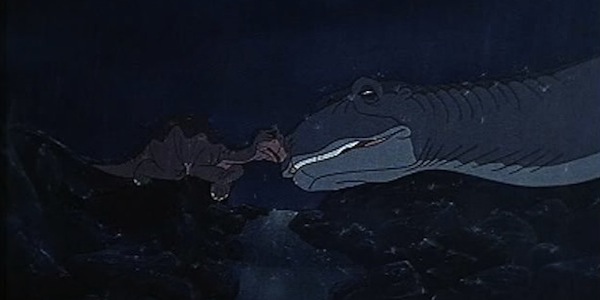
The Land Before Time may have spawned in an ungodly amount of sequels, but the first installment to this prehistoric series is a lovingly crafted masterpiece of animation. While it doesn't bear the lofty themes of Bluth's follow-up, All Dogs Go to Heaven, it was nonetheless a heartbreaking benchmark of children's cinema. Little Foot's journey begins with the death of his mother. In one of the most disheartening scenes of all animated filmdom, Little Foot watches his mother pass before his very eyes while she shares her final few words with him. Her mauled body is pelted by rain as her breath dissipates and Little Foot is left alone in the darkness urging her to "get up". It's tragic and tear-jerking for all of the right reasons and never once feels cheaply implemented. The sadness of Little Foot's conflict covers the entire narrative like a blanket and ultimately drives the small dinosaur to avenge his matriarch by killing the Sharp Tooth (a Tyrannosaurus Rex) which insatiably tore into her. The Land Before Time isn't recognized for its audacity, but for the sheer impact of its emotion and fearless depiction of death. It may be animated and focus on a bevy of cute dinosaurs, but that doesn't prevent it from punching guts with its sentimental heft.

8. The NeverEnding Story

"They look like big, good, strong hands, don't they? I always thought that's what they were." Quoth, the Rock Biter, nevermore, nevermore... This line of dialogue from the magnanimous creature of stone is singlehandedly one of the most poignant and reflective moments of the entire film. It's here that The NeverEnding Story truly becomes the coming-of-age tale it always meant to be. While the initial build-up is fantastically driven by everything a child might find interest in, it's this third act's sequence of events which convey all of the deep-seated worries and internal conflicts of a maturing child. As the Great Nothing makes its merciless way through the land, the Rock Biter confronts Atreyu with the reality of failure and hopelessness, shortly before allowing himself to be taken by the unstoppable force of nature. As far as present-day children's films go, darker themes are typically avoided or vaguely implied. However, during The Neverending Story's time, such elements were addressed head-on in surprisingly blunt ways. Be it the aforementioned Rock Biter's monologue, the bloody execution of villain Gmork, or even the nude Sphinxes which kill those of weak fortitude, The NeverEnding Story declined to prance around such subjects lightly and is all the better because of it.

7. The Brave Little Toaster

Regarded as the original Toy Story to many, The Brave Little Toaster was a grand ol' adventure rife with weighty themes on materialism, age, abandonment and even the acceptance of death. The movie is placed against a backdrop of kid-friendly humor, visuals and songs, but the beating heart regards the sometimes difficult process of maturation; the things we cling to and the things we leave behind. Over the course of the film, each item, be it the toaster himself or one his sidekicks like Blanky, question themselves and their own place in a world where their master doesn't even want them. The conflict at hand was simple enough for children to understand, however, the true impact of such concepts truly don't resonate until one is older, in the same boat as the college-bound, Rob. The pinnacle of The Brave Little Toaster's subject matter occurs during a junkyard escape. Here, the living relics are surrounded by vehicles who sing their tragic tale before succumbing to the haunting hum of an all-seeing crane-magnet and the immediate death-blow of a massive car crusher. After such a scene as this, many a child would yearn to run back home and whole-heartedly hug their toys.

6. Labyrinth

Back in a time where children's films had the freedom to incorporate adult themes and imagery into their narrative, Labyrinth stood as a monument to which many a fantasy film would yearn to aspire. While many might observe it as "Bowie's Bulge," the heart and soul of this classic lies within the awe-inspiring imagination that filled every nook and twisted cranny of the Goblin King's world. When its feet are firmly planted in reality, Labyrinth is that of story involving a young girl becoming a woman who acts out against her mother by deeming everything "not fair." For younger females, Sara's rebellious nature proves relatable with age and makes her journey of self-discovery that much more involving. Inside Jareth's ever-changing domain however, Labyrinth becomes an entirely different beast altogether. The artistic set-pieces, dream-like landscapes, steam-punk aesthetics, disturbingly glorious creature designs and morbid sense of humor make for the kind of film Hollywood refuses to make nowadays. What other kid's film has a host of garish creatures joyfully disembody themselves while they sing or a scene in which a girl is drugged with a peach before undergoing an insane ballroom dance of euphoria? As if the tone, visuals and imagery weren't enough, it also comes fully equipped with one of the best soundtracks of any family film. Ever.

5. The Dark Crystal

Preceding the fantastical excellence of Labyrinth was that of Jim Henson's archetypal endeavor, The Dark Crystal; an equally exuberant fantasy set in a mythical world rife with all manner of creature both good and evil. It's both surreal and dream-like and offers in incomparable amount of detail across every section of celluloid. Unless one hates the use of imagination in film, it's practically impossible not to appreciate The Dark Crystal. It's absolutely an enjoyment to watch, but it's another thing to understand the work and meaning behind everything Henson was conveying with this magical picture. Jim Henson based many of his ideas for the Dark Crystal off of Jane Roberts' Seth Material, a New Age collection of philosophy that observed channeling as an actual possibility. With the film, it was screenwriter David Odell's belief that Henson was trying to develop a different means of viewing reality by having a good mystic part and evil materialistic part reunited after a long separation. From the architectural designs of each new realm to the awe-inspiring craftsmanship of one beast to another, The Dark Crystal has so much going on that its lore might reach as deep as something akin to The Hobbit. While the kind-hearted Gelfling Jen is a fine little hero to stand behind, the real star of the show are the Skeksis. Both hilarious and repulsive, these bird-like creatures harness the power of the almighty Dark Crystal to replenish themselves as well as hinder any lesser beings from progression. Originally designed to embody the seven deadly sins, The Skeksis are a hierarchal clan which seek power even if it means screwing over their own. One of Dark Crystal's most twisted depictions of cruelty comes when they literally strip a fellow Skeskis of rank; his ear-shredding warbles echo through the chamber as numerous claws rip the clothes and robes from his body until only a frail, naked body remain.

4. Watership Down

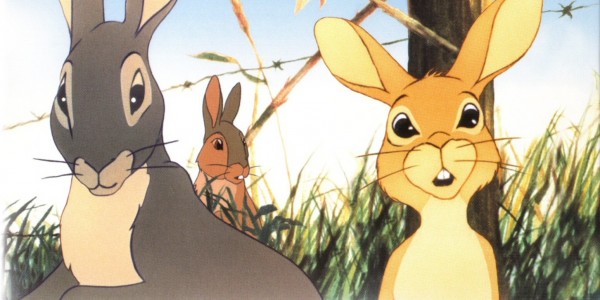
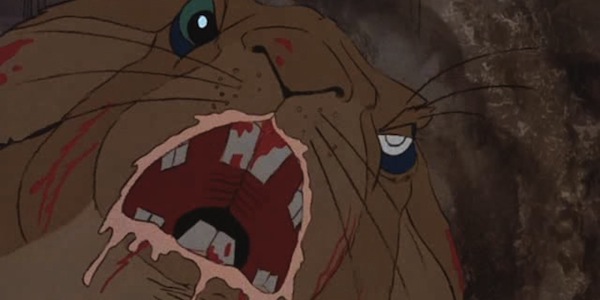
Few films are as frightening, disturbing and emotionally-scarring as that of Watership Down. For children the world over, this tale of lapine destruction was the cause of countless tears and numerous sleepless nights. Understandably, the film - like the book - is rather difficult to appreciate and understand as a child. The near-constant barrage of animal brutality is at points unbearable and the ever-present bleakness practically denies the possibility of anything remotely positive being salvaged from the warren's difficult journey. Thankfully, with age comes enlightenment and what was once upsetting, still is, but for drastically different reasons. As children, it's difficult to understand the connotations of such perturbing subject matter, but as adults, Watership's themes hit infinitely harder. The cast of rabbits stop becoming mere animals being butchered and start becoming actual characters with purpose and dimension whose deaths actually means something in the grand scheme of the narrative. Watership Down, like The Plague Dogs after it, wasn't supposed to simply be a familial joy-ride about talking animals, but that of a story with motivation; with something to say about the world, people and the things they do to each other and believe. From the opening to its final, painfully beautiful image of Hazel's passing, Watership Down is a benchmark for animated catharsis that shouldn't be forgotten.

3. The Secret of NIMH

Alongside Don Bluth's other masterpieces like the aforementioned All Dogs Go to Heaven and The Land Before Time was that cinematic adaptation of The Secret of NIMH. Developed after Bluth's fallout with Disney, NIHM is a quintessential film amongst the pantheon of family-driven narratives. Unwilling to castrate its subject matter for the sake of younger audiences, NIMH was a proving ground for future films of the same ilk. It was dark, dreary and unabashedly violent, but all of its grittier contexts reinforced the dire situation of Mrs. Frisby and the characters around her. The picture is overflowing with lovingly crafted illustrations, effects and bloody, sword-stabbing carnage, but it's the power and determination of a mother's love that melds it all together. The Secret of NIMH wasn't only a rarity in that it used the word "damn," but because it confidently displayed the reality of darkness amidst its many glimmers of hope.

2. Who Framed Roger Rabbit

There are few family films as audacious as Who Framed Roger Rabbit. It's creative, clever and comedic, yet it's also unapologetically violent, terrifying and overly sexual. Truthfully, it's a great film for all ages for completely separate reasons. The ingenuity of the storyline melded with the absolute grit of its content make it one hell of a twisted vision that still surprises to this very day. The marriage of live-action and animation is captivating and both the childish bits of mischief and sound effects are intoxicating for those of a younger age. Scene-to-scene is an energetic mix of mystery, action and humor which is made all the stronger by beautifully shot visuals, an exorbitant amount of cartoon characters and Roger Rabbit's goofball shenanigans. All of these familial elements combine so that they might trick many a youngster into thinking that this was just another jovial, child-like slice of cinema that oftentimes had live actors mucking up all of the fun, animated portions. For adults, ol' Roger Rabbit was a different story. One overflowing with adultery, foul language, toon-racism, implied off-screen fornication (the infamous "paddy-cake" scene), and some definitely un-PG acts of violence. The film's climax, which sees the gruesome demise of Christopher Lloyd's antagonist (appropriately named "Doom"), remains one of the most unsettling, most horrifying sequences to have ever been allowed inside a family film.

1. The Plague Dogs

There are few animated films as heart-wrenching and downright affecting as The Plague Dogs. Based on Richard Adam's novel of the same name, the story involves a Labrador named Rowf and Fox Terrier deemed Snitter as they escape from an animal testing facility and journey across the landscape in hopes of freedom. Coming from the same director and author of Watership Down, The Plague Dogs is nothing short of jaw-dropping in its depictions of cruelty and sadness. While the film's tagline dictates a story that's infinitely more hopeful ("Share the adventure of a lifetime"), the actual narrative is that of a soul-crushing endeavor that would have most children terrified and most adults reaching for a box of tissues. Rowf and Snitter's trek across Great Britain is constantly met with danger and even moments of happiness are abruptly guillotined with sadness. Beyond the graphic depictions of animal abuse, one of the film's most shocking and depressing scenes has Skitter accidentally shoot a potential owner in the head with a rifle.The characters may be that of canines, but their personalities and internal conflicts strike deeper than most live-action films with human subjects. From the first images of Rowf being repeatedly drowned and resuscitated by scientists to the final devastating frames of both friends' final moments together, The Plague Dogs remains one of the most tragically powerful cartoons to have ever spun through a projector and deserves to be noted as such. Like this article? Let us know in the comments section below.

Contributor

Greetings from The Yentz! The Warrior of the Wasteland! The Ayatollah of Rock and Rolla! I live, eat and breathe film... And videogames... And comics... And, well... Anything that might be considered "nerd related". I consider myself the voice against that of mainstream cinema. While critics might praise the ostentatious drivel supplied by Oscar-pandering films, I enjoy directing attention to less popular gems in hopes of educating people on incredible film experiences that may not be backed by massive studios, nominations and a star-studded cast. Outside of WhatCulture!, I write for Movieweb, assisted BlueCat as a script analyst, have worked on films from the east coast to the west and continue to write, critique and direct here in the lovable land of ol' LA. I hope you enjoy reading my diatribes as much as I enjoy writing them.