10 Bizarre First Drafts Of Famous Movies

Your childhood was nearly very, very different.

When we imagine the creative process, it's easy to picture a genius struck by sudden inspiration like a bolt from the blue. It fits into our ideals of how creativity works. We can picture George Lucas waking up one day and immediately creating Star Wars, or that the idea for childhood classic E.T. came fully formed into Steven Spielberg's head. In the real world, though, it doesn't quite work like that. In reality movies spend weeks, months, even years in development, undergoing re-writes and changes that sometimes make the finished product unrecognisable from the original idea that spawned it. There are times where that's a real shame, but quite often we can thank our lucky stars that they didn't go with the first draft. Try and picture the Xenomorph with tentacles, Han Solo with green skin, or Woody from Toy Story as an evil, murdering patriarch and you might have an idea of the rejected ideas that did not make it to the screen. Just try and picture the cultural landscape had these scripts never been altered - it would be a radically different place.

10. Alien 3 - Set On A Wooden Planet Full Of Monks

It's fair to say Alien 3 isn't the most beloved in the Alien franchise, but we can all agree it looks a lot better when compared against the Alien offerings we've had since (step forward Alien: Resurrection and Prometheus). Initially, it looked promising. Sigourney Weaver was on board for a third go-round along with respected British thespians Charles Dance and Paul McGann. Behind the camera was a promising young director called David Fincher. Alien 3 was set on a prison planet, an intriguing setting that is, sadly, largely wasted. In an early draft, though, the setting was a whole lot weirder. Before Fincher got the nod as the director, New Zealander Vincent Ward was initially the man set to write and direct the third Alien film and he had a very singular vision for it: he wanted the film to take place in a medieval world. If you know anything at all about Alien, you'll know that the whole "being set in the distant future" thing makes this impossible. Undeterred, Ward did the next best thing, and decided to set his film on a wooden planet-sized space station inhabited by god-fearing space-monks who had rejected modern technology (except, presumably, space travel and the building of space stations). Five different writers and innumerable re-writes later, sense was restored and the wooden planet idea was jettisoned. However, some of the material was re-used for the prison planet setting that was eventually agreed upon. Alien 3 may have been mediocre at best, but had Ward has his way, watching a bunch of old-timey-yet-futuristic monks running from a Xenomorph could have become the franchise's defining image. Thankfully, everyone involved eventually saw sense.

9. Spider-Man - A James Cameron Epic Where Doc Oc Is Bitten By The Spider

Spider-Man is so frequently on our screens that the character is already on its third incarnation - and second reboot - since 2002. It's amazing to think that Sam Raimi's movie took such a long and winding road to the screen that it was all set to be made a decade previously, with James Cameron on board as writer-director. Worried that Cameron was going to go way over budget, the studio insisted that he turn in a script budgeted at $60m, at most, or waive his $3m writers fee. Luckily for them, Cameron was absolutely willing to compromise his artistic integrity for a huge payday, and quickly turned in a script to meet their terms. How did he do it so swiftly? Well, he just took a pre-existing unused script (that had been written by six or seven different writers) and tweaked it. And by tweaked it, we mean he made it utterly incomprehensible. The script featured iconic Spider-Man villain Doctor Octopus, but not as we know him. In this version, Doc Oc was really Professor Oc (which is much less catchy), Peter Parker's physics professor. Weirdly, a significant plot point involves Parker's nemesis trying to steal his physics paper. Oh, and Doc Oc was also bitten by a radioactive spider, so confusingly also refers to himself as Spider-Man. The script was the kind of mess you might expect from one that was cobbled together from about six different versions, briefly edited by Cameron and handed in to a studio to earn him a few million. The baffling script was never made, and the resultant legal action around Cameron's involvement (20th Century Fox had a contract with Cameron granting them exclusivity on his services) ended up bankrupting two studios and Marvel. When the dust had settled and Sam Raimi was eventually picked to take over, he took one look at Cameron's existing script and decided the best thing to do would be to start again from scratch. With that confusing mess of a script, it's possible that James Cameron's movie would have been a bigger waste of money than all that litigation.

8. Toy Story - A Dark Film With Woody As An Evil Ventriloquist Dummy

Pixar's 1995 classic is beloved by kids and adults alike, the computer generated movie was a real game changer that irrevocably altered the landscape of animated film. Inspired by the buddy cop genre, at Toy Story's heart was the conflict between two sentient toys, cowboy doll Woody and spaceman Buzz Lightyear, which eventually resulted in mutual friendship and respect. This heartwarming tale would have never come to pass, though, were it not for significant re-writes. In Toy Story's early drafts, Woody was a giant ventriloquist dummy, and was also the movie's main antagonist. Pixar's creative team didn't realise their mistake quickly, either. Through several rewrites Woody became the regular cowboy doll we came to know, but he remained evil for a surprisingly long time. Encouraged by Disney executives to go for a darker, edgy tone, Woody was a malevolent would-be leader of the toys who abused and terrorised the others (including a scene where he straight up throws Buzz out of a window), until the other toys band together to give him a taste of his own medicine and hurl him out of the same window. Would Pixar have become such a household name if their technical leap forward in animation was a tale of in-fighting toys involving abuse, murder and rebellion? I think we all know the answer to that one.

7. Ghostbusters - A Futuristic Time-Travelling Action Film

The 1980's sci-fi/action/comedy Ghostbusters is a such a beloved property that news of a remake starring an all-female cast prompted most of the Internet to explode with self-righteous rage. Whatever you may think of the new ghostbusting team, it seems unlikely that the 2016 version will achieve the same "instant classic" status that the 1984 vintage did. The easy going, semi-improvised feel of the original had a lot to do with the laconic style of SNL alum Bill Murray, but Dan Akroyd's original vision for the movie didn't feature a role for Murray. Instead, the Peter Venkman character was written with John Belushi in mind, with Akroyd as his co-star, similar to The Blues Brothers. The original Ghostbusters draft - initially called Ghost Smashers - didn't feature an original story for the characters, instead set in the future and starting with Belushi's Venkman and Akroyd's Stanz already well established in their ghost smashing ways. The ambitious script saw them travelling through time, space and various dimensions to battle huge ghosts. In this version, the Stay Puft Marshmallow Man was just one of many manifestations of main villain Gozer, rather than the movie's biggest set piece. Unable to get a big enough budget together to do justice to Akroyd's ambitious vision, director Reitman instead suggested the script be rewritten and scaled down, instead focusing on the origins of a plucky group of paranormal ghost hunters in New York. We may not have got the see the team travelling to different dimensions, but there aren't many Ghostbusters fans who would trade the classic we did get for that.

6. Twilight - A Martial Arts, Blade-Meets-Predator, Road Movie
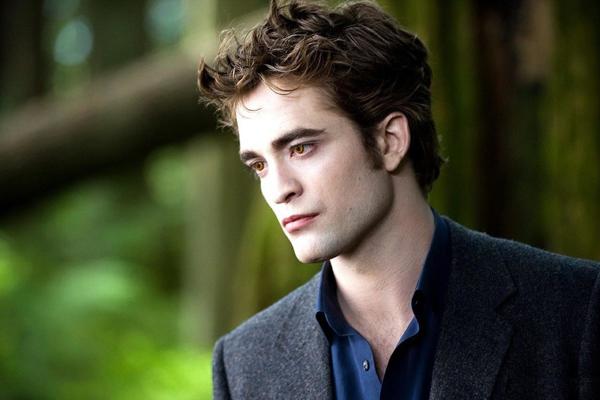
The movie adaptations of Stephanie Meyer's Twilight novels was an absolute money making juggernaut. It's easy to see why - the fantasy romance novels were hugely popular, particularly among teenage girls, and the casting of heart throbs Robert Pattinson and Taylor Lautner in two of the male lead roles pretty much guaranteed that the money would roll in. When the Paramount studio initially bought the rights to the novels, they were unconvinced that the world wanted to see mopey, love sick vampires and instead decided to turn the story into one of Edward Cullen and his vampiric clan battling SWAT teams of martial arts experts and vampire hunters across America, and transforming Bella into an ass-kicking action heroine. After Paramount had put production on hold numerous times they eventually sold the rights to Summit Entertainment in 2007, who decided to throw out all Paramount's Blade-meets-Predator action script and instead use one hewn more faithfully to the source material, resulting in the kind of cultural phenomenon seldom seen. Imagine the anger of Twilight fans if Paramount's insane vision would have made it to the screen, though. Hell hath no fury, and all that.

5. Alien - A Tentacled Creature Attacks A Ship Full Of Men

That Alien is an absolute classic goes without saying. It was the movie that made director Ridley Scott's name, its genre-blending mix of sci-fi and horror led to three sequels and a prequel (with another on the way) as well as countless lesser imitators. Alien's original form was not as far removed from the final one as some others on this list, but it did have some vital differences. The simplistic yet effective title Alien was not there from the start, the script by Dan O'Bannon and Ronald Shusett was instead laughably called Starbeast. The title was not the only aspect that was terribly named. The all male crew were aboard the spaceship Snark, with barely credible monikers like Chaz Standard and Cleave Hunter. The alien was not the Xenomorph we've come to know and, er, love. The Starbeast in question was a horrific, tentacle-covered monstrosity that probably would not have been able to pull off the creepy stealthiness that made Alien so memorable. It did die in an explosion in space at the end, though, so people would have remembered that. A later version of the script changed the ending so that after the alien had killed the entire crew (including Ripley, whose character existed by that point) it would sit back in a chair and begin recording an entry in the ship's log, while imitating Ripley's voice. Presumably someone pointed out that Aliens that can talk are less scary than silent killers. The ending was changed, and a sci-fi phenomenon was born.

4. E.T.: The Extra Terrestrial - A Horror Film

E.T. a beloved childhood favourite of everyone who is the right age to have experienced it. It came about after the success of Close Encounters Of The Third Kind - director Steven Spielberg was invited to make a sequel, but was not keen to do so. He was still interested in the subject of alien encounters, though, and decided that his Close Encounters follow up would take the idea into the realm of horror. What emerged was a script called Night Skies, centered around a group of malicious extra terrestrials terrorising a human family. The character that would become E.T. did feature as a good-natured alien who befriends the family while his kin try to destroy them. In the end Spielberg was convinced by his friend Melissa Mathison to concentrate on the friendly alien, and so the horror elements were pared back in favour of the gentle, emotional movie we've come to know and love. Speilberg did later re-use elements of Night Skies for Poltergeist (which he produced) and had planned a much darker E.T. sequel with the working title Nocturnal Fears that never saw the light of day, presumably because someone pointed out that following a family friendly sentimental movie with a sequel of intense supernatural horror is a terrible idea. It's a good thing Spielberg does seem to listen to the advice of those around him.

3. Batman - A Light-Hearted Romp With The 60's Camp Fight Scenes
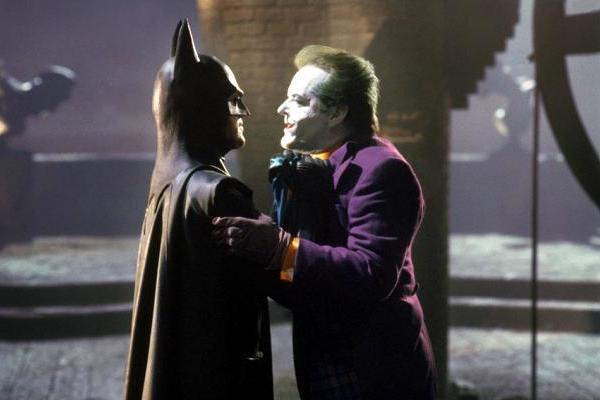
Tim Burton's 1989 take on Batman is largely well regarded (though looked upon less favourably following the advent of Christopher Nolan's Dark Knight trilogy) and helped wipe the memory of the Adam West campy take on the Caped Crusader. You could argue that without Burton's gothic take on the subject matter, Nolan's dark reboot would have never happened. It's easy to forget that at the time, the announcement that Tim Burton would direct and Michael Keaton would star was greeted with anger by bat-fans. At the time Burton was best known for Pee-Wee's Big Adventure while Keaton was known as a comedic actor from Night Shift and Mr. Mom. Fans might have been even more angry had the script not been altered from the first draft, written by Tom Mankiewicz several years previously. Mankiewicz's vision was in many ways not too dissimilar from the Sam Hamm and Warren Skaaren script that would eventually see daylight at the end of the decade. It still featured scenes depicting the death of Bruce Wayne's parents and Joker as the main villain, but also had Batman making public appearances and being on first name terms with Gotham's glitterati, which doesn't seem quite right with a brooding vigilante. It veered in tone quite a bit, struggling to shed the camp fight scenes of the 1960's TV show (including a fight with some jetpack wearing goons) and was over-stuffed with bad guys, with Joe Chill, corrupt politician Rupert Thorne and The Penguin all making appearances alongside Joker. The eventual script was much more streamlined and focused on the dark elements of Batman's story, resulting in the best big screen Batman movie. Well, until Nolan came along, anyway.

2. Back To The Future - Marty Tries To Kill Himself In A Coke-Powered Time-Travelling Fridge

Back To The Future is one of the most iconic and beloved movies of the 1980's. It's treated with such reverence that in these days where just about everything is being re-made and rebooted, there's not a whisper about a Back To The Future do-over. It took quite a few do-overs, though, before Robert Zemeckis and Bob Gale had a script that studios were interested in. In one very early draft Marty McFly was suicidal, and in a "hilarious" misunderstanding climbed into Doc Brown's time machine (then a stationary, refigerator-like device) believing it would kill him. Thankfully, the duo decided a suicidal protagonist didn't really fit with the upbeat, comedic style they were aiming for, but even after they changed that aspect, the movies early drafts were still decidedly weird. Doc Brown lived in an abandoned theatre and ran a bootleg video operation on the side. He also had a pet monkey, rather than a dog, and his time machine (still shaped like a fridge, and not a DeLorean) only works when Marty accidentally spills Coca-Cola on it. The trigger for Marty to go back to the past is Brown being shot by government operatives. When he gets to the '50's the script hits similar beats to that of the finished movie, and when he gets back to the present day it has changed. But whereas the finished movie shows that Marty came back to the perfect life, in the script the new '80's looks like the sci-fi fantasy people in the 1950's thought it would be - with robots and flying cars. The weirdest thing of all, though, is that Marty's beloved rock and roll no longer exists. Why? We can only speculate that after hearing Marty butcher Johnny B Goode at the school dance, society as a whole decided that they didn't want anything to do with whatever the hell that was. Way to go, Marty. You ruined the future for everyone. In the end it was decided to save the robots and flying cars aspect for the sequel, and any reference to Marty destroying a whole genre of music before it had even been invented was abandoned.

1. Star Wars - Annikin Starkiller Blows Up Space Stations And Punches Princesses

It took a while for Star Wars to become Star Wars. George Lucas initially wanted to direct a movie version of Flash Gordon, but after being unable to secure the rights, he instead went away and made his own swashbuckling space Western. What he came up with was catchy titled The Journal Of The Whills, and was totally incomprehensible to anyone without a working knowledge of the made-up trade laws of the fictional planets in Lucas' universe. Changing the title to The Star Wars, the script focused on a young boy with the excellent name of Annikin Starkiller. Young Starkiller is part of a squadron set to attack the New Galactic Empire's latest super weapon, the Death Star, and is trained by a Jedi named General Luke Skywalker. As you can see, some of the elements of the classic tale are there, just not in the right places. There's the character that would become Han Solo, but not as we know him - he's a smuggler with green skin and gills. There's also a Princess Leia-type character, though she's 14 year old. Perhaps most problematic is the scene where our loveable young protagonist Starkiller punches the Princess in the face (she promptly falls in love with him, of course). Imagine watching Star Wars and having to root for the teenage girl puncher. I would be with the Empire all the way. Several re-writes later - with the assistance of a coterie of presumably very patient friends - Lucas produced the script we would come to know as Star Wars. Though Lucas being Lucas, his tin ear for language meant that he called it The Adventures Of Luke Starkiller As Taken From The Journal Of The Whills, Saga 1: The Star Wars. Try fitting that on a poster. It's fair to say the movie probably would not have been as successful with a title almost as long as its running time. Lucas owes a beer to whomever convinced him to change that name. It's fair to say he can probably afford it.

 
Posted On: 
Contributor
Contributor

David is an office drone and freelance writer for WhatCulture and Moviepilot, among others. He's also foolishly writing a serialised novel on Jukepop and has his own irregularly updated website. He's available for freelance work. Reach out on Twitter to @davefox990