10 Biggest Mistakes Zack Snyder Has Made In His Movies (So Far)

"Can we get some more slo-mo up in here?" - Zack Snyder, all the time, every day

In continuing to combat Marvel in the franchise building superhero movie market, DC have declared their new champion: Zack Snyder. The man who helmed Watchmen, 300, and most infamously Man of Steel will be taking the DC cinematic universe to the next level with Batman vs. Superman movie in 2016, and Justice League immediately after that. So now is as good a time as any to look back at his body of work to see whether he is really up to the task. As a director, Zack Snyder has created some of the most visually interesting action films of the last decade, but they come in a wide range of quality. From good films, to bad films, to mediocre ones, almost every single film Snyder has directed is flawed in one way or another. In this list we have compiled the top 10 times Zack Snyder has messed up - whether it be poor adaptation choices, tonal missteps, or just bad scenes in general. If there are any of Zack Snyder's big mistakes you can think of that didn't make this list (or if you disagree with any of our choices), be sure to say so in the comments section. Spoilers below.

Honorable Mention: General Zod's Death - Man Of Steel

The murder of General Zod by Superman in Zack Snyder's own Man of Steel is among the most controversial comic book movie moments of the last decade, but it is not a moment that ruins the tone of the movie. In fact, it would not have made this list at all for the decision alone, but what bumps it up to honorable mention status is the scene's execution (no pun intended). When defending his choice to end Zod's life - something considered quite out of character for any adaptation of Superman - Zack Snyder chose to point out he was trying to establish why Superman would never want to kill again, because he is given no alternative in this instance. Either the innocent people die, or Zod does. However, Snyder's own staging of that scene makes reading it that way a difficult task the first time around - mainly because it looks like the family in that scene could escape without too much difficulty anyways.

10. Intensity Over Depth - Dawn Of The Dead

Competent remakes are difficult material to discuss, because there will always be two sides of the discussion: The side that thought the remake was a drastic improvement over the original, and the side that thought it was far far inferior. Zack Snyder's Dawn of the Dead encourages such discussion, largely because of the cult status of George A. Romero's original. Perhaps it was already a mistake to do a remake of a classic as your first feature film, because the error Snyder made in adapting this material would probably be barely noticeable if it wasn't a remake. But when held up back to back with the 1978 classic, it reveals several missteps in adaptation. The primary mistake is in the focus on action over character. While holding up a very solid character-driven first act, Snyder then proceeds down the 28 Days Later route and creates essentially, another generic Zombie film. It's always futile to advocate for slower Zombies in our zombie movies, but the slower shambling of the zombies in the original gave Romero more time to focus on the inevitability of death and create a more ominous atmosphere. Snyder leaves no room for that contemplation, or even the macabre humor present in Romero's cheekily gruesome finale.

9. The Action Scenes - Sucker Punch

This probably comes as a shock to many of you - Weren't the action sequences the best part of the brainless slog that was Sucker Punch in the first place? Well, yes and no. On the plus side the action in Sucker punch was very gorgeously rendered and put together - technically speaking, some of the most visually arresting over saturated action poetry in modern Hollywood this side of Guy Ritchie. But here is where they start to become problematic - Sucker Punch being what it is, a shallow attempt to sell a high-concept fetish film as a passion project, the action scenes have no sort of dramatic involvement to them whatsoever. As awesome as giant robot ninjas and steampunk Nazis can be, the action scenes in Sucker Punch have a critical flaw: They take place entirely in dream sequences. To make dream action dramatically involving, one needs to establish clear rules and stakes for the action to make any sense. As it is, there are no rules, no real dramatic tension, not even any antagonists. In fact, that's where he could easily have saved the action scenes in this film - by having tangible antagonists who are reflections of the protagonists' captors in the "real world." Without grounding the gorgeous battles in this fantasy world, Snyder renders the action empty, and stiflingly dull.

8. Plot Details So Important They Must Be Explained Twice - Man Of Steel

There are many reasons to nitpick Man of Steel, but ultimately many of them wind up being matters of personal value - i.e. the complaint that "this isn't what a Superman movie SHOULD be!" And yet one thing that is a quite valid place to poke fun at Man of Steel is in its structure. This may be one of the most haphazardly structured films of the entire Superhero genre (although it has lately been surpassed by The Amazing Spider Man 2). Save for the scattered flashbacks, the pace perhaps wouldn't be that distracting at all if there wasn't this very odd scene toward the end of act one. This moment comes when Kal-El first discovers his heritage and his Hamlet's Ghost of a Father. Jor-El must get Kal up to speed on everything that happened on Krypton in the opening sequence of the movie. The main problem with this? The audience has already seen the opening sequence of the movie! So what essentially we have is Kal-El giving us the same exposition we already received 30 minutes ago in a less visually interesting manner (It appears to be the Kryptonian equivalent of powerpoint). It is understandable that Goyer made this error in the screenplay - when you write something you have to be absolutely certain you flush out convoluted plot ideas to give the director a complete picture - But when going through his cut of the movie, Snyder should have noticed that we were essentially getting two versions of the same scene. The other possibility is he did notice and just didn't trust the audience to remember a plot so convoluted. We may never know.

7. Tales Of The Black Freighter - Watchmen (Director's Cut)

Zack Snyder's career is full of these: creative decisions that sound cool on paper, but fall apart when thought about for more then a couple moments. Tales of the Black Freighter only appears in the Director's Cut of Watchmen, and perhaps it was Snyder's decision to remove it from the theatrical version after all, but we may never know. What we do know is that this is a substantial sequence he had animated for the film, and it just doesn't work for a number of thematic and tonal reasons. Tales of the Black Freighter has a concrete purpose in Alan Moore and Dave Gibbons' masterpiece of a graphic novel - to show what comic books are like in their fictionalised version of the 80s where superheroes are the subject of great social controversy. It was a relatively minor part of the book that served well to flush out the world and tone of this bleakly cynical vision of Cold War America. In a movie of said graphic novel, it just doesn't translate thematically - the meta-commentary on comic books just doesn't work because of how the Tales of the Black Freighter is no longer a comic within a comic. Playing out as an animated segment in a live action movie only serves to highlight this tale's pointlessness. Even in a film as stylistically grandiose as Watchmen, this digression into animated pirate mythos is quite distracting aesthetically, and takes time and focus away from the already quite complicated main story. As an adaptation choice, this highlights one of Zack Snyder's major problems as a director: he chooses to put things in his movies purely because they are "cool", without thinking them through on a story level.

6. Too Much Slow Motion - Watchmen

Slow motion is one of Zack Snyder's directorial signatures. He uses it more stylishly than most directors in Hollywood (often jumping back and forth from slow motion to regular speed in the same shot), but there are some instances in his own movies where it just doesn't work. Case in point; Watchmen. This is a film that has every reason to be gritty and realistic, but Zack Snyder chooses to shoot every action sequence in heavily stylized super slow motion, which grows tiresome after a while. This isn't to say that there aren't moments in Watchmen where the slow motion does work - the concluding shot of the opening fight scene comes to mind (with the comedian's signature smiley-face pin suspended in midair), as well as the entire opening credits sequence, which is one of the standout moments of Snyder's entire filmography. But the action sequences in Watchmen use slow motion to the point of abuse, making the fight scenes clash harshly with the tone of the script and original graphic novel. Both the graphic novel and film of Watchmen are intended to be (at least partially) a postmodern reflection on what type of sociopathic behavior glorified vigilantism can encourage and a reflexive look at the whole superhero genre in that more harsh light. The excessive slow motion in Watchmen has the worst possible effect in continuing to glorify the genre in a way that is plainly not self aware.

5. Complete Lack Of Slow Motion - Man Of Steel

And then there are the times when Zack Snyder should return to his old bag of hat tricks. When it was first announced that he was going to direct the next superman film, many people were excited for just that - a chance to see Superman punch through a wall of henchmen in slow motion, then leap back into the air at the speed of sound. The aesthetic we most associate with Superman is one that Snyder could command effectively: brawny, yet visually striking and meticulously composed. However, when he actually did direct a Superman film, it was nothing like that. Say what you will about Snyder's work, it always has refrained from becoming the very frenetic and hyperactive shooting and editing style that plagues his contemporary in action filmmaking (and former film school classmate) Michael Bay. In every single one of his films up until this point, Snyder has maintained this relatively sane visual style... until Man of Steel, when he chose to go "gritty" and "realistic." The result is one of the most confusing aesthetics ever to grace a superhero film - a desaturated, grimy, shaky-cam Superman movie. As always, the effect is at its worst in the action scenes, where flying debris and frantic punching combined with shaky-camera ends up making everything visually cluttered.

4. Hallelujah - Watchmen

This one has been discussed quite a few times, in both positive and negative lights. On one hand, one must admire Snyder for staying true to Dan Dreiberg's impotency storyline from the comic, something many directors would shy away from in a superhero film (alongside the dozen or so other touchy subjects they'd shy away from in the source material). On the other hand, the scene itself is stiflingly awkward when actually executed in the film. What more is there to say about the scene itself? The flame thrower bit is amusing on the page, but on the screen it jumps up to downright ridiculous. Using Leonard Cohen's Hallelujah (a song mentioned in the original text) only makes this scene so much more silly. According to interviews with the director, he had originally intended to use a different cover of the song by Allison Crowe, but deemed it "too sexy," wanting the on-screen version to actually be a little ridiculous - a goal he quite clearly accomplished. But whatever the merits of Snyder achieving his goal are with this scene, it doesn't make the scene itself any less confusing when viewed alongside the other moments in this dark superhero drama. You know something went wrong when a scene feels like a director's cut addition in the theatrical version of the movie.

3. Literal Adaptation - 300

It is quite easy to look at 300 as Zack Snyder's masterpiece - a film that knows how dumb it is, but completely owns up to its cheesy testosterone-charged bloodlust with brutal glee. That is, until you have a long conversation with someone who read the comic it was based on. Because if it looked at its source material more critically, it might have been a much more self-aware movie than the one that ended up on screen. Sure, this movie was ridiculously over-stylized due to Snyder ripping the aesthetic right off the pages (something that works in the movie's favor for he vast majority of its running time) but in the comic, the style itself had a purpose. Xerxes and the people of ancient Persia were not gods or demons, and Frank Miller, writer of the Graphic Novel, was perfectly aware of that. All the over-the-top ridiculousness in the comic was taken from the point of view of Delios, a guy who makes a perfect unreliable narrator - of course he would glorify the spartans as musclebound supermen fighting against ultimate evil! Snyder seems aware of this point, referring to Delios as "a guy who knows how not to wreck a good story with truth." But he doesn't execute the style of the film in a way that makes this point clear - at no point do we see Delios' bit of the storyline any less glorified, or get a hint that he is anything more than a guy telling a true story of Persian demons and Spartan pride.

2. The Destruction Of Metropolis - Man Of Steel
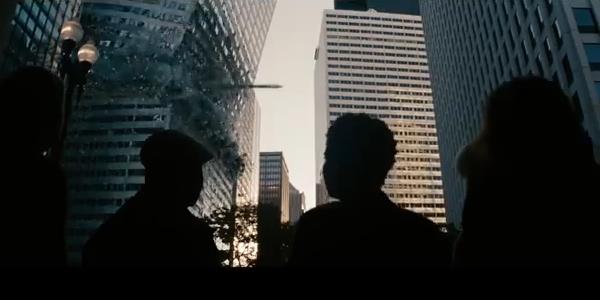
Of all the ruthless nitpicks comic book fans have found with Man of Steel, this one is by far the most valid. The climax of Man of Steel isn't poorly done, it is simply overdone. The violence in this sequence is so over-the-top, it's very possible to mistake this for a Clash of the Titans movie instead of a Superman one. By the end of the sequence, Metropolis is a post apocalyptic wasteland, an image that seems starkly overdone even for a film that opened by destroying a planet. Everything in the above paragraph has been said time and time again by numerous detractors of Snyder's Superhero epic. What makes this scene uniquely misguided is Zack Snyder's inept defense of it when asked. His response was he wanted Zod and Kal-El's fight to be "operatic", and the destruction they cause was not meant to be realistic, but rather heightened for the sake of melodrama. This would be a fine enough defense, if Snyder hadn't concerned the first 2 hours of this film (and every single pre-release interview) establishing that he wanted to make this Superman movie believable in a "realistic" context. If that contradiction isn't enough, the fight with Zod and Superman, which sent both of them careening through numerous massive buildings, concludes with Superman taking a life to save four humans. If the point of this film was to establish how important human life is to Superman, Snyder wasn't really paying close attention to the message he was sending with all the architectural terrorism going on in this finale.

1. The Story - Sucker Punch

It was far to tempting at the outset of this list to just list 10 different flaws from Sucker Punch. Easily Zack Snyder's weakest film, this film is so unbearable for one reason and one reason only: the script. Zack Snyder isn't known as a director who gets behind a writer's desk often, and with Sucker Punch it is clear why that is. The only film on his entire filmography that's purely original, and the only one that doesn't make a lick of sense. With this script Snyder tried to have his cake and eat it too - a film where he can stage scantily clad women fighting robots and dragons, but also have a deep and emotional story about a girl trapped in a mental hospital as well. There are films that have paired fantasy and realism well (Pan's Labyrinth comes to mind), but Zack Snyder is not a nuanced enough writer or director to make either of these halves of a film work. The script is divided between the convoluted mental hospital/brothel storyline and the narratively devoid fantasy storyline so that both detract from each other rather than complementing each other as they should. Not only does this film fail in almost every way possible with its narrative, it also bungles the characterization and dialogue so badly that the third act One Flew Over the Cuckoo's Nest twist comes completely unearned and meaningless. And don't even bother trying to work out why Scott Glenn appeared everywhere - it's quite likely even Snyder didn't know what that was supposed to mean. Like this article? Let us know in the comments section below.

Contributor
Contributor

Self-evidently a man who writes for the Internet, Robert also writes films, plays, teleplays, and short stories when he's not working on a movie set somewhere. He lives somewhere behind the Hollywood sign.