10 Batman Movie Theories That Were Bat-Sh*t Crazy

Every time a Batman movie is announced, bat-guano follows.
In the age of the Internet, fan theories are all the rage, and since he's arguably the single most over character in the history of characters, Batman probably has more than any other. There are countless theories about Batman in the comics, such as that he's actually a patient at Arkham, or that he created Robin so that he'd have someone to take him down if he ever went bad. Some improve the reading experience, but some are wildly ruinous - but at least fans are seeing a new way to engage with the content. Somewhat inevitably, this also extends to Batman's movies as well. Christopher Nolan's Dark Knight trilogy ended up getting a fair amount of fan theory treatment, but there are theories that date all the way back to Tim Burton's 1989 Batman film. And just as inevitably, some of them were dreamt up by minds as unhinged as the Joker's, and couldn't possibly be anywhere close to the truth. To their credit though, a lack of logic doesn't make them any less compelling when you consider them properly...

10. The Joker Didn't Kill Batman's Parents€”Batman Projects That On His Enemies

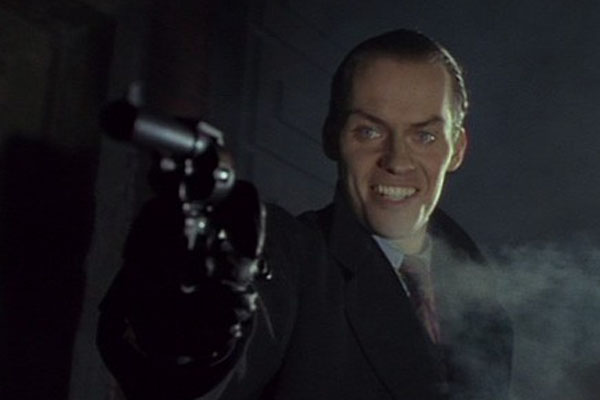
1989's Batman took a lot of liberties with the Dark Knight and with the Joker. Not only was Michael Keaton's Batman totally cool with killing villains, but the Joker even got a definitive origin with his real name revealed, something the comics have never done. And the decision was made to tie the Batman and the Joker together, with a flashback where Bruce realizes a pre-Joker Jack Napier killed his parents. Batman's always been a bit nuts, but this theory takes it up a step, saying that Jack Napier didn't actually kill Bruce's parents. Instead, that's just something Batman projects on every single criminal he takes down. The theory only works if you haven't seen the movie recently. Watch it again and it's pretty obvious that Napier actually did kill the Waynes. From Bruce asking Alfred to pull his parents' file to the Joker's pretty much outright confession during the whole "I made you, you made me first" conversation in the church at the end of the film.

9. Alfred Is Bruce Wayne's Real Father

Alfred Pennyworth has been a part of the Batman mythos almost since the inception. To illustrate just how big of an impact he's had on the Dark Knight, Alfred is included in every single Batman adaptation to date. Even when other major characters like Commissioner Gordon or Robin are either left out or have reduced roles, Alfred still looms large as a central character. But following the The Dark Knight trilogy, Cracked noted how Alfred has an almost fanatical devotion to Bruce Wayne. A devotion that seems far too extreme for just a mere butler. So the theory goes that Alfred and Martha Wayne had an affair. And, knowing Alfred was the real father, that's why Martha leaves Bruce in Alfred's custody in the event of her death. There's no actual evidence to back up the theory, of course. Alfred has always been more than just a mere butler. In the comics and movies, he refers to Thomas and Martha Wayne more as friends or family than simple employers. And blood relative or not, he did raise Bruce, so that would explain the devotion.

8. Batman Forever And Batman & Robin Are Movies Within Movies
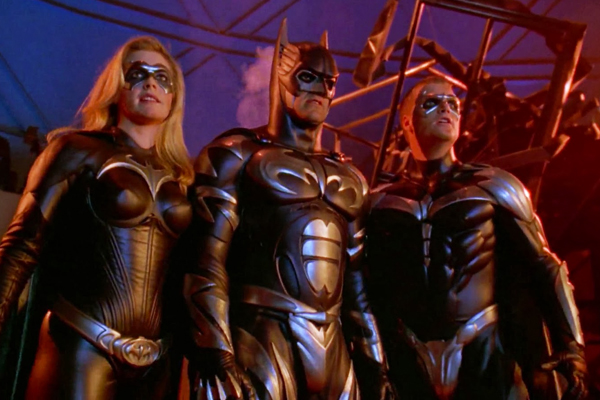
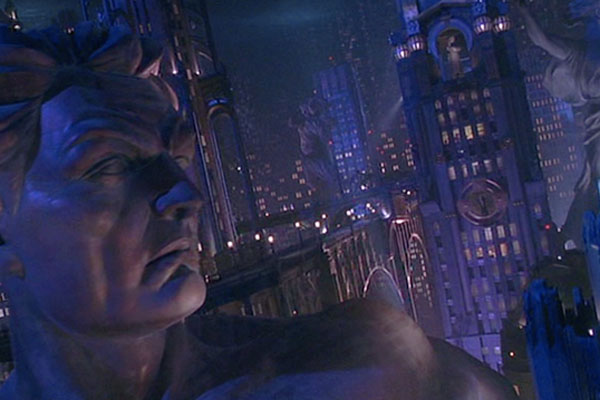
The dark tone of Batman Returns received so much blowback from parents and critics that Warner Bros. made the decision to do a kind of soft reboot by replacing Tim Burton with Joel Schumacher. The result was the much more lighthearted and kid-friendly Batman Forever. And after that movie did gangbusters at the box office, Warner Bros. decided to go even further and basically make Batman & Robin a big budget version of the old Adam West Batman TV show. But how does that work within the continuity of the movies? Batman goes from being a sadistic killer in Batman Returns to lecturing Dick Grayson about how it's wrong to take a life in Batman Forever. Gotham City goes from a city full of gothic architecture to one filled with neon lights and giant Grecian statues. The theory is that after Batman Returns and the loss of Catwoman, Bruce was so despondent that he revealed his identity to the world and retired. One version even says that he also fell on hard financial times, necessitating the need to sell his life story. And Batman Forever and Batman & Robin? Those are movies made about the exploits of Michael Keaton's Batman. Hence why you have two different actors playing him, why the movies show a very different Gotham, and how Harvey Dent's race changes from black to white. But the problem with this theory is that there's nothing to suggest Bruce would do that in Batman Returns. And an even bigger problem is that both Michael Gough and Pat Hingle play Alfred and Commissioner Gordon in all four films.

7. Gotham Legalized Gambling

The discrepancies between the Burton and Schumacher films have also inspired another interesting theory. The folks over at Crave put forward the idea that the trigger for all the differences is that Gotham legalized gambling. In the Burton films, Gotham is in trouble. So between Batman Returns and Batman Forever, Gotham legalized gambling as a way to attract more tourism. That results in the tackier, gaudy architecture elements throughout Gotham City, and all the neon. Batman is affected by it, too, the idea being that Batman has basically become Gotham's mascot in order to help bolster his city. So he lightens up, throws some neon on the Batmobile, and starts appearing at charity functions and putting his symbol on credit cards. It makes a little bit more sense than the Schumacher films movies within the Burton universe. But there's still the question of why would Batman do that. Changing his methods is one thing, but making himself into Gotham's mascot would seem to reduce his efficacy as a crime-fighter.

6. Bane Wanted To Help Batman

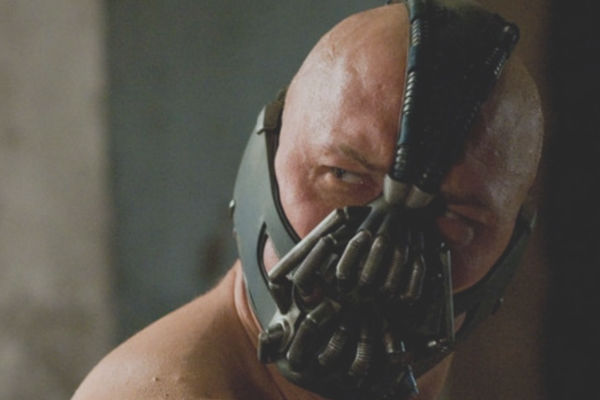
As if The Dark Knight Rises wasn't already a needlessly complicated movie, here comes a theory adding yet another layer to it, one that says Bane wasn't Batman's enemy, but rather his biggest cheerleader. The Dark Knight ends with Gordon saying that Batman is the hero Gotham deserves but not the one it needs right now. Bane believes that, even with the Dent Act, the crime and corruption of Gotham is still festering beneath the surface. And he needs to show both Bruce and Gotham that Batman is necessary. Every action Bane takes in this movie is meant to prove that Batman is an eternal symbol that Gotham will always need to watch over it. He attacks Gotham to first demonstrate that they still need Batman, then he breaks Bruce to show him that Bruce can be defeated, but Batman can never be. He even redeems Batman in the eyes of the public by showing that what they believed about Harvey Dent was false. And in the end, Bruce leaves Gotham in the hands of another Batman. It doesn't make sense within the movie, because it means Bane has basically been working against Talia and the League of Shadows since the beginning and doesn't really fit at all with the way the character is presented in the movie.

5. Superman Is In The Dark Knight Rises
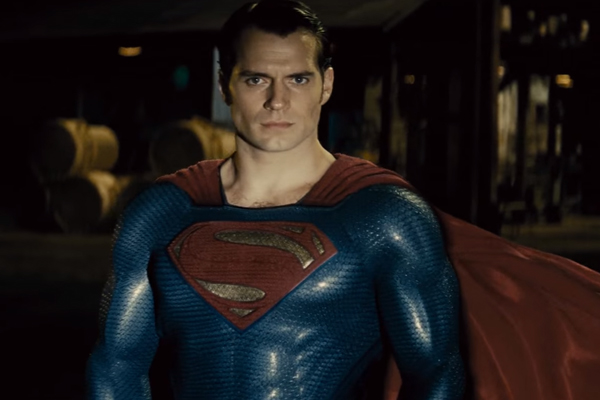
There are a number of inconsistencies in The Dark Knight Rises. How does Bruce rise from the pit and then somehow, without any money, manage to get back to Gotham and sneak in, despite the city being cut off from the outside world? Here's an answer: it was Superman. Support for this theory says that Jonathan Kent told Clark to keep his powers a secret, but Clark still helped people, albeit in secret. And in The Dark Knight Rises, Gotham is facing a more serious threat than ever before. Plus there's the fact that Christopher Nolan produced Man of Steel. It doesn't work in practice, though. Even if we take the idea that it's a pre-Superman Clark, how does he discover Bruce Wayne is Batman and how does he know where Bruce is being held? And why does he bother letting Batman taking the bomb at all? Batman v. Superman pretty much completely negates this theory, since it's the first time the two characters meet. And we know BvS doesn't take place before The Dark Knight Rises, because the only Robin in Nolan's trilogy is Robin John Blake, but there's clearly a desecrated Robin suit in the BvS version of the Batcave.

4. The Joker Is The Hero Of The Dark Knight
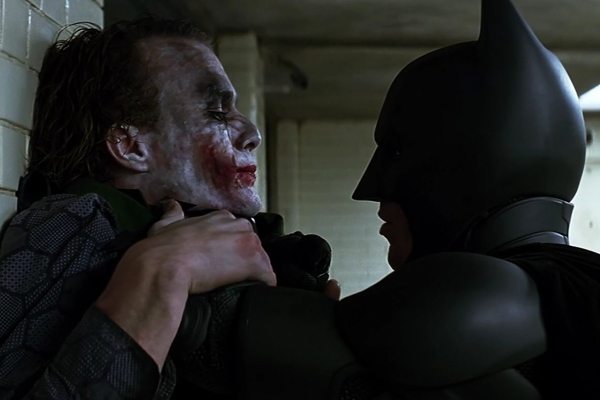
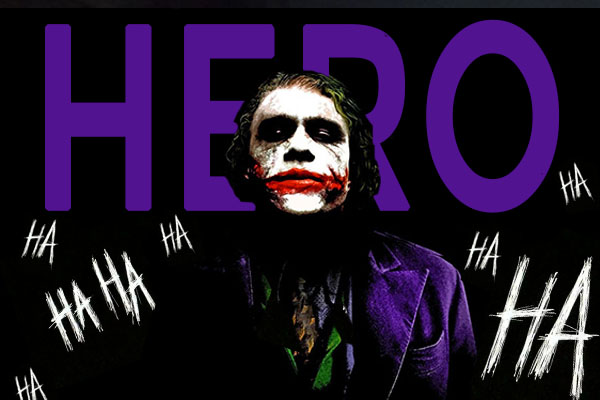
A key element of the Joker in The Dark Knight is that he's basically chaos personified. He doesn't have a plan, he just does things and wants to watch the world burn. But one theory paints him not as a sociopath who loves blowing things up, but instead as a bizarre hero with an elaborate plan. At the beginning of The Dark Knight, organized crime is still a major problem (even infiltrating the Major Crimes Unit). And rather than addressing these problems, Gotham has just left it all in the hands of an unaccountable vigilante of questionable sanity. The Joker's actions were about luring Lau out of hiding and to get him into a place where the Joker could get to him and his money. And by the end of the film, all the corrupt cops and politicians are behind bars, organized crime is basically dead, and the vigilante has gone into hiding. Leaving Gotham in the care of a heroic police commissioner. Of course, you have to disregard that the Joker basically murders his way into making Gotham a better place. And in the course of that bloody rampage, he ends up killing one of Gotham's most incorruptible District Attorneys and physically and psychologically Harvey Dent, the city's white knight. His actions even morally compromise Gordon, who perpetuates the lie of Harvey's death in order to keep the city safe.

3. Bruce Becomes Ra's Al Ghul

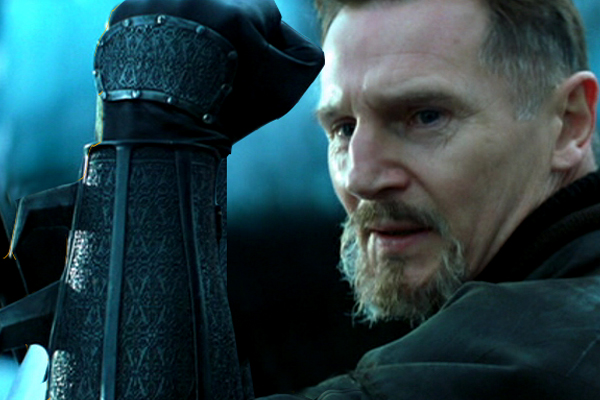
In Batman Begins, when Ducard reveals that he's really Ra's al Ghul, he tells Bruce, "Is Ra's al Ghul immortal? Are his methods supernatural?" Immortality is pretty key to Ra's al Ghul and how he's survived for centuries in the comics, through the Lazarus Pits. But in that one scene, plus the notion that the League of Shadows has existed for centuries, it's suggested that Ra's al Ghul may simply be a title adopted by the leader of the League. After all, that makes more sense in the more realistic world of The Dark Knight trilogy. One theory takes it a step further and says that after Bruce faked his death and left Gotham in the hands of John Blake, he didn't do it just to retire. But rather, he did it instead to take over the League of Shadows with Selina by his side. The theory is that Bruce would now use the League as a force for good to fight crime across the globe, much like Batman Inc. in the comics. It's problematic because there's nothing to suggest the League has even survived after the defeat of Bane and Talia. And more than that, why would the killers who make up the ranks of the League willingly follow someone who betrays their key philosophies and killed not just one but two of their leaders?

2. The Joker Is Robin

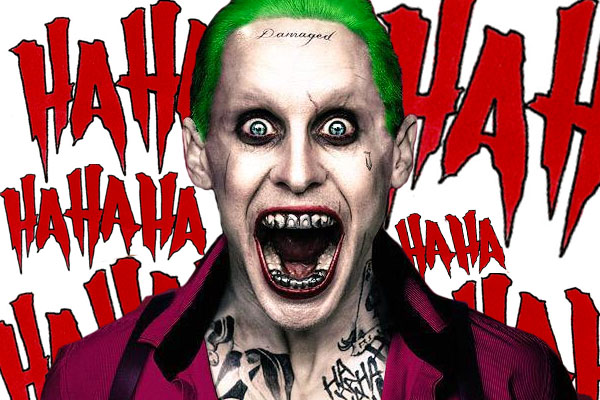
One of the more ridiculous theories surrounding the upcoming DCEU is that Jared Leto isn't actually portraying the Joker at all. Instead, he's playing Jason Todd, the second Robin who was killed by the Joker in the comics. The basis for this comes from the brief glimpses of Joker graffiti on a Robin suit in the Batman v. Superman trailer. The theory is that rather than being killed by the Joker, Jason Todd was actually so twisted by torture that he ended up killing and then becoming the Joker. Another piece of "evidence" touted for this rumor is the J on Leto's face - it also matches the J brand the Joker gave Jason Todd in the Arkham Knight video game. The logic for this is that it's similar to the backstory used in the direct-to-video Batman Beyond: Return of the Joker where Tim Drake was imprinted with the Joker's DNA. Something like that feels like far too much backstory needed to pass on to casual viewers who may not even know who Jason Todd is.

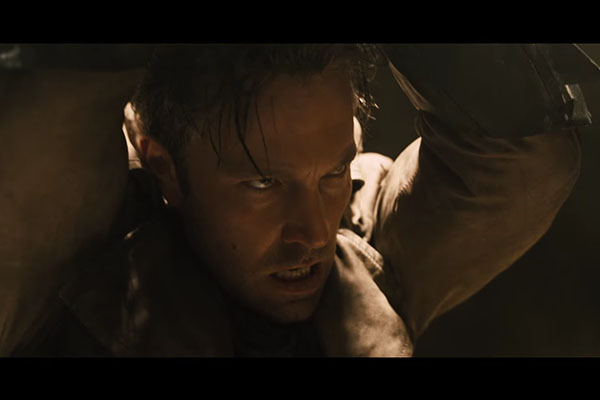
1. Ben Affleck Is Deathstroke

What if Ben Affleck isn't playing Bruce Wayne? Instead, he's actually playing Slade Wilson, also known as Deathstroke the Terminator. And Jeremy Irons isn't playing Alfred, but instead is William Randolph Wintergreen, Deathstroke's butler. It sounds ridiculous, but Total Spoiler proposed this theory. In fact, it gets even crazier than simply wishing that Affleck isn't Batman. It also adopts the theories that The Dark Knight Trilogy is a precursor to the DCEU and that Robin is the Joker (in this case, John Blake). The theory goes on to say that after The Dark Knight Rises, Bruce Wayne goes off to Europe and Blake takes over as Batman, but is corrupted by the Joker. Wayne calls up Slade Wilson and asks him to take up the cowl and help Blake. The big twist in the movie is supposed to show Christian Bale returning as Batman to team up with Slade to stop a Bizarro Superman leading a "red cape" army. Oh, and the V in Batman v. Superman? It doesn't stand for "versus," but instead is the Roman numeral five, because it's the fifth movie in the series that started with Batman Begins. This rumor is undoubtedly the biggest piece of batsh*t, likely arising from a mixture of wishful thinking and negative reaction to the casting of Ben Affleck. Which other Batman fan theories deserve to be on this list? Share your own suggestions below in the comments thread.

Contributor
Contributor

Percival Constantine is the author of several novels and short stories, including the Vanguard superhero series, and regularly writes and comments on movies, comics, and other pop culture. More information can be found at his website, PercivalConstantine.com