10 Awesome Movies That Saved Struggling Franchises
 Look, let's get down to it. I'm willing to bet that by virtue of being on this site, you know your cinema onions. After all, you wouldn't down this far into the internet's rabbit hole without some sort of burning passion for film, or at least a slight curiosity. And like all film fans myself included we can all be a pretty merciless bunch, especially when it comes to failure. So really, there's nothing we like better than a failing franchise. We can all pretend we're altruistic, but there's a reason why we watch Youtube clips like fat woman falling down stairs. To laugh at misfortune is an unfortunate thing, but this schadenfreude is embedded deep within our DNA. So when we as film-going enthusiasts see a franchise which continues to slump from disaster to disaster, you can bet we're going to mock that low-hanging fruit. When the good ship Twilight, Insert-Genre-Here Movie or Transformers continues to run aground with every attempt, we're all over that like a pack of hyenas on a three-legged cat. Yet sometimes, despite years of embarrassment and the occasional colossal misstep, certain franchises can suddenly improve, hoist themselves of the piñata string and escape our critical bat-swinging. It's to these franchises that this article is dedicated. They're in no particular order and I must point out, a mild SPOILER WARNING is in effect.
10. Dredd

9. Rocky Balboa
 Where It Went Wrong: A lack of Rocky in the ring during Rocky V and attempting serious drama. How It Re-Succeeded: Putting the Italian Stallion back in the ring, throwing subtlety out the window. Everyone loves Rocky, and that's just a scientific fact. The Italian Stallion's first franchise entry won Oscars, and though it soon descended into Hulk Hogan, Clubber Lang and Ivan Drago-inspired silliness, the core of what made the original successful was still there. It was just about a man defying the odds and achieving superhuman feats through the sheer force of being punched. After IV, where the franchise truly and awesomely jumped the shark by having Rocky basically end the Cold War through the power of being punched in the face, you could argue there was nowhere else to go. And being fair, Sly Stallone agreed with you, attempting to take his franchise back to basics by having fate kick Rocky in the balls a couple of times. He went bankrupt, found he had brain damage and saw his prodigy fighter poached by a Don King-a-like. In between this, he lost the respect of his son. It was all a bit odd, really. We didn't come to a Rocky film to watch everyone's favorite word-mangler get battered by life, we watched it for the insane boxing and ridiculous overcoming of obstacles. The fact V ended in a street brawl was the final nail in the coffin, and we were all prepared to bury Rocky, viewing it as an awesome franchise with a poor ending. But then Rocky Balboa came along and changed this. Look, I'm not going to pretend it was the best film ever, but it did its job, and did it well. It re-discovered the rich seam of bonkers sentimentality which the first few films mined expertly and started where it left off, showcasing a geriatric Rocky shorn of Adrian and still slightly distanced from his financier son. It had plot, but this time went no-holds-barred with the preposterous spectacles, allowing an arthritic(!) Rocky to force-punch his way to a split-decision loss(!) against the undefeated Heavyweight Champion Of The World. The fact this guy was around 40 years younger than the Italian Stallion, was a reliable contender for the greatest heavyweight of all time and of prime boxing age mattered not this was Rocky, dammit. Nothing's going to stand in his way, and it was great to see this insane can-do attitude brought back to the franchise.
8. Red Dragon
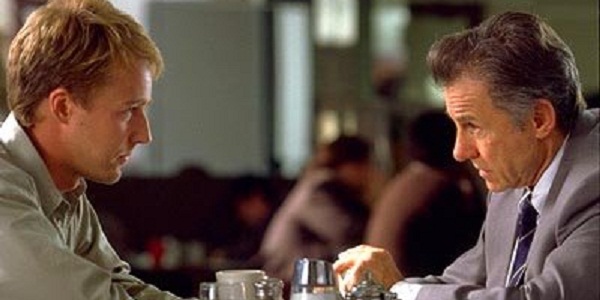 Why The Franchise Failed: A loss of pacing, making Hannibal the centre of the story. How It Re-Succeeded: Reusing Silence Of The Lambs' old formula, putting Hannibal back in prison. In a weird instance of Brett Ratner improving a franchise (more on that kettle of fish in a moment), Red Dragon managed to ape the Academy Awards-dominating Silence Of The Lambs to great success. Weirder still, Ratner managed what the far-more-acclaimed Ridley Scott couldn't pulling off the original's sense of intense dread. But before I explain this, lets back up to Hannibal. The sequel to the much-loved Lambs, the film couldn't get the original band back together but still managed to make some intriguing additions it swapped out Jodie Foster for Julianne Moore, and Ridley Scott replaced Jonathan Demme in the director's chair. We were prepared for something which might not live up to its predecessor's mighty legacy, but would still be an interesting work of quality. However, what we got was a meandering film which lacked all urgency and managed to turn one of cinema's most terrifying prospects into an eccentric, loveable anti-hero. In Lambs, Anthony Hopkins' Hannibal Lecter could chill the blood with just a stare, but while he kept his violent edge in the sequel, he became more of a doddering, cannibalistic uncle, all twinkly and avuncular. Unsurprisingly for a film bearing his name, the whole enterprise wallowed in him, giving him too many monologues with too little to do. It was a shame, because when it got going, Hannibal could really freak you out Gary Oldman was a tremendous villain and some scenes, like the brain-eating and Florence disemboweling, were excellent. Red Dragon managed to re-establish the sense of awful macabre its predecessor had lost, and did it in a very simple way. Namely, it discovered that less was more, sticking Lecter back behind bars and back in the role of story facilitator rather than story centre-piece. Sure, he was still vital to the plot, but having him absent for great swathes of time in favour of Ralph Fiennes' tremendously unsettling Tooth Fairy was a masterstroke, lending real weight to the scenes where he did show up and re-establishing that chained animal mentality. So strangely, in nailing these vital story beats Ratner managed to give a film franchise a proper send-off, and that's the first and last time I'll probably ever write those foreign-sounding words.
7. Pirates Of The Caribbean: On Stranger Tides
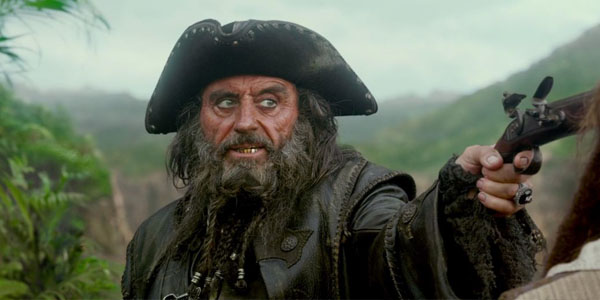 Why The Franchise Failed: It became messy, convoluted and to wrapped up in its own mythology. Why It Re-Succeeded: It lowered its sights and dumped the backstory. I know I'm going to take a kicking for this one, but strangely, I enjoyed On Stranger Tides. That's not to say it's a perfect movie, because it clearly, clearly isn't. There's still flaws all over the shop and Johnny Depp's Jack Sparrow shtick is starting to get quite old. But still, what I admired about the film was that it took to the opportunity to start (relatively) afresh with aplomb. Dropping the always-wooden Will and Elizabeth from the franchise allowed the film to focus on Captain Jack and for the large part abandon the leaden back-story and rules which killed the third film in the crib. Go back and watch At World's End. Go on, I'll wait. I'll be here three-odd hours, but I'll wait. If you've done that (or you don't particularly feel like it), you'll notice that there was just far too much going on. Remember it was the previous film which featured a boatload of exposition from Pintel and Ragetti about who was fighting for what, replete with a we-know-its-complicated subtext. Yet the third film drops even more on top of this, throwing in the Davy Jones-Calypso love story, the East India Trading Company's endgame and a surreal pirate law session and accompanying vote. It was baffling, hard to follow, and left the audience cold. So really, Tides' choice to dump the majority of the mythology to focus on some barmy action set pieces couldn't have been more welcome, and augmenting the formulaic plot with the addition of the always-terrific Penelope Cruz couldn't help but improve matters. Throw in Ian McShane overacting like it was going out of fashion ('Mutineers HAAAAAANG!') and you've got yourself a perfectly serviceable movie perfect for a Sunday night. Granted, it's not going to win any awards, but by dropping Pirates' dead weight in favour of tried-and-tested pirate tropes Blackbeard, mermaids, etc. you could switch your brain off, safe in the knowledge that no-one's going to bludgeon you with ridiculous expository rules from two films ago. If anything, it's quite cathartic.
6. X-Men: First Class
 Why The Franchise Failed: Staleness of ideas and a borked screenplay. Why it Re-Succeeded: Tearing up the rulebook and trying something new, in glorious style. I told you I'd be back for Ratner. Everyone knows how much of a disaster and colossal disappointment X-Men: The Last Stand was, although if I'm honest not all of it can be laid at the director's door. He came into proceedings quite late, with much of the script and cast already decided. But still, the fact he helmed something which promised so much the acclaimed Dark Phoenix storyline and turned it into an anti-climactic mess which put him at the same level of geek pariah-dom as Joel Schumacher. It's never too difficult to nail the 'substance' of X-Men' the civil rights analogies are always present and correct, and can be mined for script-writing gold. However, as befitting its status as one of the trailblazing early noughties superhero films, it suffered from the need to look 'normal,' eschewing some of the more out-there designs for safe-and-boring black leather suits and a need to ground everything in the super-serious. In this regard, throwing the whole lot in the bin and drenching the prequel in Bond-esque glamour and frippery was a masterstroke, giving the film a distinctive flair the originals especially Last Stand sorely lacked. Really, all they could do with the X-Men franchise was tear it up and start again. Aside from the aesthetic, they did this in an extremely inventive way, using the first film's intriguing prologue where a teenage Magneto bends a concentration camp gate and expanding upon it massively. Strengthened by an awesome turn from a pre-phone-shilling Kevin Bacon as an excellent Sebastian Shaw, and an ass-kicking, occasionally Irish-sounding new cast, the film hit the heights where its predecessor (and the godawful Wolverine standalone) failed, opening itself up to next year's quasi-sequel Days Of Futures Past.
5. Fast Five
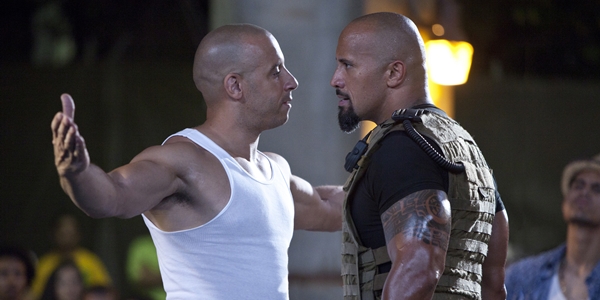 Where The Franchise Failed: Constant repetition and taking itself too seriously. How It Re-Succeeded: The Rock! Cinema Blend really hit the nail on the head when they said The Rock saves franchises. Before he came along and added his bombastic goodness to the Fast franchise, the whole thing was becoming an unintentional parody. It was staffed by charisma vacuums (Vin Diesel aside, maybe), suffered from constant repetition, and most awkwardly of all, addressed the subject matter with a certain po-faced sincerity, steadfastly believing the whole thing was vital, important and on the bleeding edge of cool. Granted, when it first came out, they were probably correct. Street racing was incredibly popular, Li'l John and the Eastside Boyz (I think there's a z in there, I just don't know anymore) were all over the zeitgeist and the game they lent their pipes to, Need For Speed Underground, was going gangbusters in the gaming charts. Yet come Tokyo Drift and beyond, we all started to get bored of the whole damn thing. Sure, it could still hold your attention and kicked ass at the box office, but it was starting to become the film equivalent of Coldplay successful, but the subject of jokes and eye-rolls. If I'm honest, I think the whole thing was all just a bit earnestly dull, and in dire need of some fun and games. Enter The Rock, doing what The Rock does best blowing stuff up and looking awesome while doing it. The man's presence slotted into the series' new-found ethos perfectly, straddling the line between parody and insanity with expertise. With The People's Champion aboard, the franchise was reinvigorated everyone knew they were in for big dumb fun. Being honest, I might be doing The Rock a disservice he's a better actor than people give him credit for, and occupies his action/comedy wheelhouse extremely well. If nothing else, he gave Vin Diesel and chums a compelling antagonist and rival, providing the series with a spark which made sure Fast Five and its sequel outperformed its predecessors both financially and critically. It was a Plus, I really like the rumour that they had to give him a beard so you could tell him and Diesel apart in the action sequences. I have no idea if that's true or not, but I hope to Christ it is.
4. Star Wars Episode III: Revenge Of The Sith
 Where The Franchise Went Wrong: You know this, don't play that game. How It Re-Succeeded: Stuff had to happen to wrap up the prequels. You could probably create several digital forests with the volume of internet pages attacking George Lucas, so I'm not going to dwell to heavily on his myriad faults here. After all, it's all things you've heard before, so just a quick recap will do. Simply put, the main problem with the prequels was that a lot of stuff happened that we didn't really care about. The original Star Wars had a relatively simple plot enlivened with monster hooks and twists, but the prequel series devolved into strange minuitae about trade embargos, the Galactic Senate and political conspiracies. If this was a political thriller, I'm sure everyone would've lapped it up. Yet it wasn't this was Star Wars, and people came for the epic whizz-bangery of the awesome originals. Yet for two whole films Lucas didn't seem to grasp this, instead chucking labyrinthine plot at us like nobody's business. Honestly, in other hands this attempt at more complex subject matter might've gone well, yet punctuated by Lucas's notoriously clunky dialogue the whole thing just seemed to fail harder. But in the final installment, any attempt at wallowing in the narrative was quickly curb-stomped by necessity. After all, this was (at the time) the last film in the franchise, featuring a definite and clearly defined end-point at which we had to arrive. Lucas finally had a target and a place to go, and the film picked up a good amount of pace to make this happen. So we got to see exactly how pouty Anakin Skywalker got turned, we got to see what turned him into the asthmatic harbinger of doom we all knew and loved and we got to see the set-up behind Luke and Leia's situation in the originals. On top of this, we got to see Samuel L. Jackson go out like a badass. It's a bold opinion, but I think Lucas absolutely nailed these essential story beats. Anakin and Obi-Wan's fight in the lava was excellent, the final throes of Padme and Anakin's relationship didn't collapse into cringe-worthy embarrassment that hilarious 'NOOOOOO!' aside and the birth of the Empire was handled really well. It could've continued in the prequels' vein of colossal failure, but in my book it gave a much-derided mini-franchise a positive note on which to end, so it must be praised for that, if nothing else.
3. Predators
 Where The Franchise Went Wrong Teaming up with the Aliens. How It Re-Succeeded Going back to basics and getting rid of the Aliens. The Predator is an awesome monster. I'll make that plain now. It's effectively a dreadlocked killing machine capable of great menace, an athletic bogeyman allowing the film's heroes to be action-heavy tough guys, rather than the shrinking violets and everymen of the regular slasher genre. The first film played this to perfection, stuffed with Arnold Schwarzenegger, inventive murder and latent homoeroticism like only an 80s film can be. The second Danny Glover-fronted film was something of a noble misfire, possessing a cool Predator-in-the-city premise but ultimately failing to deliver, despite its grand ambitions. However, it was when the Predator began to team up with the Alien franchise and Paul W. Anderson that things got nutty. Namely, the whole thing just veered off at the deep end, taking what made the franchise brilliant the heroically awesome monsters and their wanton badassery and bastardising it in a couple of substandard flicks concerning an underground pyramid and the abomination that was the Predalien. Any novelty of seeing the two franchise monsters together on the silver screen was soon lost under the constant repetition and awful effects, and we just wanted it to stop. So thank god for Predators. Taking the franchise back to basics, it eschewed the overly-extraterrestrial environments and cityscapes of its unwanted predecessors for the jungle-based combat of the original, and had a fantastic time doing it. Much like the original, the whole thing was just a B-Movie excuse for violence made all the more charming by the fact it was so blatant. Predators just stuck a couple of hardened psychos, badasses and Topher Grace in their home jungle, and began to hunt them. Again, no hassle, just violence. The weird thing was that the cast was almost too good for a a film like this, anchored by a 'roided-up Adrien Brody, the reliable Alice Braga and Laurence Fishburne giving good nutter. Coupled with some insights into hierarchical Predator society and a flair for bitching action set-pieces, the enterprise was able to be more than the sum of its parts, putting itself back in the Predator tradition. Personally, I really hope they follow through on the hinted-at sequel, although I'm not hopeful.
2. The Incredible Hulk
 Why The Franchise Failed: Too esoteric and ahead of its time, strange villains. How It Re-Succeeded: Dumbed down slightly and threw in some excellent set pieces. Well this one needs justifying, because you might tell me that any film which has to replace its main star for its 'sequel' can't be considered a re-invigorating success. I suppose there's a school for that argument, but please, let me explain. Louis Leterrier's film isn't a classic. Hell, I'd go as far as saying it's one of the weaker Marvel entries, Daredevil and Fantastic Four aside. But there's one thing it is, and that's functional. Please understand, that's not meant as an insult here. What I mean is that the film set out to do a job, and that was to prove a Hulk film was possible after Ang Lee's brave mess. The sad thing is that Lee's contribution came at a time when the comic book genre was still sorting out exactly what it was. In such a situation, wild innovation and esoteric-ism don't tend to be greeted with such a warm embrace, and safer, formulaic, more blockbuster-friendly fare is preferred. This isn't necessarily a bad thing there's no point trying to run before you can walk. So when Hulk came stumbling out the movie trenches first in the guise of a mood piece with strange dog-monsters and a watery Nick Nolte, it got shot to pieces. I personally thought it was good, but I can see why it got a negative reaction while Ang Lee was fascinated with Bruce Banner's duality and gave us some beautiful shots to work with, it just wasn't what we were expected from a film about a big green rage monster. So when Leterrier stepped into the breach he knew he had to make something sufficiently bang-for-your-buck, and I think he managed it. I mean, just look at the set-pieces. The Brazil foot-chase was excellent, the Hulk's rampage on campus was inventive and brutal (remember when Blonsky gets kicked into a tree?) and I reckon I'm possibly the only person who really liked the Hulk-Abomination Harlem smash-off. If you wanted thrills and a safe grounding for a franchise, I reckon Leterrier did a good job it's not his fault Ed Norton was ejected from The Avengers.
1. Rise Of The Planet Of The Apes
 Why The Franchise Failed: Abominable script and a weird ending. How It Re-Succeeded: Absolutely nailing a prequel, astonishing mo-cap. Before Rise came along, the last memory we all had of the Apes franchise was Mark Wahlberg kissing an ape-ified Helena Bonham Carter, which easily goes down as one of the more disturbing things Tommy Wiseau aside I've had to witness in my film-watching life. Yet even if we take out that astonishingly disturbing scene, Tim Burton's attempted reboot did make a hash of things. The script was leaden, Mark Wahlberg proved to be an unsuitable leading man and the ending was so goddamned bonkers that it may have killed any attempted phoenix franchise by itself. So when the time came for Rise Of The Planet Of The Apes, we were all reticent. While Rick Baker's prosthetic designs for the earlier effort were excellent, the whole humanoid-ape thing was starting to look somewhat dated. Then we learnt that mo-cap was being used, and medium wizard Andy Serkis had signed on to play Caesar, we were all excited again. Needless to say, the guy rocked it in the part, earning unheard-of calls for an Oscar nomination and shocking you into silence in one incredible scene.Yet Rise was so much more than Serkis/Caesar the script was sharp, James Franco pulled off the central human part with ease, the ape battles were phenomenal and we got to see Draco Malfoy get immolated. Everyone loved it, and now we get to see Gary Oldman in the similarly wordy sequel, Dawn Of The Planet Of The Apes. So if it got critical acclaim and resurrected a franchise, what more can you really ask for, aside from a Troy McClure-style musical? Nothing, that's what. So that's what I think. What do you think? Feel free to comment!