10 Annoying Movie Tropes That Can Ruin A Horror Movie
Phone not working? Car not starting? Who isn't tired of these cliches?
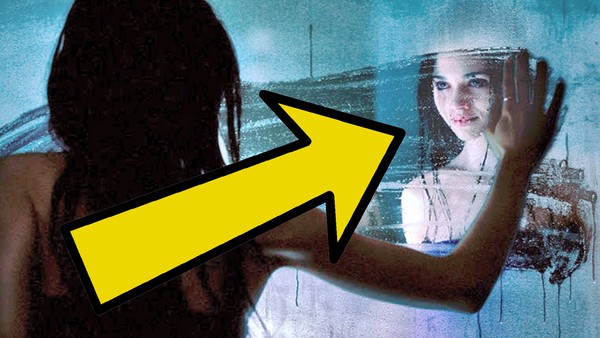
What’s a horror movie without tropes? The subgenre is built on a standard set of rules that it seemingly needs to follow to even be considered part of the arena in the first place.
The genre thrives on doing what it says on the tin, needing to adhere to those rules to satisfy its audience. After all, who wants to see a vampire movie without some bloodletting? Well… then you get Twilight. But that’s a whole other kettle of fish; a kettle that is definitely not horror.
On the other hand, the horror genre has been around almost as long as cinema itself, so clichéd tropes are plentiful. When used with all the excitement of ticking off a checklist, they’re never welcome. Tropes can also be a sign of lazy writing, often used to fill plot holes or conjure a scare by copying movies that did it better, and then watering down the trope as a result.
There’s no quicker way to sour an audience than hitting them with the same cliche they’ve seen a billion times ad nauseam, or draining sympathy for the surviving characters by making them behave stupidly.
Simply put, some things have outstayed their welcome.
10. Uncharged Phones/No Signal

Oh, how modern tech has evaporated the fear of isolation. Up until the late ’90s, horror movies could easily strand characters without a payphone nearby, and the lack of contact with the police didn’t need much explanation, as shown in the likes of The Texas Chain Saw Massacre and The Hills Have Eyes.
However, pesky mobile phones pretty much solved that problem in real life. Stranded in the middle of the desert with some creepy hillbillies eyeing you like you belong on a spit? Just pull out your phone and call 911 - problem solved.
So now, for the past two decades, we’ve had the obligatory scene where a group of teens is stranded in the woods, and everyone checks their mobile phones. Coincidentally, no one remembered to charge their batteries, bring a power bank, has a signal, or data roaming; you get the picture.
We live in a society where most young people are plugged into something at all times, and the dread of being disconnected - even briefly from Instagram - is more terrifying than a maniac wielding a chainsaw, so you better believe they have some sort of back-up plan.
It’s a tough pill to swallow for modern audiences, and one that needs to be remedied with at least some form of creativity.
9. Brushing Off The Obvious

Things go bump in the night? “Probably the pipes, honey.” Dead animal carcasses in the basement? “Wow, those former tenants didn’t like cleaning, huh?” Priest running out of the new house screaming? “Looks like he caught a case of the runs.”
Yes, we know, horror movies thrive on people being stupid, but how many times do our main characters need to face the inevitable and not just leave?
Audiences are willing to let it slide to a point. Certainly, in real life, most people will try to accept or downgrade a situation as much as possible. For example, when that scruffy lady starts screaming supernatural forces are coming for her on your morning commute, who else doesn’t just put their headphones on?
However, there is a point that crosses the threshold of believability. If characters are so dumb as to ignore the obvious, you lose involvement and stop caring for them. In a way, their fate is written by their own stupidity, so why root for them?
Stronger horror films can move around this trope with subversive plot tricks. Case in point, in Sinister, Ethan Hawke’s protagonist Ellison Oswalt moves his family into a haunted house on purpose as he wants to research and write a book, but the ticking time bomb aspect comes down to how long he can stay before it's too late. Likewise, Insidious pulled a great twist with the family exiting their haunted house, only to find out that it was their son who was haunted, not the property.
8. The Car Engine Won't Start
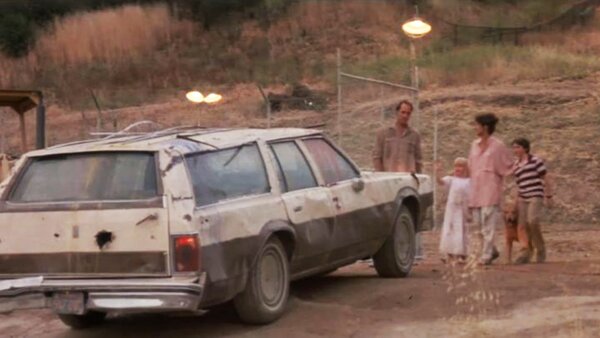
Think really hard. Throughout your lifetime, has your car ever stopped working on you? If yes, what was the frequency throughout your driving career outside this rare incident? Not many, right? Also, in any of these scenarios, did the car happen to get flooded when a masked, axe-carrying psychopath was chasing you after escaping his woodland lair?
It’s that age-old cliché, usually found in your slasher movie: whenever someone leaps into their car in a desperate attempt to escape, the engine just never seems to work… ever. We can add missing keys into the mix, too.
What follows is smashed glass, and, if it's a hapless victim, they get their just deserts. If it's the final girl, often she manages to duck out in time and leads that killer to an industrial warehouse for the inevitable cat-and-mouse finale.
It’s all an excuse to ratchet the tension for an extra beat, or chuck some more conflict at the audience. But at this point, what would feel more unpredictable is if someone jumped into a car and it started it up smoothly for a clean exit. Not as exciting, is it? Less groan-worthy, though.
Hats off to the Scream series, as the first two movies flipped the stalled-car scenario on its head (the killer has the keys!) and delivered nail-biting set pieces out of it.
7. Splitting Up

It’s as inevitable as the sunrise at this point: a group of survivors faces an ominous situation that clearly signals, “stuff just got real.” Whether it’s the aftermath of a grisly massacre, a mysterious artefact, or even a caged military scientist who looks suspiciously hungry for human flesh, the group stares at each other as a decision must be made.
In real life, every person would stick together like glue, never leaving each other’s sight, and certainly not venturing off alone in the dark. But in the movies, the go-to strategy is often, “Let’s split up… we’ll cover more ground that way.”
Audiences tend to respond with an immediate facepalm, and this trope appears across all genres, ranging from straight-to-streaming C-flicks to high-budget productions like Prometheus, where, after the group splits up, the mapmaker gets lost and the alien expert tries to pet a hissing space snake. Spoiler Alert: it doesn’t end well.
Savvy watchers know the setup conveniently allows the story to pick off characters one by one in drawn-out set pieces, or simply explains why no one escapes before realising they’re the last one standing, and it feels lazy and convenient. That said, the trope can be subverted to brilliant effect - take The Thing, for example - where if you can’t trust the rest of the group, splitting up is the safer option.
6. The Cat Jump Scare

It seems like every suburban residence in horror movies has a stray cat epidemic. They always jump out at night from the back of a dark alley, ready to make our protagonist’s heart leap into their throat - and deliver a jump scare to the audience during the slower part of Act 1.
On further thought, spaceships, old churches, and abandoned wood cabins seem to have the same problem.
It always feels like a cheap tactic, with filmmakers ratcheting up the tension, hinting at some sort of viable threat, and then: MEOW! No masked maniac or ghost; just a random cat leaping in from the side of the frame.
It’s an easy way to frighten a tense audience without the plot earning it in any meaningful way. Understandably, horror films often start slow, but talented directors, like those behind Smile or X, are able to build atmosphere and suspense through nuanced direction, even without a killer creature on screen... yet.
One place where this trope gets some leeway is Alien, because Jonesy the cat is a legitimate character in the film. And the aforementioned jump scare is immediately followed by one of the most iconic movie monster reveals in cinematic history, so it gets a pass.
5. I've Fallen And I Cant Get Up
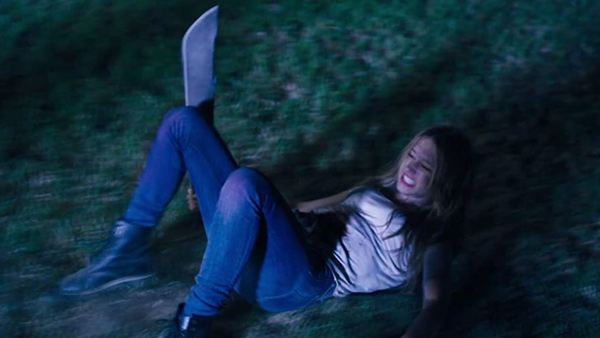
In the scenario of a killer or creature being in pursuit, the hapless victim, covered in dirt and bruises, makes a desperate dash for safety when - oops - a tree branch appears out of nowhere. They trip. Oh no. Their momentum is lost. If only they could leap to their feet without missing a beat, they might regain their lead. After all, the pursuer is literally just walking behind them with a determined jaunt.
But instead, the pursued flails on the ground for a moment, panting, panicking, and feeling hopeless. Are they having a meltdown instead of jumping up? Get up! What’s wrong with you?!
Yep, who hasn’t yelled that at the screen? It’s one thing to throw hurdles at the protagonist to build tension or explain why a final girl hasn’t sprinted down the highway to the nearest police station, but there’s nothing more infuriating - or nonsensical - than a character falling and, instead of immediately recovering (especially when they’re pumped full of adrenaline), they lie there having a pity party, hesitating to stand up and save themselves.
If you want to drain sympathy from a character, this trope pretty much takes the cake - and it needs to go.
4. Knock Out Killer – Then Leave Them
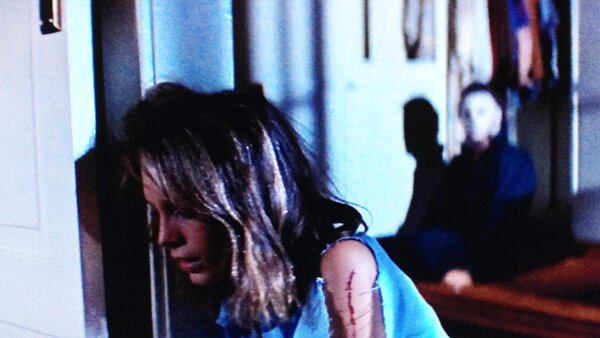
This one tends to happen consistently in the third act of a slasher or survival film. There’s a massive tussle with the big bad, all hope seems lost, and the lead protagonist is being overpowered, until the security guard we all thought was dead shows up and smashes the villain with a chair. Bad guy down. Hooray!
But, instead of seizing the moment and dropping a boulder on the assailant’s head to ensure they never breathe another day, the victims simply stand up… and walk away?
That’s right, the bad guy is lying on the ground, seemingly unconscious, and they just turn their backs on them. No tying them up, no finishing the job. They leave and try to find an exit, complacent in the belief that there’s no way the rogue will get back up.
We all know how this pans out, as the killer often rises and jumps out at our heroes all over again. Rinse and repeat. It’s tired, predictable, and feels like the writers are padding out the third act for one last showdown.
The Scream franchise gets a second shout-out as it brilliantly mocks and subverts this trope. In the 1996 original, when Billy Loomis lies incapacitated, Sidney Prescott puts a well-deserved bullet in his head, not giving him another chance for one final scare.
Classic (and welcome) stuff.
3. Stand Frozen

There’s a lot to be said about the fight-or-flight response in human psychology. It’s an instinct that inevitably kicks in when confronted with danger: do we gear up for battle? Run to live another day? Or freeze like a deer in headlights? All are natural reactions, depending on what our personalities tell us to do to survive, but in horror movies, it better not be the last option, or the audience will be ready to scream for a character's demise.
This usually occurs when there are two characters the plot needs to pick off. They’re jogging through an isolated area, the villain leaps out and takes down one of them, and instead of the second person seizing the moment to fight back - or, you know, run - they stand frozen, practically wetting themselves, for what feels like an eternity. This gives the assailant enough time to finish their business and then turn their attention to victim number two, who gasps, as if they couldn’t see it coming.
It’s enough to make you switch the TV off. It’s as goofy as a gang of bad guys in a kung-fu movie lining up to get kicked in the head one by one, instead of just overpowering the hero.
Alien gets a pass again, though. Lambert’s frozen reaction as the creature makes quick work of Parker feels like a legitimate character trait. Plus, the horrifying payoff - her death gasps echoing over the ship’s audio - is one of the most chilling moments in the film.
2. Arming Yourself - Then Tossing the Weapon

This one sort of applies to action films, too, where movie characters don’t seem to have much respect for weaponry on screen. Once Chow Yun-fat’s dual pistols run empty, he tosses them away like disposable cigarette lighters. At least he follows it up with a slow-motion roll and grabs the AK-47 on his way up to continue spraying. In horror films, not so much.
Once the antagonist has been dealt with (well… supposedly dealt with), or the situation calms down for a moment, main characters are always quick to drop the gun, the wrench, the bat - whatever they’re holding - unless it’s a mobile phone with no signal.
Are weapons only good for one or two uses? It seems silly. In a real-life dangerous situation, you’d likely have that weapon super-glued to your hand. Even an empty gun can be turned into a hammer if needed. So, when characters drop their weapons, it feels groan-worthy - a nonsensical plot hole designed to make them vulnerable again, just to put them in peril moments later, instead of letting them be a worthy opponent when Leatherface pops back into frame.
Maybe it’s better than guns jamming at opportune times, but not really.
1. The Mirror Jump Scare

Mirrors are scary. Just ask your pet cat. In fact, the mirror scare was once an extremely effective method of terrifying audiences - thanks for the sleepless nights, Candyman - until it was overused to the point of exhaustion.
The traditional trope usually involves a character in the bathroom, shown in a standard over-the-shoulder shot. They open the cabinet, everything seems normal, but once they slam it shut in a continuous take, something alarming appears in the reflection: a vengeful ghost smiling at them, a blood-stained clue suddenly visible on the wall behind, or sometimes (if the character arc permits), their face is distorted for shock value. The list goes on.
Audiences know the drill by now. If it’s a horror movie and a character is acting nonchalant around a mirror, we can see the scare coming a mile away and usually know exactly how it will play out.
It’s time to delete this trope and move on.
Props to films like Oculus and Mirrors. While flawed, they manage to take this tired trope and wring genuine tension from multiple set pieces built around it - not to mention Amy Smart’s literally jaw-dropping demise in the latter is still etched in several people's minds to this day.