10 Amazing Films From Directors Who Stopped Giving A Damn
Filmmakers with singular vision, and the will to pursue it.

Cinema has always walked a tightrope between art and commerce. On the one hand, you'd hope that any filmmaker worth their salt would take some degree of pride in their artistic vision, and would seek to make their mark creatively; on the other, movie-making is an extensive and costly undertaking, and there's always a need to make that money back with interest for all that effort to be worthwhile.
Every so often, though, directors with particular ambition and nerve decide to throw caution to the wind and go all-out. Never mind whether it'll win over audiences or critics; never mind whether it'll make its money back or not.
We don't see filmmakers throwing caution to the wind in this manner all too often, and when they do the results aren't always everything we'd like. Donnie Darko writer-director Richard Kelly took such an approach on his second film Southland Tales, and that pretty much killed his career on the spot.
However, on occasion directors really need to say to hell with everything and everyone, and make that film that only they can make - and when they get it right, the results leave us all richer for it.
10. Guillermo Del Toro - The Shape Of Water

You'd be forgiven for thinking a film that just cleaned up at the Oscars, scooping the statuettes for Best Picture and Best Director, wouldn't necessarily be something all that bold and unconventional, given how risk-averse the Academy Awards have tended to be over the years.
In this instance, however, you'd be dead wrong. The Shape of Water was an intensely personal effort for director, producer and co-writer Guillermo del Toro; and as an independent production made for less than $20 million, it was something of a change in direction after del Toro's big budget studio productions Pacific Rim and Crimson Peak didn't have the anticipated impact.
In light of its awards-season success, it's easy to forget that The Shape of Water wasn't necessarily an easy sell. It's an adults only fairy tale, blending elements of a cold war thriller with hints of classic musical, all of it centred on the love story between a mute cleaning lady and an amphibian monster man.
It takes some guts to give Oscars to a movie that features inter-species sexuality at its heart, but it takes even greater guts to make that movie in the first place. Bravo, Mr del Toro.
9. Peeping Tom - Michael Powell

Throughout the 1940s and 1950s, Michael Powell was among the most respected names in cinema. In collaboration with his directing, producing and writing partner Emeric Pressburger, Powell had lent his name to such time-honoured, family friendly classics as The Red Shoes and A Matter Of Life and Death.
However, in 1960 Powell tried his hand at something very different indeed in the form of Peeping Tom - and the resulting film pretty much derailed his career.
Hand in hand with Alfred Hitchcock's Psycho (which was made and released that same year), Peeping Tom is widely regarded the birthplace of the slasher movie. Carl Boehm stars as Mark, a nudie pin-up photographer and aspiring filmmaker, whose social awkwardness masks a horrifying secret: he's a serial killer preying on young women, impaling his victims on the lethally sharp leg of his camera tripod and capturing the moment of death on camera.
To say this was pushing the envelope for the time is a major understatement. The critical establishment which had previously heaped praise on Powell were appalled, and the backlash hit the director hard. Though previously prolific, he would direct only five more films and a few TV episodes in the years ahead, before passing away in 1990.
Happily, Peeping Tom has long since been re-evaluated, and is now widely recognised as a truly groundbreaking horror classic.
8. Apocalypse Now - Francis Ford Coppola

The 1970s were a truly radical time for Hollywood, ushering in a new era of American cinema in which bold, challenging material was the order of the day, and the director was king. Arguably the big daddy of them all was Francis Ford Coppola. With the first two Godfather movies and The Conversation, he was responsible for three of the decade's greatest masterpieces.
Surely the only way to go was up, and so Coppola went to major extremes with his next picture, Apocalypse Now, an update of Joseph Conrad's Heart of Darkness set against the dark days of the Vietnam war.
The troubled production of Apocalypse Now is almost as legendary as the final film itself, with cast reshuffles, hazardous conditions, massive overruns on the budget and shooting schedule, leading man Martin Sheen suffering a heart attack, and the notorious eccentricities of Marlon Brando.
Coppola famously declared that the film "is not about Vietnam, it is Vietnam," and that "little by little we went insane" during production. The debts Coppola accrued making the film, on top of the commercial failure of his next film One From The Heart, saw the auteur largely reduced to director for hire status in the years ahead.
Still, many would say it was all worth it, given what an earth-shattering all-time classic Apocalypse Now turned out to be.
7. Cruising - William Friedkin

Not unlike Coppola, Friedkin was one of the major Hollywood players of the 1970s. 1971's The French Connection cleaned up at the Oscars and proved hugely influential on the cop thrillers that followed, whilst 1973's The Exorcist is arguably the most acclaimed - and, adjusted for inflation, most commercially successful - horror movie ever.
However, Friedkin didn't have anything like the same critical or commercial success with his next two films Sorcerer and The Brink's Job (although the former has since been widely declared one of his best). Subsequently, the director didn't have much to lose when he returned to cop thriller territory with his riskiest project to date, 1980's Cruising.
Inspired by real life crimes, Cruising centres on a series of murders in New York's gay S&M leather bar scene, and casts Al Pacino as a cop sent undercover to find the killer. However, as tends to be the case in undercover cop movies, the job takes a great personal toll.
Cruising had a very troubled production as much of the New York gay community aggressively protested the film, believing it would promote a homophobic agenda. It also had major problems with censors, thanks to uncensored footage of real sadomasochistic sex acts. A whopping 40 minutes of such footage (since lost) was cut for to avoid an X-rating.
On release, Cruising didn't go down well with critics or audiences, but as an example of just how bold mainstream filmmaking can get when the director has no f***s left to give, it's well worth a look.
6. Falling Down - Joel Schumacher

By the early 1990s, Joel Schumacher was on a roll, his CV boasting such diverse hits as Brat Pack drama St Elmo's Fire, teen-friendly horror movies The Lost Boys and Flatliners, and saccharine weepy Dying Young.
Few could have imagined that Schumacher would next direct one of the most provocative and controversial films of the time, 1993's satirical black comedy thriller Falling Down.
The film casts Michael Douglas as William 'D-FENS' Foster, a man who's both recently divorced and recently fired from his job as a defence engineer. Abandoning his car in an LA traffic jam, he sets off on foot to reach his daughter's birthday party. Along the way he has numerous violent encounters with strangers and picks up an increasing number of deadly weapons. A killing spree and police manhunt ensues.
With its shady morality and grim worldview, Falling Down didn't go down well in some quarters, but many praised the film both for Douglas's commanding central performance, and the questions raised about the state of America at the time.
Schumacher's courageous handling of such edgy material definitely increased his standing in Hollywood, leading to further high profile, dark-edged dramas like The Client and A Time To Kill.
What could the director possibly do wrong from there? Oh yeah, the Batman movies...
5. Fight Club - David Fincher

David Fincher's first decade as a Hollywood film director had its highs and lows. His first feature, 1992's Alien³, was by all accounts a very unhappy experience for the seasoned commercial and music video veteran, but he came back with a vengeance on 1995's Seven. After that, 1997's The Game met a warm but comparatively muted response.
So when the time came for Fincher to helm his adaptation of Chuck Palahniuk's novel Fight Club, Fincher was determined to pull out all the stops. The result was an aggressive, in-your-face attack on 1990s America which actors Brad Pitt and Edward Norton both declared the best film they'd ever made.
With a $63 million budget, Fight Club was an expensive risk for 20th Century Fox, and not one that paid off in the short term, as it only took $100 million at the worldwide box office. As a result, Fox fired their head of production Bill Mechanic, and Fincher wouldn't make another film for the studio until 2014's Gone Girl.
Still, almost two decades later most would agree it ranks among the best work of all involved, though it continues to prompt mixed readings and controversy to this day.
4. Domino - Tony Scott

The late Tony Scott might easily have wound up a bit of an also-ran in Hollywood. From the start, he seemed doomed to be trapped in the shadow of his more widely acclaimed older brother Ridley Scott; and yet, with his massive breakthrough hit Top Gun, the younger Scott was soon the more commercially successful of the two.
Yet rather than resting on his laurels, Scott continued to make a point of trying different things, even in the later years of his career. So it was with his 2005 film Domino.
On paper, it sounds simple enough. Keira Knightley takes the lead as Domino Harvey, a real-life character who made the distinctly unusual career progression from fashion model to professional bounty hunter.
However, Scott crafted something very far removed from your standard biopic. Domino builds on the aesthetic of his preceding film Man On Fire, but takes it to another level, with a hyper-kinetic visual style, disorienting editing, a persistently thumping soundtrack, and a plot that's often near-impossible to follow.
It's hard to pinpoint quite what Scott was trying to say with the film, beyond the simple truth that fact is often stranger than fiction. The director later admitted, "I got overcome by the insanity of the world I was touching."
Still, it's not every day you see a 61-year old filmmaker with decades of experience to come out with something so positively bursting with youthful energy, irreverence and IDGAF attitude.
3. Magic Mike - Steven Soderbergh
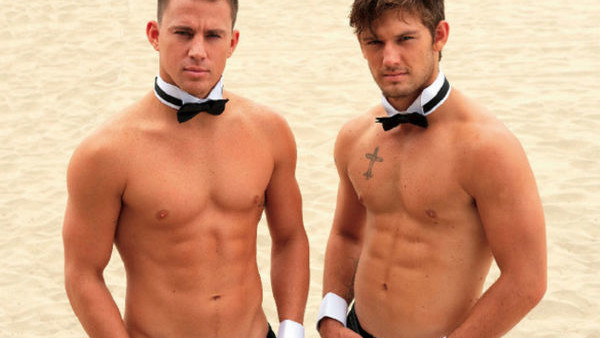
While Steven Soderbergh was one of the early pioneers of the new American indie cinema of the 1990s, it was the 2000s that really saw him rise to prominence with his Best Director Oscar win for Traffic, and the mainstream success of the Ocean's trilogy.
The director had always tiptoed between populist entertainment and more high brow material, always with a heavily intellectual edge and, it's fair to say, a very masculine energy. As such, few could have predicted that in 2011 he would make a movie that would send female audiences into a frenzy.
Magic Mike cast Channing Tatum as an ambitious male stripper. The film was largely based on Tatum's own real life experiences in that profession, which he had discussed with Soderbergh on the set of earlier film Haywire.
Shot for only $7 million, Magic Mike made its money back many times over as thirsty cinemagoers came flocking in. And yet, while the film absolutely gives them their money's worth with all the man-meat on display, it's still very much a Steven Soderbergh film, meaning the characters and the dialogue are treated every bit as seriously as they would otherwise.
It may have put off some Soderbergh fans at the time, but Magic Mike proved to be a key film both in establishing Channing Tatum as a genuine talent, as well as having a role to play in the career resurgence of supporting actor Matthew McConaughey.
2. The Lords Of Salem - Rob Zombie

It would be putting it mildly to say that Rob Zombie's move from rock star to filmmaker has proved a bit divisive. The director's breakthrough films House of 1000 Corpses and The Devil's Rejects won some admirers, but much of the goodwill generated there was rapidly destroyed by his 2007 Halloween remake and its 2009 sequel.
As such, Zombie was in a bit of a make-or-break situation when he took on his next project, 2012's The Lords of Salem. After struggling to adapt his bizarre and brutal sensibilities to a mainstream-friendly slasher format on the Halloween films, the director clearly decided to say "screw it" and make a film which couldn't be more Rob Zombie if it tried.
A surreal, nightmarish blend rock'n'roll and black magic, The Lords of Salem casts Sherri Moon Zombie as a radio DJ and recovering drug addict who comes into possession of a mysterious album, whose music induces dark visions of devil worship and debauchery.
Critics and audiences were largely bemused, but The Lords of Salem is arguably Zombie's best, most singular work as a filmmaker to date. It might not make a great deal of sense, but that was clearly never the point; it's an assault the senses, bombarding the viewer with bizarre sounds and imagery that dig into primal, subconscious terrain.
1. Mother! - Darren Aronofsky

Few major filmmakers in recent memory demonstrated having less f***s to give than Darren Aronofsky did with his 2017 film, Mother! Promoted as a simple horror film and star vehicle for Oscar winners Jennifer Lawrence and Javier Bardem, the film proved to be quite unlike anything audiences were expecting, and caught a great many off guard.
Mother! casts Lawrence as the unnamed wife of Bardem's unnamed poet, the two living alone in an idyllic, isolated old house which she never leaves. However, their peace and quiet is broken by the sudden arrival of a succession of strangers, who the husband willingly invites in.
These simple beginnings lead into action that grows increasingly strange, abstract and confrontational, building to a delirious final act that should have something to upset just about everyone.
It's not an especially pleasant film, and not one that many viewers will be eager to watch more than once, but Mother! is certainly a thought-provoking work that's guaranteed to leave a mark on all who see it.
Above all else, Mother! is a powerful reminder that, after his comparatively mainstream-friendly work with The Wrestler, Black Swan and Noah, Darren Aronofsky clearly hasn't forgotten how to really get under the audience's skin.