10 Alternative Version Of Movies You Didnt Know About
These classic movies have wacky alternate versions - for better or worse.

It's not at all uncommon for movies to receive a Director's Cut eventually, whether as soon as it hits home video or years or even decades later.
This allows filmmakers the opportunity to release a version of the film in line with their original vision, free of studio meddling and all the other compromises of releasing a movie in cinemas.
And while most Director's Cuts receive their fair share of publicity, sometimes there are alternate versions of films that fly well under the radar.
In some cases it's because the original filmmaker wasn't directly involved and it was considered more of a curious experiment, while in others it might be due to its scarce availability today.
These 10 movies - most of them great and some of them masterpieces in their own right - all received alternate versions, from remixes to remasters, colorisations, and even contemporary updates, which have been largely missed by the mainstream.
They certainly don't all work, and a few have even been considered sacrilegious by fans of the originals, but they are at least interesting experiments which test the potential for films to be further experimented with post-release...
10. Drive With An Alternate Soundtrack

Nicolas Winding Refn's Drive is fondly remembered for, among other things, its fantastic music, by way of both Cliff Martinez's moody original score and the fantastic inclusion of existing electro-pop tracks from the likes of Kavinsky, Desire, College, and Chromatics.
Though Refn's musical selections feel inextricably intertwined with key scenes from the film, in 2014 BBC Radio 1 produced a re-scored version of Drive with the director's approval, whereby DJ Zane Lowe replaced Refn's chosen songs with his own picks.
This new version contained new songs from Chvrches, Banks, Bastille, Eric Prydz, SBTRKT, Bring Me the Horizon, The 1975, and Laura Mvula, and viewers were able to switch between the original and new soundtracks with the mere press of a button.
Reviews from both music critics and general audiences proved decidedly mixed, some appreciating the effort while others felt that Refn's original music choices were so instinctively perfect that it was a fools' errand to bother messing with it.
For those curious, at least, the remixed version can still be viewed on Amazon Prime Video.
9. Kill Bill: The Whole Bloody Affair Combines Both Movies

You might well be aware that Quentin Tarantino's two-part Kill Bill saga was originally conceived and shot as a single film, but scissor-happy producer and general trash-planet of a human being Harvey Weinstein suggested that the director cut the film in two to avoid brutal edits.
And considering the two movies total over four hours, it's fair to say that it would've basically been unreleasable as a conventional multiplex feature - audiences would've been put off and cinema chains wouldn't have wanted to program something so ridiculously long.
Splitting the film in two not only allowed Miramax to make more money, but ensured Tarantino could keep more "extraneous" material in each film, such as O-Ren Ishii's (Lucy Liu) animated backstory in Volume 1.
And so, Kill Bill was released in two parts in late 2003 and early 2004 to critical acclaim and commercial success.
However, in 2008 Tarantino revealed the existence of his original four-hour version of the story as a single movie, including an extended version of O-Ren's origins, entitled Kill Bill: The Whole Bloody Affair.
Tarantino began screening the film at his own picture-house, Los Angeles' New Beverly Cinema, in 2011 but it never received a wider release beyond this. Over a decade later, it still hasn't been made available on home video.
With Tarantino recently releasing an extended "mini-series" version of The Hateful Eight to Netflix, many are hopeful The Whole Bloody Affair could end up on a streaming service in the near-future.
Given that this version of the film is 100% complete and doesn't require any Snyder Cut-esque post-production work, it's certainly possible. We want to believe.
8. Mad Max: Fury Road's "Black & Chrome" Version Removes All Colour

Though Mad Max: Fury Road is one of the most stylistically vibrant blockbusters of the last 10 years, director George Miller actually realised during production that he preferred the film in black-and-white.
He consequently negotiated with Warner Bros. to release a Black & Chrome version of the film on home video, which stripped away the orange-soaked colour palette for pure black-and-white.
And while some might assume this involved nothing more than pressing a button and re-rendering the movie, it actually required the entire film to be re-graded, taking into account the contrast, saturation, and so on of each individual shot.
Legendary cinematographer John Seale wasn't involved with its creation but gave his blessing, and it was largely well-received by critics and fans alike for telling the original story through a different aesthetic lens.
This kickstarted a run of popular movies receiving their own monochromatic re-releases, such as Logan (aka Logan Noir), Parasite, and most recently Guillermo del Toro's Nightmare Alley.
7. Final Destination 3's Thrill Ride Edition Lets You Choose Your Own Deaths

Final Destination 3 isn't one of the better entries into the hit horror series, but the home video release did offer up an inspired dose of added value.
The so-called "Thrill Ride Edition" included a "Choose Their Fate" feature which turned it into an interactive film of-sorts, allowing audience members to make decisions which alter the story.
As such, you're able to see alternate death scenes for several characters or even spare them from death entirely.
Most hilariously, you can even stop the central characters from boarding the doomed rollercoaster altogether, meaning protagonist Wendy (Mary Elizabeth Winstead) never has her premonition and the film just abruptly ends.
This is actually a pretty inspired idea for a franchise that's always worn its B-movie inspirations on its sleeve.
It's a shame the two sequels never kept it up for their DVD releases, but with the series getting a reboot for HBO Max, streaming offers up the perfect opportunity for a more granular and involved take on this concept.
6. The Matrix's Ultra-Green Remaster

Ever since The Matrix received its 2008 Blu-ray re-release, audiences have effectively been made to watch a version of the film that many fans consider inferior to both the original theatrical release and earlier DVD releases.
The problem, inherently, was that the film had its colours re-graded for the 2008 Blu-ray to be more stylistically consistent with its two original sequels, The Matrix Reloaded and The Matrix Revolutions.
You probably remember that the scenes set inside the Matrix in those movies have a distinct green tint to them, which differentiates them from the more washed-out scenes in Zion.
The original release of the first film utilised a far more subtle and subdued green tint within the Matrix, and so many fans felt that this new colour grade was excessive and strayed too far from the original aesthetic.
This green-tinted version was widely used by streaming services for many years, and it wasn't until the 2018 4K re-release that the original grade was restored, as overseen by the trilogy's cinematographer Bill Pope.
This is one of those subtle alternate version that many casual moviegoers would never even think about, but once it's been pointed out to you and you've seen how much more vibrant the original version looks, it's impossible to un-see.
5. The Godfather Trilogy: 1901–1980 Combines The Films Into A 10-Hour Endurance Trial

Even with the third Godfather movie being demonstrably worse than its all-timer predecessors, the Godfather Saga is still one of the finest trilogies in cinema history.
With the three original theatrical releases totalling roughly nine hours in length, the prospect of combining all three into a single project seemed logistically unfeasible, and yet director Francis Ford Coppola decided to do it anyway.
After the release of The Godfather Part III, Coppola and long-time editor Walter Murch got to work compiling a 9 hour, 43 minute cut of all three movies combined, re-cut into chronological order and complete with material cut from their respective theatrical releases.
This version of the story, entitled "The Godfather Trilogy: 1901–1980," was released to VHS and LaserDisc in 1992, though sadly hasn't ever been brought forward to DVD or Blu-ray, and so remains a rare collector's item today.
A review from Time on original release lauded the gargantuan project, even if it's obviously strictly for Godfather enthusiasts.
4. Wake Up, Ron Burgundy: The Lost Movie Makes A New Anchorman From Deleted Scenes & Outtakes

Released on home video less than six months after the original version of Anchorman hit cinemas, Wake Up, Ron Burgundy is an alternate version of the movie comprised of various outtakes and deleted subplots that are shaped into a loose narrative courtesy of a voiceover narration.
The result is a rough but fascinating film which shows just how much material was originally filmed and ultimately discarded.
Much of this involved a group of hippie bank robbers known as The Alarm Clock, and when test audiences hated this aspect of the film, it was cut and new material - namely the subplot with the panda giving birth - was filmed to replace it in the theatrical release.
Wake Up, Ron Burgundy doesn't really function as anything more than a feature-length DVD extra, which is exactly what it was, being bundled with some releases of Anchorman.
It's clear why most of this didn't make the original cut, but it's still an intriguing curiosity in its own right.
3. Casablanca: Colorised Edition
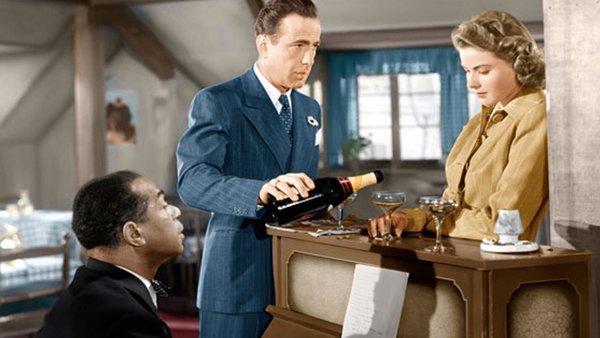
No film in cinema history has been more bitterly embroiled in a "colour controversy" than Casablanca, which was colorised in the 1980s by media mogul Ted Turner at the cost of $450,000, and aired on TBS in 1988.
Roger Ebert famously panned the very idea of Casablanca being colorised, and though its original airing received some scattered praise for the sheer technical feat of it, enthusiasm was generally muted among critics and audiences alike.
Turner, for his part, claimed he colorised the unassailable masterpiece to "protect [his] investment," a phrase which couldn't seem much more laughable 30+ years on, where black-and-white classics continue to thrive among film enthusiasts.
The colorised version was released on VHS in 1989, though there haven't been any official releases since. That hasn't stopped fans creating their own versions, the results of which are at once impressive and offputting.
2. Ghost In The Shell 2.0 Gives It A Terrible Modern Makeover
Sometimes creators just can't leave their own work alone apparently, as was evident with 1995's anime masterpiece Ghost in the Shell.
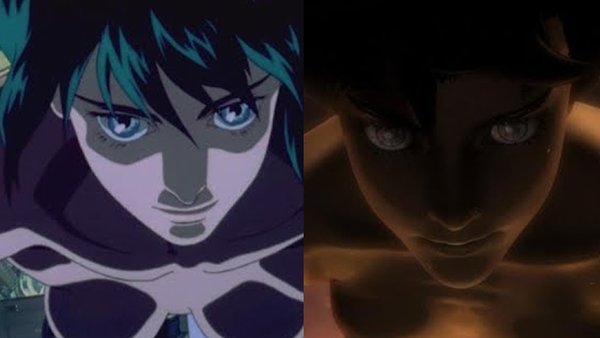
In 2008, director Mamoru Oshii oversaw the release of a new version, Ghost in the Shell 2.0, which included new 3D animation and effects, a remixed soundtrack, small edits to several scenes, and some of the original Japanese dialogue being re-recorded to sound more "modern."
This new version has largely flown under the radar for all but hardcore fans of the series, yet proved massively divisive for two reasons: the excessive inclusion of 3D CGI and the horrendous colour grade.
Many key moments from the original film have been recreated with modern CG animation and look nowhere near as appealing as in the original, which combined 2D hand-drawn film cells with digital effects.
It doesn't help that shots within the same sequence keep switching between 2D and 3D, as proves extremely distracting.
Oshii also made the baffling decision to give most of the film a nauseating orange hue, making it fall stylistically in line with 2004's non-canon sequel Ghost in the Shell 2: Innocence, counter to the blue-ish colour grade of the original version.
1. Night Of The Living Dead: 30th Anniversary Edition Contains Newly Filmed Footage & Music

It's well known that George A. Romero's seminal zombie movie Night of the Living Dead accidentally entered the public domain upon release due to the original distributor failing to include a copyright notice in its credits, allowing anyone to remake it free of charge without permission.
But you might not know about the contentious 30th Anniversary Edition of the movie, which was created by the film's co-writer John A. Russo and released in 1998.
Russo filmed new scenes to be inserted into Romero's existing footage and had a new soundtrack composed in order to make the film feel more contemporary.
Yet critics and fans largely panned Russo's new version, lamenting that the new footage looked out of place next to the original scenes, having been shot on newer camera equipment and even featuring a visibly much-older Bill Hinzman reprising the role of the cemetery ghoul.
Some of the alternate versions on this list are great remixes, others are intriguing curios, and some like this you'll probably wish you could remain blissfully ignorant of.