10 All-Time Great Franchises That Still Had One Bad Movie
Not a lot of franchises have been lucky enough to pull off a 100% success rate.

The problem faced by any long-running franchise is how to avoid the law of diminishing returns, with consistency always being the key to keep audiences coming back for more.
These days, it isn't enough to simply rehash everything that worked before but place it in a different context this time around, and one of the main reasons why so many brands keep getting rebooted is that the studios are hoping a fresh coat of paint will cover up a glaring lack of new ideas.
Very few franchises are fortunate enough to have a 100% track record of success, especially once they reach four or more installments, and with the vast majority of Hollywood's box office dollars hailing from their established properties a misstep or two has almost become inevitable at this point.
John Wick, the rebooted Planet of the Apes series and The Lord of the Rings trilogy are some of the very few managed to deliver consistently great follow-ups, but even the most popular and acclaimed franchises in history aren't immune to that one bad movie that undoes a lot of the hard work that went into making them such a success in the first place.
10. The Fast and the Furious: Tokyo Drift

Although there are a lot of fans that miss the days when the Fast and Furious franchise was still focused on street racing, the box office numbers would seem to indicate that most people prefer the tonal shift into action-packed blockbuster territory.
This leaves Tokyo Drift as the odd movie out, because not only is it barely connected to the first two installments, but it marked the last movie before the original cast returned to take the series in an entirely new creative direction. Which is probably for the best, because it gave little indication that Justin Lin was only a few years away from establishing himself as one of the best action directors in the business.
Unsurprisingly, Tokyo Drift succeeds when it comes to the driving sequences but manages to fall flat almost everywhere else, not least in trying to convince us that Lucas Black is a high school student. It might be the weakest Fast and Furious movie, but at least it managed to serve a purpose in the long run by bringing both Lin and Sung Kang's Han into the mix.
9. The Dead Pool

To paraphrase the great man himself, did they make six Dirty Harry movies or only five? Turns out it was only five, but there might have been enough left in the tank to give Clint Eastwood another run at playing Harry Callahan if The Dead Pool hadn't turned out to be such a bust.
About as formulaic as the fifth entry in a decades-old franchise can get, The Dead Pool's mercifully-brief 91 minute running time is more than enough, as Eastwood goes through the motions in a pale imitation of his iconic and work in the original that sees Harry as a pale imitation of the incendiary figure that first burst onto our screens back in 1971.
Notable for featuring early Hollywood appearances from Liam Neeson and Jim Carrey, it was clear that the Dirty Harry franchise had well and truly jumped the shark when Guns N' Roses made cameo appearances, with Slash firing a giant harpoon through a window later on in the movie. Yes, that actually happened.
8. Fantastic Beasts: The Crimes of Grindelwald

The decision to keep the Wizarding World alive after the Harry Potter series had drawn to a natural conclusion always seemed inevitable, but the announcement that they were stretching a 128-page fictional textbook that was originally written to raise money for charity into five feature-length movies was a real head-scratcher.
It was clearly a financially-motivated decision, and the spinoffs got off to a decent enough start with Fantastic Beasts and Where to Find Them, but The Crimes of Grindelwald has already seen the wheels start to come off, and we've still got three more of these mega-budget fantasy flicks to go.
Universally regarded as the Wizarding World's worst movie by a long distance, the second installment becomes bogged down in tedious subplots, mind-numbing exposition and a host of both new and returning characters that aren't particularly interesting or engaging.
With both reviews and box office takings on a steep downward trajectory already, the upcoming third movie has the potential to either right the ship or sink it completely.
7. The Bourne Legacy

Matt Damon must have agreed to return as cinema's favorite amnesiac super-spy after a decade in 2016's Jason Bourne because he didn't want the franchise's swansong to be a major disappointment that he wasn't even involved in.
Released during that brief period in history when Hollywood toyed with the idea of making Jeremy Renner the industry's next major action star, The Bourne Legacy would probably have enjoyed a better reputation if it was released as a standalone espionage thriller instead of awkwardly stuffing itself into the franchise's established mythology and wasting one hell of an ensemble cast in the process.
All the talk of chems quickly became tiresome, and without the urgency of Paul Greengrass' direction the action sequences possessed little of the bone-crunching excitement that had come to define the series' signature set-pieces, and the final product was almost monotonously pedestrian and workmanlike as a result.
6. Mission: Impossible II

The Mission: Impossible series might very well be the best franchise in the business at the moment, having consistently and spectacularly raised the bar with each new installment following a triumphant return to form in Brad Bird's Ghost Protocol back in 2011.
However, at one stage it looked like Ethan Hunt's adventures may have never gotten past the second hurdle, with the general malaise surrounding Mission: Impossible II leading to a six-year hiatus from our screens for the IMF. It may have been the highest-grossing movie of 2000 after earning almost $550m worldwide, but the reviews were tepid to say the least, as John Woo proved to be ill-suited for the material.
The action auteur dives deep into his bag of cinematic techniques and tricks, but it never quite clicks as the plot continues to twist itself in knots to the point of incomprehension. It's a nice-looking movie that's for sure, but Mission: Impossible II is also a hollow and vapid one that marked a huge step down from Brian De Palma's more intellectual original, and is a million miles away from what the franchise has become under Christopher McQuarrie's stewardship.
5. Thor: The Dark World
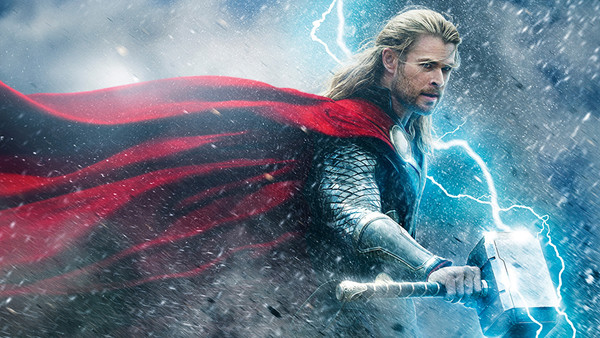
Up until Taika Waititi completely reinvented the title character in Ragnarok, it wouldn't be unfair to say that Thor probably wasn't anybody's favorite Avenger. The God of Thunder's solo franchise only seemed to exist as a stepping stone to joining the dots and expanding the Marvel Cinematic Universe, and never was this clearer than in The Dark World.
It has perhaps the weakest villain in a superhero series that's been constantly plagued by subpar antagonists, Natalie Portman doesn't exactly try to hide her lack of interest in the material, the screentime for Kat Dennings' painfully-irritating Darcy is drastically increased for unknown reasons, and despite being responsible for some of the best episodes of Game of Thrones director Alan Taylor brought absolutely nothing to table despite the fantasy elements being right in the wheelhouse that he built his entire reputation on.
Thor: The Dark World is the MCU at its most paint-by-numbers and uninspired, and if it wasn't for the chemistry between Chris Hemsworth and Tom Hiddleston dragging the movie along on sheer charisma and force of will alone then it could have turned out much, much worse.
4. Rocky V

The Rocky franchise may have come perilously close to descending into self-parody on more than a few occasions, but cinema's most famous fictional boxer wasn't part of something genuinely terrible until the fifth installment decided that having a fighter at the peak of his career batter lumps out of a brain-damaged retiree in a dingy back alley was the direction they wanted to go.
It would be nearly two decades before Creed showed that it was possible to make a great Rocky movie without having the Italian Stallion step into the ring, but Rocky V's failed attempts at reinventing the narrative wheel only served to send the series into hibernation for sixteen years.
Rocky IV's desire to overdose on Americana and bring robots into the equation saw shark-jumping become a real possibility, but the movie ended up thriving based on the overwhelming cheese factor alone. The franchise lived and died by the in-ring action, and taking it to the back streets only ended up becoming a massive misstep for what had once been one of cinema's biggest brands.
3. Spider-Man 3

If Sam Raimi had been allowed to make Spider-Man 3 without the heavy hands of studio interference, then we'd no doubt be talking about one of the all-time great trilogies, not just in the comic book genre. However, after bowing to Sony's demands, people only talk about the third installment as an example of how having too many villains in the same movie is never a good idea.
Unlike the director, fans were incredibly excited about the prospect of seeing Venom in live-action for the first time, until everybody's worst fears about the potential miscasting of Topher Grace were well and truly confirmed. Thomas Haden Church's Sandman could have made for a tragic figure with an emotionally satisfying redemption arc, but instead he was reduced to the role of glorified henchman.
There was so much going on in Spider-Man 3 that very little of it managed to stick, and Raimi ended up walking away from the franchise entirely after becoming disillusioned with being constantly overruled by Sony, who only went and made the exact same mistakes again when they rebooted the franchise just five years later.
2. The Matrix Revolutions

Despite arriving just six months after Reloaded, The Matrix Revolutions would earn over $300m less at the box office than its immediate predecessor, with the reviews also being much more negative. In just half a year, the back-to-back sequels had gone from being two of the most highly-anticipated movies in history to a major disappointment that took the wind right out of the sails of what had the potential to be a game-changing trilogy.
The second installment at least had some decent action scenes to keep audiences occupied, but Revolutions ended up undoing a lot of the narrative heavy lifting that was required of Reloaded by doubling down on the pseudo-psychological nonsense and crafting a climax that aimed for epic, but instead came off like a glorified live-action episode of Dragonball Z.
The Wachowskis have always been great at world-building, but it would be an understatement to say that their writing often lets them down, and in the space of just four years the groundbreaking original had descended into an almost-unrecognizable blend of pixels, misplaced profundity and an inflated sense of self-importance that bordered dangerously close to outright pretension.
1. Indiana Jones and the Kingdom of the Crystal Skull

Indiana Jones had literally ridden off into the sunset at the end of The Last Crusade, and given how many attempts there had been in the intervening 19 years to mount a fourth installment, a lot of people thought that it might never actually happen. When it did, those same folks wished that bearded best buddies Steven Spielberg and George Lucas had never bothered.
Kingdom of the Crystal Skull isn't quite as awful as certain sections of the internet would have you believe, and it does provide a decent amount of adventure-driven spectacle, but it would be fair to say that Indy's long-awaited return only served to disappoint.
For a franchise that relied so heavily on practical stunts, the overuse of CGI is one thing, but the appallingly bad quality of the vast majority of it is nigh-on unforgivable. The gophers, the vine-swinging and the poorly-rendered extra-terrestrials are still nightmare fuel for diehard fans, but at least the upcoming fifth movie won't be burdened by the same kind of impossible expectations given how badly Spielberg and Lucas dropped the ball last time round.