10 Jaw-Dropping Comics Cancelled Before They Were Published

Gone in zero issues.
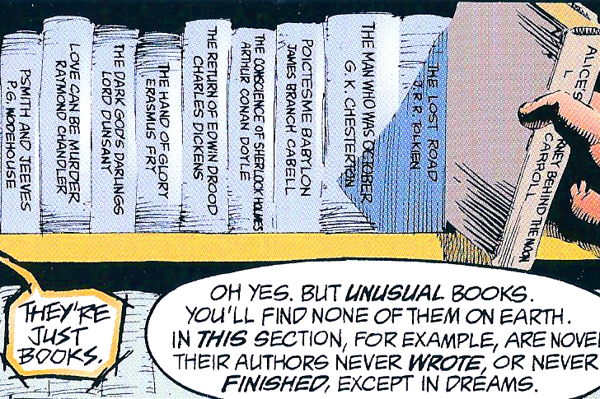
In the dream-world of the Sandman, a man reincarnated as a crow has this conversation with the world's chief librarian: Matthew: They're just books. Lucien: Oh, yes. But unusual books. You'll find none of them on Earth. In this section, for example, are novels their authors never wrote, or never finished, except in dreams. There are always going to be comics that seem on the verge of happening and then never do, for whatever reason. Creators get busy, partnerships break up. Sometimes an idea that sounded good in outline form just lands with a wet thud when the pages start coming in. And sometimes the idea was never that good in the first place, and people end up saying, "Oh, wait, we'd have to be idiots to publish this." Herein are ten of the most intriguing, frustrating, and jaw-dropping comics that reached the drawing board but will probably never see a finished form, ranging from the regrettable (in that we can truly regret their not being published) to the relief-inducing (in that the only thing we can truly regret is their ever being approved). Sometimes we know exactly what led the project into premature cancellation. Sometimes the cause of death is pretty mysterious. But in all cases, it would be a more interesting world if these books saw the light of day. We'll have to settle for knowing that Lucien is keeping them for us in the moonlight of the Dreaming.

10. Twilight Of The Superheroes

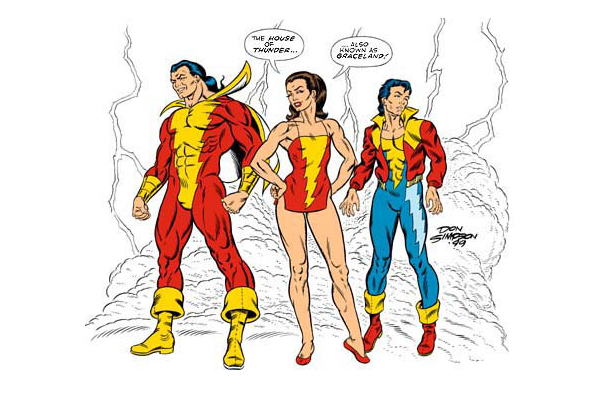
In 1987, Alan Moore was thinking a lot about endings. He had written what could have easily been the last issue ever of Swamp Thing, was working on the end of a superhero society in Watchmen, had written an ending for Superman in "Whatever Happened to the Man of Tomorrow?" and had written a foreword to The Dark Knight Returns, which was then regarded as Frank Miller's ending for Batman. What was left to end? Soon enough, the answer would be "his working relationship with DC Comics," but before that relationship had soured completely, Moore had one more big idea: an ending to the DC Universe. Moore's idea is refreshingly different, though bits and pieces of it would inspire later works like Kingdom Come, Identity Crisis and the animated Justice League series' Justice Lords. As society crumbled, the world's superheroes organized, purged the world of most supervillains, and found themselves the only remaining forces for social order. An aristocracy developed, with superheroes organizing into "houses" and, bit by bit, slouching toward tyranny. Now, an arranged marriage between Superman and Wonder Woman's House of Steel and the Marvel Family's House of Thunder could spell the end of liberty on Earth, and eventually, the end of liberty in the galaxy. But John Constantine has a plan. How Regrettable Is Its Loss? Severely. Even in pitch form, Twilight of the Superheroes is breathlessly exciting once you get into it (if you're pressed for time, WhatCulture summarized it here). Of course, it does have your standard bloody, perverse darkness from early Alan Moore, but that flavor still felt revolutionary in 1987, before twenty years of trying to imitate it ensued.

9. Morning Dragons

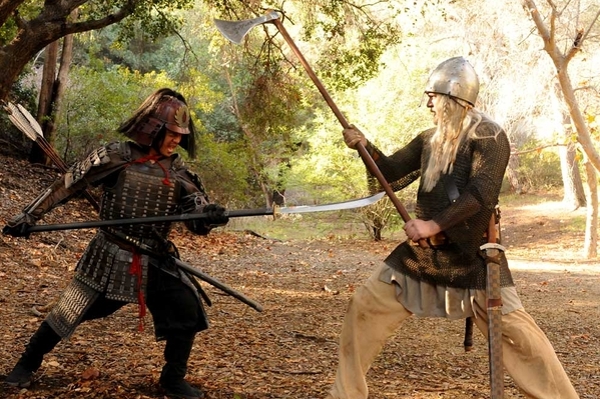
What if Viking longships arrived in 12th century Japan? Warren Ellis and Steve Lieber planned to answer that question with this series at Image Comics. Ellis, a science-fiction writer, researched the Vikings and feudal Japan carefully, generating a 14-page synopsis, but couched the series in science-fiction terms. "It's a first contact story. It is two utterly alien civilizations, divided by a huge gulf, meeting for the first time." But the book never got to the scripting stage. Ellis called it "a victim of certain business events out of both my control and Image's." What does that mean? If neither Ellis nor Image killed it, what did? Your guess is as good as ours. How Regrettable Is Its Loss? Oh, man. That attention to research, Ellis' gifted, uncompromising imagination and Lieber's stark, sharp artwork could have made this quite a sight to behold. By now, it could've been a major motion picture. However, as Ellis now owns the rights to it, it could still find its way back on the schedule someday.

8. Untitled Doctor Strange Project

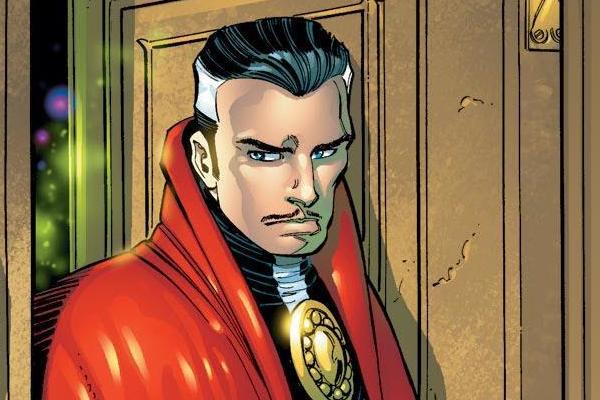
Here's an intriguing matchup for you: Harlan Ellison and John Romita Jr. on Doctor Strange. Ellison is one of the most widely known high achievers in classic science fiction and he writes with a furious passion whether working on his own science-fiction stories or others' intellectual properties. He had worked on several Marvel projects before, albeit briefly: Daredevil, Hulk, Avengers. Originally conceived as a Silver Surfer story, this tale would have involved Dr. Strange going inside his most hated nemesis, Dormammu, to perform his strangest surgery ever. Because even though Dormammu is a tyrant, the ecosystem of the netherworld can't get along without him. Although Ellison and Romita Jr. were both raring to go on the project, announcing it at conventions a bit prematurely, Marvel ultimately passed for unknown reasons. How Regrettable Is Its Loss? Strongly. Ellison and Dr. Strange both have an especially strong appeal to hippie sensibilities, and seeing Ellison apply his emotional style of writing to outright mysticism would've been a rare treat. Plus, John Romita, Jr. knows his way around a pen. (JRJR finally rendered Dr. Strange in a Spider-Man guest appearance above.)

7. Punisher/Nick Fury: Rules Of The Game
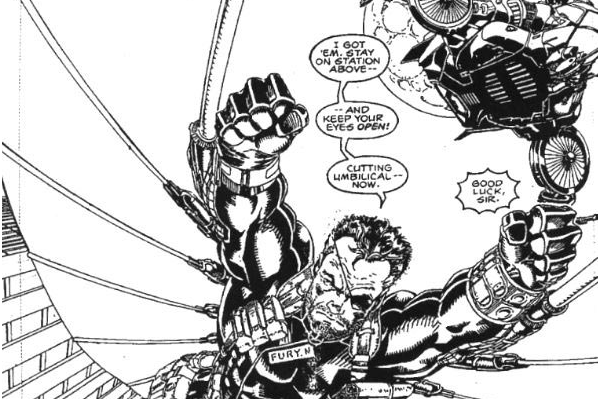
In the early days of Jim Lee's career, Marvel threw him a very 1990s project: the Punisher teaming up with Nick Fury (old World War II vet white guy Nick Fury) to stop a crooked arms dealer who got his hands on some S.H.I.E.L.D. technology. Scriptwriter/colorist Gregory Wright was enthusiastic as the pages started to roll in, but Lee was a popular belle at the ball at Marvel, and kept getting thrown side projects that slowed "Rules of the Game" down. Then he became the chief artist on Uncanny X-Men, and the X-Men basically owned his schedule until he left Marvel to co-found Image. How Regrettable Is Its Loss? Pretty regrettable. Lee's approach to art, especially in the 1990s, was full of infectious fun and an instinct for what was cool (just look at Fury's hang-glider wings!). Yet he also paid more attention to the rules of storytelling than some of his Image compatriots, especially when he had another scripter to work with. Like Twilight of the Superheroes, this is an idea whose time has really passed, and unlike Twilight, it would be at no risk of being a classic. But it would've been nifty fun if it had come out when it was meant to.

6. Night Radio

Ellis' second entry on this list would have been an anthology series of four 48-page black-and-white issues, without ads, by Avatar Press. It was meant to introduce Matt Fraction, Antony Johnston and Micaela Petersen as scriptwriters, with each of them and Ellis himself taking an issue apiece, and Ellis editing the whole shebang. To be published by Avatar Press, it represented Ellis' attempt to inject "new voices" into comics around the turn of the century.

"I associate night radio with newness. Back in my youth, when dinosaurs ruled the earth, late-night radio was the time when new bands were broken, new musical forms were allowed out, and novelty was the point and not the exception. NIGHT RADIO is me trying to broadcast future music." Though Fraction and Johnston would go on to careers in comics, this "debut album" of theirs never came together.

How Regrettable Is Its Loss? Hard to say, really. Anthologies are usually a bit hit or miss even when the talent behind them is solid, and Petersen's obscurity thereafter isn't a selling point. Ellis' move was commendable, but perhaps the idea of the anthology opened more doors for Fraction and Johnston than the anthology itself.

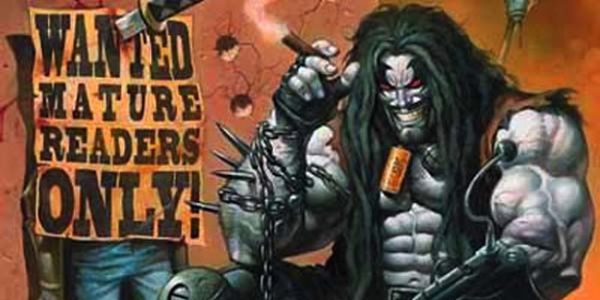
5. Lobo: The Hand-to-Hand Job

The Nineties-est Nineties antihero who ever Ninetiesed, Lobo was a big ol' brutish bounty hunter (these days, he's slimmed down a lot) and the impressive creative team of Alan Grant and Frank Quitely gave him a hunt worth following:
It€™s a parody of Hugh Hefner. The guy gets kidnapped by this male-liberation group because his exposure of the female body is responsible for female lib. This is one of these Iron John male-bonding groups who kidnap him and they€™re gonna torture him, and Lobo is hired to get him back.
It was pretty clear, though, why the book might have some difficulty seeing print:
For about half the book, Lobo appeared naked. The climax of the story featured 10,000 asteroid miners masturbating.
How Regrettable Is Its Loss? Eh. Your mileage may vary. Lobo starred in plenty of provocative comics in the 1990s, and while it's interesting to think of Quitely's style in service to his adventures, the chatter about this project makes it seem just offensive for offense's sake, not even offensively funny, necessarily.

4. JLA/Avengers (1982)
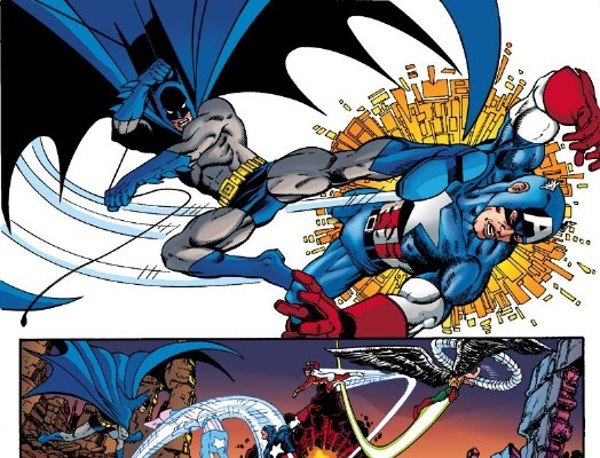
You might be saying "huh?" to this if you know there was a comic called JLA/Avengers or Avengers/JLA from 2003-2004. However, there was another such inter-company crossover, intended for release 21 years earlier, and its failure is a curious footnote in comics history. DC and Marvel may have a bitter 75-year rivalry going, but by the early 1980s they'd realized they could make a lot of money by putting the knives away every so often, and leaving the fighting to their characters. Superman and Spider-Man had had two separate crossovers, as had the Hulk and Batman and the Teen Titans and the X-Men. The Avengers and JLA were natural picks to be next, especially since the rising star artist George Perez had done work on both. Unfortunately, the scripting had more issues. Marvel editor-in-chief Jim Shooter rejected Gerry Conway's original script as poorly written with plot holes and weak motivations. DC commissioned Perez to start drawing it anyway on the theory that any problems could be fixed by changing dialogue. Shooter disagreed strongly. Roy Thomas, who had a long history with both DC and Marvel characters by then, reworked the plot in a way that required minimal redrawing by Perez. Shooter has claimed he was fine with this new plot. But by then, Perez's workload was becoming impossible and he felt Shooter was impossible to please. Thirty-odd years later, virtually all the creators involved continue to put the blame on someone else. Shooter has a reputation for being hard to work with, but given what we know, he may have been right this time. In any case, the experience was sour enough that DC and Marvel stopped doing inter-company crossovers for about a dozen years after that. How Regrettable Is Its Loss? Perhaps for the best. Perez always regarded JLA/Avengers as unfinished business until he got to finish it in that later series, with an all-new, much longer story scripted by Kurt Busiek. The later work is almost inarguably better than the first one would have been: a hungry market after the twenty-year wait meant DC and Marvel spared no expense and Perez spared no effort. Moreover, the original plot, reproduced in the JLA/Avengers collector's edition, does seem kind of a mess. Still, it would have been an interesting and well-drawn mess. Get that collector's edition if you want to see more of the work Perez finished before it was called off.

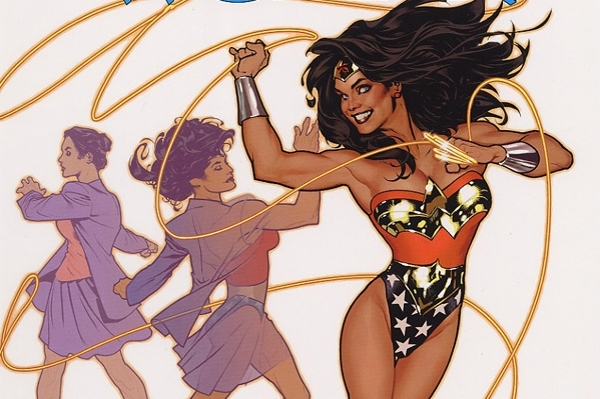
3. All-Star Wonder Woman

Not long after the debuts of the excellent All-Star Superman and the one-of-a-kind All-Star Batman, DC naturally announced an All-Star Wonder Woman project, retelling Wonder Woman's origin story and featuring Adam Hughes as writer and artist. Hughes is best known as a cover artist and for his skill in rendering arresting, beautiful women with personality. Hughes has vowed several times to finish the six-issue miniseries, but so far no one has even seen the first issue, and in the meantime the entire "All-Star" brand has been retired. How Regrettable Is Its Loss? Welllllll... like JLA/Avengers, it would probably look great, but Hughes' writing career has been fairly short and undistinguished: a couple of Gen13 miniseries, a single Superman/Batman story, and that's about it. Retelling Wonder Woman's origin also isn't a particularly compelling hook, since comics tend to do that about once every two years. It can certainly be done in a way that seems fresh and new, but no one who has described the project has hinted at a new angle other than "written and drawn by Adam Hughes." This project is the second-most-likely to still happen someday (after Morning Dragons) and could surprise us, but right now we're not feeling its absence.

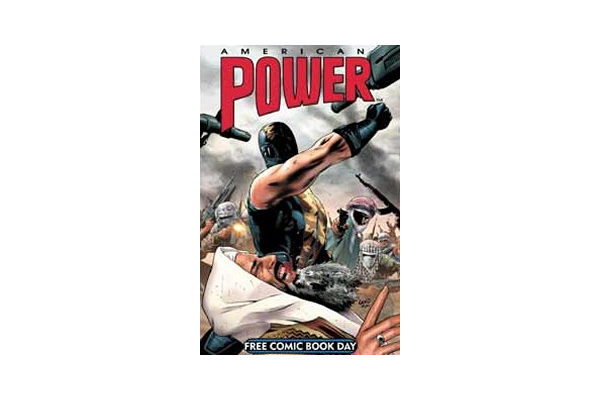
2. American Power

The first issue's cover would have featured an unidentified superhero punching out Osama bin Laden, much as Captain America punched out Hitler in his (Captain America's) first cover experience. The first issue was meant for Free Comic Book Day, meaning that it literally became a book that its publisher, CrossGen, could not give away. It was 2004, and CrossGen was struggling for cash: its latest investor declined to support this project for reasons we don't know. However, we can guess. The writer of American Power, Chuck Dixon, is a staunch conservative who has criticized comics culture's relative liberalism. How Regrettable Is Its Loss? Not very. Artist Greg Land was at his most photo-referenced during this period, and while Dixon had written plenty of good comics, American Power didn't show signs of being one of them.

1. Jesus!

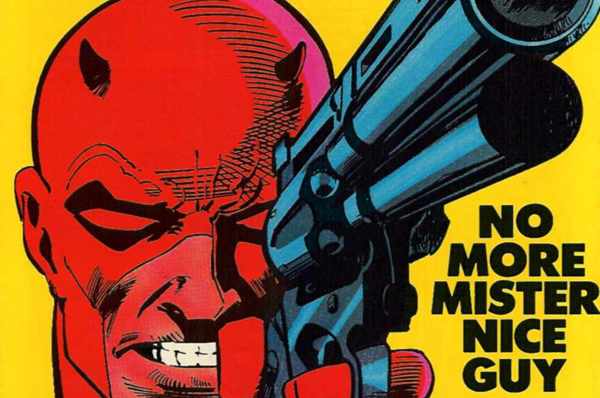
Raised Catholic as a youth, Frank Miller had actually treated religion with a great deal of nuance and respect, especially in his early work: he made Daredevil a Catholic ("I figured Daredevil must be Catholic because only a Catholic could be both an attorney and a vigilante") composed a memorable story about a nun in Sin City and included a few other characters who seemed to draw strength from prayer. However, it was in 2000 that he was working on a story about the historical Jesus. And by then, most of his best-loved work was behind him, and nuance was far, far behind him: he was beginning work on The Dark Knight Strikes Again and was a few years out from All-Star Batman and Robin the Boy Wonder. Even in the 1990s, Miller had become known for one kind of story: big, loud, violent, vengeance-driven epics. If anyone needed to see Jesus' life reimagined as that kind of story, all they had to do was wait a few more years for Mel Gibson to make The Passion of the Christ. How Regrettable Is Its Loss? Thank Christ this never happened. Note there are even more fascinating unpublished stories in another WC list, 6 Wildest Batman Stories Never Published. Know of an awesome (or awful) unpublished gem we missed? Let us know in the comments.

Contributor
Contributor

T Campbell has written quite a few online comics series and selected work for Marvel, Archie and Tokyopop. His longest-running works are Fans, Penny and Aggie-- and his current project with co-writer Phil Kahn, Guilded Age.