DC Comics 2015 Wishlist: 10 Things That Must Happen

2015 is time for a change.
The last decade or so has been a roller coaster ride for DC Comics - and the venerated publisher€™s regular monthly output has certainly reflected this. There have been earth-shattering crossover events such as Blackest Night, Final Crisis and Future€™s End. There have been major revisions to almost every character in the company€™s stable. There has even been one full-scale company wide reboot, the likes of which DC hadn€™t seen for almost 30 years... To better put things into perspective, 10 years ago, Batman did not have any in-canon children, Hal Jordan had yet to properly return as Green Lantern, Wally West was still plying his trade as The Flash and Martian Manhunter was not only a founding member of The Justice League, but was also considered to be its €˜heart and soul€™ by almost everyone... Anything can change in comics, and as well it should, that€™s part of what makes reading them so exciting. However, it is fair to say that DC Comics as a company is not where it could potentially be right now, either creatively or in terms of sales. Instead of appearing energized and empowered by the New 52 reboot, they have borderlined on apologetic at times, limping along with storylines that we€™ve seen a thousand times before (and often quite recently). Paradoxically, instead of showcasing zeal and chutzpah, they have opened the door to ponderous, overlong storytelling and radical character revision that frequently €˜throws the baby out with the bathwater€™, as it were. Finally, instead of offering storylines that are impossible for the reader to resist, they have regularly dragged us down with tedious, editorially mandated crossover events, almost none of which have had any major impact on the DC Universe, or the characters that inhabit it. Creatively speaking, the decade started very strongly indeed for DC. However, at the time of writing, this creative energy boost appears to be petering out at an alarming rate. Put simply, 2015 is time for a change. Here are 10 suggestions on how things can be improved, from a lifelong reader and massive DC fanboy.

10. Become More Reader-Friendly...

How about this: a fan-vote on the next new series and/or creative team? It sounds mad, but with Twitter, Facebook and the Internet in general, the division between we fans and the creators we admire has never been thinner. DC takes a chance when it publishes books like Firestorm or Hawk and Dove, sometimes they sell and sometimes they don€™t. However, if the company put out a series of options, so that fans could vote on which series they wanted to see, it could completely change the game. If fans could also vote on possible creative teams, we may be talking a full-on sales boost. Hypothetically, the fans would be emotionally invested in their chosen title and thus would feel included in the success or failure of the venture (like a free Kickstarter, but not really). Of course, we€™re not suggesting taking this approach for all the books, just the lower selling ones. Comic book history suggests that DC€™s readership are often highly engaged with the product (Jason Todd, anyone?) and an idea like this could really turn the tide in the company€™s favour. If the DC website ran regular fan-made content, blogs from creators, interviews with artists, merchandise sales and so on, to a greater extent than it does now, it could become a wonderful fan community, which would also serve as a way to disseminate new ideas and storylines. Imagine, if you will, funny memes and articles being shared across the web, alongside €˜teaser posters€™ and trailers for new comic book events, stories and creative teams. DC€™s website does some of this now, but the site is hard to use, even if all you want to do is find out what books they€™re publishing this week. The DC site should (re)model itself on fan-led sites like the (sorely missed) iFanboy.com or Comic Book Resources and should relate to its fans in a manner reminiscent of Marvel Comics fan-led marketing blitz from the 60€™s and 70€™s...

9. Create €˜Definitive€™ Versions Of Characters...

These days, it seems that DC characters are being re-wired from the ground up in every other issue. Frankly, this needs to stop. One of the major things that DC traditionally has over Marvel (and every other publisher, for that matter) is that you could pick up any given issue of a DC book and know exactly where you stood with it. Clark Kent, for example, works at The Daily Planet, is in love with Lois Lane and fights crime as Superman. Everybody knows that. Everybody that buys a Superman book expects to see that. By keeping this €˜story shorthand€™ in place, even new readers can become instantly familiar with the DC Universe and its many trappings, without needing a bunch of stuff explained to them at any given time. As Stan Lee famously said, €œevery comic book is somebody€™s first comic book€. In this way, too much radical revision over too short a period can be a bad thing. Essentially, evolution, NOT revolution, is the order of the day in today€™s comics. Of course, bold, sweeping changes can still happen (hey, it worked when DC replaced Jay Garrick with Barry Allen, or Alan Scott with Hal Jordan), but when they do, the changes need to be lasting, not frivolous. New readers are picking up comic books every day and discovering the joys inherent to these characters, which is why it is important that they retain the aspects that people will already be familiar with from video games, movies and cartoons. To this end, it would be prudent for DC to create a €˜definitive€™ version of each character, one that ties in the best of the past with the promise of the present. Visually modelling the New 52€™s Green Arrow on his Smallville counterpart was a smart move, but re-positioning Ollie Queen as an annoying, bratty kid, was not. This new Green Arrow is unrecognisable to fans of the character that have followed him from Neal Adams to Mike Grell and onwards to Kevin Smith. Providing a concise character bio on the site, with links to the trade versions of where, when and why major events happened, would be easy enough to do, and could potentially drive sales higher and higher into the stratosphere, making it easier than ever to start collecting comics! In the comics, an event series capable of establishing a €˜definitive€™ timeline/personality for all DC characters is desperately needed, and appears to be on the horizon at the time of writing. By fusing the past and the present together once again, DC can create €˜optimum versions€™ of all characters; this would make it easier for new fans to jump aboard the good ship DC and for lapsed fans to start reading DC books again. Before you rush to point out flaws in this idea, consider that the approach worked extremely well when Grant Morrison applied it to Batman during his extended run. It fuelled a great story arc for the character, together with his freshest interpretation in decades - and it re-sold old comics from the 50€™s that had been doing nothing but sitting in the archives for six decades. €œOptimum Batman€ as Morrison memorably called his rendition of the character, was a primeval fusion of every different take on the character, as viewed through the prism of today. If it worked for Batman, why can€™t it work for everyone else?

8. Re-Embrace Continuity (But Don€™t Die By It)...

During his controversial X-Men re-vamp at Marvel, writer Grant Morrison suggested that Marvel€™s extensive (and confusing) continuity should be used merely as €˜window dressing€™ for new, uncluttered stories. Realistically, this is the way it should always be done. You don€™t want new readers to go tripping into a long, extended web of stories that they weren€™t there for, but, equally, by starting everything all over again you run the risk of giving readers nothing to latch onto. A fine example of this is the phenomenon of the €˜comic book death€™. Because so many heroes have died over a short space of time, only to return a scant few months later, modern fans tend not to care about the death of a hero anymore. With too much whitewashing and too many minor reboots, there will be nothing upon which to build stories - and this will lead to an eventual erosion of reader interest. What will eventually happen if this process is left unchecked is the complete collapse of a character€™s core integrity, meaning that every writer will write the characters differently, with no consistency from issue to issue. Last week, Batman gave it all up to become a gay burlesque dancer, this week; he€™s toting a gun and going on a killing spree. Don€™t get us wrong, it€™ll be awesome for the right creative teams, but such an approach will suck BIG TIME over the long term €“ and it will require a long and arduous recovery. Removing any sense of occasion (€˜oh, it€™ll all be rebooted next month anyway€™) from comic book storytelling would present a fatal mistake. As readers, we KNOW that the ideal status quo will eventually be restored, no matter what changes are made to it. What we don€™t know is how and when. DC should work within this principle at all times.

7. The Past IS The Past€

How many fans, enthralled by the Chris Nolan Batman movies, went running to their comic book reading friends and requested Dark Knight reading lists to get them up to speed on the character? Tons of them. Of course, most of their friends listed the tried-and-true Bat books such as The Killing Joke, The Dark Knight Returns, Year One, The Long Halloween, Arkham Asylum, Knightfall and others still. These, the new fans dutifully ate up, recognising the Batman Begins-isms in Year One, the Long Halloween components of The Dark Knight and the endless parallels between The Dark Knight Rises and Knightfall and/or Dark Knight Returns... However, when those same fans, now €˜up to speed€™ on the Caped Crusader€™s history rushed down to their local comics shop, they invariably found that none of those classic books mattered to continuity anymore. This turned more potential fans away than we dare to think about. To put this into perspective, Scott Snyder€™s Zero Year has wiped away Frank Miller€™s Year One, as well as large portions of Alan Moore€™s Killing Joke. Pete Tomasi€™s Batman & Two Face series had destroyed The Long Halloween and even Paul Dini€™s Mad Love had, ahem, taken an acid bath... In an attempt to streamline continuity for new readers, many of DC€™s creators had actually complicated it further. What would probably work better than constantly revising the character€™s respective origins and landmark stories, then, would be to create a €˜recommended reading list€™ for each character and place it on the DC website. By keeping these stories (largely) in-canon, new readers would know exactly how to get into the current books and sales of classic collections would likely skyrocket. The publisher could even re-package €˜Special Edition€™ volumes of the old stories, together with written explanations of where and how they fit into the modern continuity in each volume. Even the spines could match, creating the ultimate comics collection for each corner of the DCU. Imagine that. Meanwhile, stories would continue to forge new ground, unencumbered by too much continuity. Creators could dip in to the rich tapestry of DC€™s 75+ year history whenever they liked, just as long as all concepts/characters were presented in a fresh and exuberant way. Besides, origin stories are old hat now. Let€™s see something different!

6. Return To Short, Sharp Storytelling...
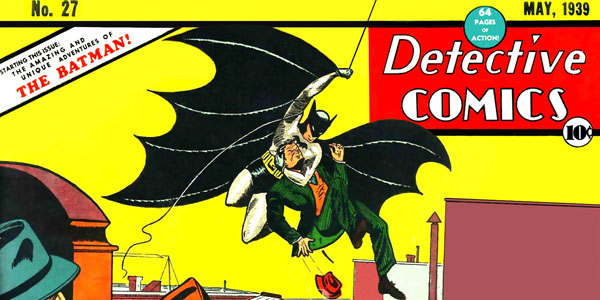
Modern comics publishers seem to forget that a six-part story takes SIX MONTHS to read. That€™s SIX WHOLE MONTHS of our lives invested in one story. This is fine for tales like Scott Snyder€™s Death of the Family, which needed a creepy, extended build up in order to be truly effective, but it really needn€™t be the case for a Supergirl series or a Teen Titans adventure. DC readers need to be able to pick up and enjoy a short, fun, diverting story, that really shouldn€™t be more than two, or three chapters long most of the time. Lest we forget that Batman: Year One, arguably the greatest origin story of the modern age, was over and done in four issues. If the story is €˜Scarecrow escapes Arkham with a new fear compound that regresses everybody to a child-like state€™, you really don€™t need more than four issues to tell that one... Besides, not every story has to be an exhaustive character study. Most of the time, comics should be fun, frantic and frivolous! Serious stories like The Death of Superman or Death in the Family were successful because they were bleak, isolated moments of tragedy against a backdrop of fun and positivity, that€™s why they stuck with us. It is also why they still resonate as important stories to this day. Another plus side of shorter stories would be that readers would relate to long stories in a better way, because a year-long saga would mean that something serious was happening and that they should pay attention to it. In addition, shorter stories overall would encourage readers to try out new books, knowing as they would that the story arc would not represent a massive financial/time commitment from them. Long-form storytelling wouldn€™t suffer either, because comics would simply revert to type and go back to playing out extended narrative/character arcs via a series of short, punchy stories, just as modern TV shows do today (a trope that, in fact, was originally adapted from comic books).

5. Make More €˜All Ages€™ Books...

Let€™s face facts, geek-wads, we ain€™t getting any younger... Most of you reading this first discovered comic books and superheroes in your childhood and that is where superhero fiction works best. Today, there are a lot of €˜dark€™ comics out there, which is fine, until you realize that younger children aren€™t really reading comics anymore as a result... Comic books aren€™t the tobacco industry, publishers don€™t specialize in killing their customers, but the two are similar in that both aim to hook the clientele while they€™re still young... So, we€™re suggesting here that DC pitch a series of €˜All Ages€™ books that contain serious, dramatic subject matter and take place within the main continuity, but that don€™t feature extreme violence, sexualised content or too much €˜adult stuff€™. If, for example, you want to read Batman tracking down a serial killer, then that€™s fine - do it in the €˜older€™ version of the book, for Batman vs. The Riddler, put it in the €˜All Ages€™ book. If a couple of DC flagships (Justice League and Action Comics, for example) were newly pitched as All Ages books, it probably wouldn€™t affect existing readers at all, but it would also allow children to once again enjoy mainstream superhero comics. We want to stress here that this wouldn€™t involve a €˜dumbing down€™ of any storylines, just making them more accessible to younger readers by removing the more salacious content from selected books.

4. More Synergy...

By tying the adventures in the comic books more closely to those of other media (in particular, DC€™s animated movies and TV shows), reader-interest can be fostered (and held) in a far more efficient way. A good example would be the 1990€™s X-Men cartoon series that many of us grew up watching. By fusing the look and feel of the contemporary Jim Lee comic books with the classic storylines from Chris Claremont€™s 80€™s run, readers were instantly familiar with the characters and their world and therefore could (and did) pick up X-Men books and fall right into them. As Marvel have hopefully now proved, comic book movies work better when they have more in common with the source material anyway. Once again, radical character revision (often made by Hollywood consultants that have never read a comic book in their lives) is seldom the answer. The fans want authentic comic book stories that pay homage to the genius of creators like Jack Kirby, Carmine Infantino, Bill Finger, Paul Levitz, Chuck Dixon, Mark Waid, Len Wein, Dick Giordano and all the others... Ergo, it is reasonable for DC to use the Warner Brothers movies (and video games) as a springboard for their own products. Why not try to sell comic books based on the success of their associated movies, and, while you€™re at it, why not help this along by getting more comics guys involved in the movie making process? After all, NOBODY knows those characters better than they do.

3. New Content, New Series, New Characters...
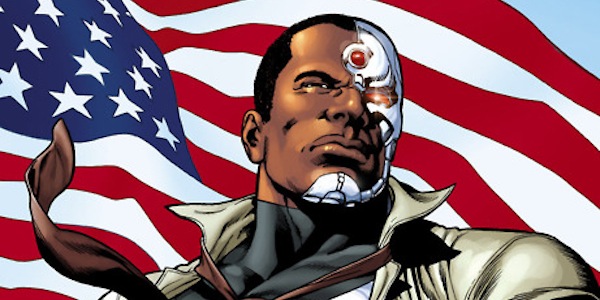
Cyborg is the only member of The Justice League without his own book. Why was Cyborg worthy of inclusion into The League if he wasn€™t strong enough to sell his own title, exactly? Come to think of it, who the hell decided that Rob Liefeld on Hawk & Dove would sell more than the new, improved Cyborg with a great creative team? Where€™s the logic? Martian Manhunter is a great character, one of DC€™s best, in fact. It beggars belief that he doesn€™t have his own series (and hasn€™t since before The New 52 initiative began). The same is true for Midnighter. In fact, an Apollo/Midnighter book, essentially the same as Superman/Wonder Woman (but with one obvious difference), would be a wonderful read. For that matter, using the website to promote short €˜back up€™ strips is a great way to test the water for a new series/characters. In much the same way that a classic book€™s back up story would feature a lesser-known character that would often go on to star in their own ongoing series (Martian Manhunter, Catwoman and Green Arrow are all great examples), so too could online stories. Young, up and coming artists could create short €˜in between€™ features that may take place between issues, so that in the month between Justice League Issues, you could get a sneaky extra adventure. In addition to keeping reader interest and web hits at an all-time high, this would allow hot new creators to cut their teeth and find an audience. It would also mean that DC would get to the new generation of creators first.

2. Look To The Multiverse!

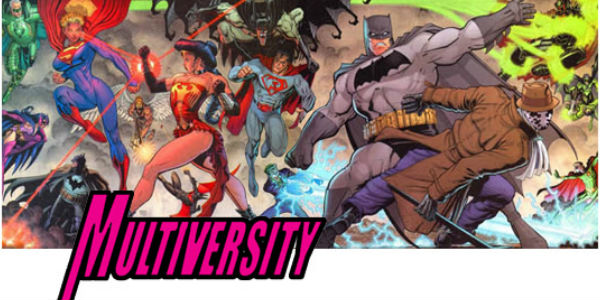
Grant Morrison€™s Multiversity series has so far been about as much fun as one can have with one€™s clothes on (and we mean that in a nice way!). Put simply, it is awesome, as are its potential implications. Bringing back the €˜multiple earths€™ concept at DC has been a powerful re-energizing force for the company in recent years, with series like Earth 2 offering exciting new possibilities for established characters, not to mention the tantalising potential for an all-new Crisis series (maybe the one that creates those €˜optimum€™ characters we spoke of earlier? Just a thought). These €˜multiverse€™ worlds are a perfect breeding ground for new talents to take flight. How about creating a Legends of the Dark Knight style ongoing series, with multi-issue stories provided by new and established teams, each taking place within a self-enclosed parallel world? Editors could team veteran artists with young writers, rising pencil stars with established writers and more besides. Think of the eclectic €˜anything goes€™ feel of Batman: Black & White and you€™re getting what we€™re driving at... Of course, if that doesn€™t work, then it may actually be possible to put together an entire companion universe to the mainstream DCU, with some stories provided by fresh talents and placed upon the website. Each month, the site could feature a different world and possibly even commission the odd reader-submitted script. Imagine if it was YOU...

1. Keep Giving Us Greatness...

Finally, one man€™s €˜Jerry Macguire-esque mission statement€™ aside, the one thing we want from DC is more quality books featuring great characters and astounding scenarios. Books like Pete Tomasi & Pat Gleason€™s Batman & Robin, Geoff Johns & John Romita, JR€™s Superman and Grant Morrison€™s Multiversity (to name but a few), all offer fun, thrills and excitement on a monthly basis. It would just be nice to see the company embracing modernity a little more and embracing the fanbase a lot more. More than any others, even the creators themselves, the DC readers are the people that live, breathe and die in the DC Universe. They deserve a company at the top of its game, being as good as it possibly can be. None of this has been written to denigrate the hard work or creative output being made by DC€™s editors, publishers or creators. It is simply a fan€™s perspective that more could be done to improve the company. Somewhere near the beginning of this piece, this life long fan wrote that €˜evolution, not revolution€™ was the key to building a stronger future at DC Comics. Maybe that isn€™t right, maybe we readers DO need a revolution, but if that is indeed the case, then let it be a €˜grass roots€™, reader-led revolution, something we can all take part in and enjoy.

In this post: 
DC Comics
 
Posted On: 
Contributor
Contributor

I am a professional author and lifelong comic books/pro wrestling fan. I also work as a journalist as well as writing comic books (I also draw), screenplays, stage plays, songs and prose fiction. I don't generally read or reply to comments here on What Culture (too many trolls!), but if you follow my Twitter (@heyquicksilver), I'll talk to you all day long! If you are interested in reading more of my stuff, you can find it on http://quicksilverstories.weebly.com/ (my personal site, which has other wrestling/comics/pop culture stuff on it). I also write for FLiCK http://www.flickonline.co.uk/flicktion, which is the best place to read my fiction work. Oh yeah - I'm about to become a Dad for the first time, so if my stuff seems more sentimental than usual - blame it on that! Finally, I sincerely appreciate every single read I get. So if you're reading this, thank you, you've made me feel like Shakespeare for a day! (see what I mean?) Latcho Drom, - CQ