7 Comic Book Story Arcs That Were Never Finished (And Why)
One day you're crafting the best Galactus comic ever, and then...
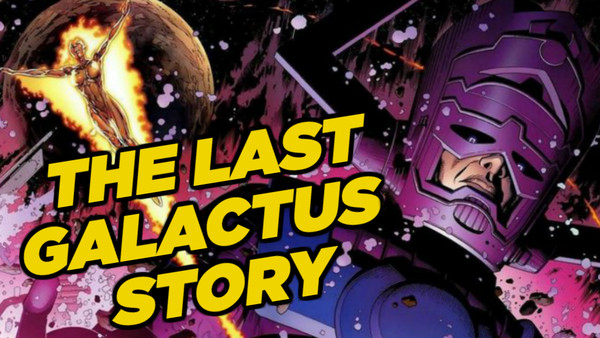
A story without an ending - while still a story - inevitably feels incomplete. More so than most other mediums (bar perhaps television), comics are particularly prone to cancellation before a given storyline has reached its conclusion. Some never even make it to the stands, while others are at least given the chance to wrap up an arc before drawing to a close. The following comics however, didn't enjoy such fortune.
Either because of a scheduling conflict, a battle over creative control or just an untimely cancellation, some of the most beloved stories in the medium never got to end on their own terms - if they even got an ending at all. For fans invested in a series over a period of months or even years this always tends to come as a bitter shock, but for those creators absorbed in their work, cancellation can sting for a long time after.
Sadly, depriving writers and artists of the opportunity to wrap up a given arc isn't a problem consigned to a bygone era. The trend has continued into the 2010s and one would assume things won't change in the new decade either; cancellations are symptomatic of larger, more ingrained issues entrenched in the industry.
It never gets any easier, and the following books are a testament to that very fact.
7. Rick Veitch's Swamp Thing
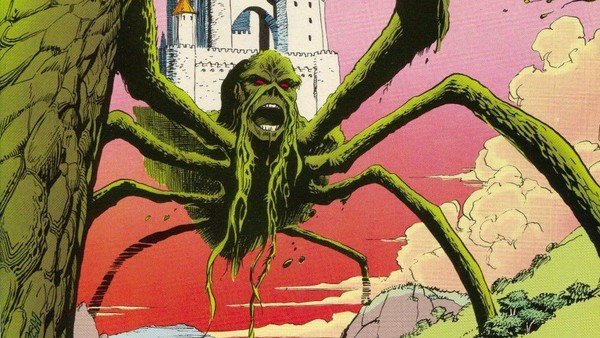
Swamp Thing was Vertigo's darling to the eighties and nineties, and for good reason. Alan Moore had done amazing things on the character alongside a number of artists, among them Rich Veitch. Veitch would later take the reigns on Swamp Thing as a writer, but it all came to an abrupt close when he decided that Jesus Christ himself would appear in the book's 88th issue.
DC - specifically editor Jenette Khan, in what was admittedly an out of character move for the then president of the publisher - was apparently anxious that the publication of the issue could trigger a religious backlash due to concerns over blasphemy, and so decided that it wouldn't be published. Veitch promptly departed the series and DC as a whole, justifiably vexed that the publisher had stifled his creative freedom over what was effectively a non-issue.
This of course meant that Veitch never got the opportunity to finish his arc. The reigns were handed to Doug Wheeler, who took the series in a different direction thereafter.
6. The Crew
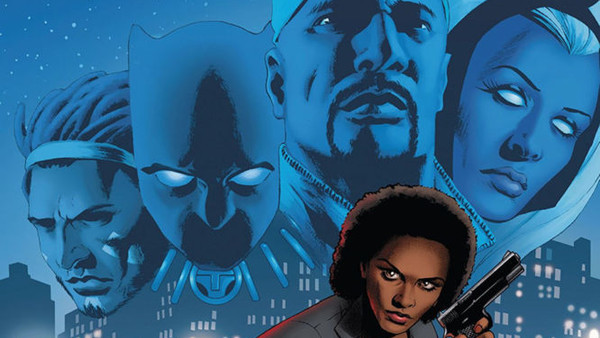
Ta-Nehisi Coates has been turning in some brilliant tales over at the House of Ideas. From Black Panther to Captain America, Coates' comics always find a way to be politically intriguing, socially conscious, and utterly, utterly gripping. Black Panther and The Crew, a comic co-written alongside Yona Harvey, was no exception, but it only lasted two issues before it was cancelled, meaning that both writers and artist Butch Guice were only able to wrap up the first arc, which totalled six issues altogether.
By all accounts, Coates and Harvey were able to finish a story, but it wasn't the whole story. The Crew had so much potential and it was evident there was a lot more in the pipeline.
Sadly, Marvel were left unconvinced by the comic's sales, and killed it off before contemplating how well the book could have performed in trade paperback collections. Even more frustrating is that Marvel barely promoted the comic before its release, a familiar issue that's vexed multiple creators, with some even taking to financing their own promo out of their own pocket.
The Crew had clear potential. And if Marvel had supported it properly, it may well have been able to continue.
5. Daredevil/Bullseye: The Target

Kevin Smith has a bit of a habit of not finishing comics. A shame, given his work on Green Arrow, Daredevil and the Green Hornet has been so well received, but it's a sad reality that the Fatman on Batman host (great podcast, by the way!) hasn't always managed to steer a comic to an actual conclusion.
Case in point, Daredevil/Bullseye: The Target. Smith had previously helmed a compelling story based on the Man Without Fear in Daredevil: Guardian Devil, which was drawn by Joe Quesada, but the character was in the hands of a new creative team now. Brian Bendis and Alex Maleev where in the midst of what would later prove to be a seminal run on the character, one that impacted Matt Murdock for over a decade after they left the series.
Still, Smith persisted with his Daredevil book, and it looked great! Artist Glenn Fabry was to handle art duties throughout the entire arc, but only one issue was ever published, in November 2002. Weeks, months and then years passed with no word of when a second issue was meant to drop, with Fabry even being forced to drop out of the project. He was then replaced by Adam Kubert, who later left to pursue an exclusive contract at DC, at which point updates on The Target became few and far between.
The project is unlikely to materialise at this stage, with Smith having since gone on the record to claim that he was personally dissatisfied by the first issue, which he'd rushed into production to ensure he could use Bullseye before he could appear in the Bendis and Maleev run. CBR later revealed that 'The Target' in question was going to be Captain America.
4. Grant Morrison And Jim Lee's WildC.A.T.S.

WildC.A.T.S. is one of those quintessential nineties properties that's impossible not to love. Seriously. The title's class, the characters look like G.I. Joe designs cranked up to eleven, and well, the characters are actually pretty great too.
WildC.A.T.S. has also been through a lot since its inception. Originally conceived by Marvel, Image and later DC superstar artist Jim Lee alongside Brandon Choi, WildC.A.T.S. started off at Image Comics before moving to Wildstorm. Lee and Choi's property was then acquired by DC Comics, and various elements from the comic have even been incorporated into the mainstream DCU since, with Grifter having seen repeat success in the DCU.
Frustratingly for fans of Grifter, Zealot and all the others, multiple revivals of the comic haven't lasted long, meeting cancellation either before or after the first issue is able to hit the stands. Undoubtedly the most promising of these revivals was one that involved the team's co-creator, Jim Lee, teaming up with Grant Morrison for a planned twelve-issue run. It lasted one issue before succumbing to multiple delays and later cancellation, and WildC.A.T.S. fans haven't really recovered since.
To rub even more salt into the wound, Morrison has previously gone on the record to discuss what exactly the rest of the issues would've been about, stating that the comic would've pitted the team against an antagonist in the mould of Margaret Thatcher. Oh, what could've been.
3. All-Star Batman & Robin

Of course, not every cancelled comic is necessarily a major loss. Some titles just don't quite cut the mustard, and one that most certainly did not involved a creative team that should, on paper, have been just as dynamic as the duo they were depicting.
I am, of course, referring to All-Star Batman & Robin, the Boy Wonder. It's a comic so infamous, so batsh*t weird and weirdly mean-spirited that it has become a meme in itself. Batman neglects his adopted ward, leaving him to fend for himself in the Batcave to eat the rats and bats that live in there, and if the blatant child abuse wasn't bad enough, him and Black Canary decide to get it on in the rain after burning a dozen or so mobsters alive in an explosion by the Gotham docks.
Yeah. It's that kind of Miller comic.
Anyway, All-Star Batman & Robin wasn't meant to be the only title in that line of comics. Grant Morrison and Frank Quitely also helmed a brilliant story under that banner in All-Star Superman, while other projects headed up by the likes of Adam Hughes (All-Star Wonder Woman), Geoff Johns (All-Star Batgirl) and others were also optioned. Naturally, a sequel to the Boy Wonder was also planned, with the first issues having set up the Joker to appear as a central antagonist, and for Batgirl to presumably join the team after her brief cameo at some point too.
A sequel titled Dark Knight: Boy Wonder was announced in 2010, but nothing ended up materialising. Miller has since written two follow-ups to his Dark Knight series in Master Race, co-written by Brian Azzarello, and the Golden Child, with art from Rafael Grampá.
2. W. Haden Blackman And J.H. Williams III's Batwoman

Batwoman was one of the greatest comic book characters introduced over the last two decades, and naturally, when you're that good a character, you tend to have a couple of good comics to answer for that reputation. In Kate Kane's case those came in 2009 and 2011 respectively, with Greg Rucka and J.H. Williams III presiding over a standout Batwoman story in the pages of Detective Comics first, before Williams teamed up with W. Haden Blackman for a series to line up with DC's New 52 reboot.
Rucka set the wheels in motion, and it's with that in mind that Blackman and Williams were able to craft what was at the time the publisher's best Bat-book. It was smart, character-driven, and vital. Kane was one of only few openly gay superheroes and her relationship with Gotham cop Maggie Sawyer became a major element of the book, to the point that, in what would eventually prove to be the series' final arc, Kate proposed.
The stage was set for another famous comic book wedding, but then DC demanded that the creators call off the marriage, a decision rationalised by Dan DiDio because supposedly superheroes just aren't allowed to get married. Presumably because it makes them less hip, or something. I don't know. It's pretty dumb.
When considered with all the other "eleventh hour" changes editorial forced on the pair, Blackman and Williams decided to leave the book altogether, calling quits after the book's 26th issue hit the stands in 2013.
Elements of Blackman and Williams' planned arc were wrapped up months later, but not in the way they had planned. DC's meddling meant that fans were met with an unfortunate end to what was, frankly, a brilliant comic. How tragic that its ending had to typify one of the comics industry's most ridiculous trends.
1. The Last Galactus Story
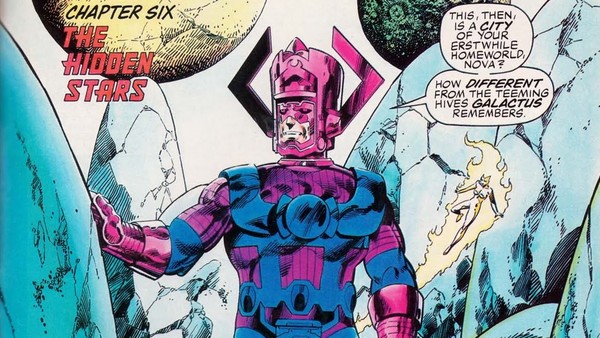
John Byrne and Terry Austin's The Last Galactus Story is one of the more bizarre examples on this list, mainly because it was cancelled out of the blue and no efforts to assemble the final, unpublished issues have been made since.
The Last Galactus Story does what it says on the tin. The Devourer of Worlds, aided at this time by herald Frankie Ray, aka Nova, finds himself investigating a trail of destruction across the cosmos. Entire galaxies have been wiped from existence, and the duo set on a path to the centre of the universe to figure out why.
It's the exact kind of epic, cosmic storytelling fans love to see from Marvel, with Byrne at the peak of his talents. The story was published as a part of Epic Illustrated, but with sales of the book diminishing, Marvel pulled the plug. By this point, nine chapters of The Last Galactus Story had been published, which meant fans were left high and dry in regards to getting some much needed closure, and that's still the case today.
So, why did The Last Galactus Story never see completion? Well, according to Marvel Comics of the 1980s, it was down to a number of factors. First, the aforementioned cancellation of Epic Illustrated; second, because Byrne's efforts to work the story into The Last Fantastic Four Story were unsuccessful; and lastly, because Byrne ended his partnership with Marvel following the cancellation of X-Men: Hidden Years.
Though it's not much consolation, Byrne has detailed what his plans were for the last few issues before, in a conversation with CBR back in 2000. It all sounds very epic - possibly even too epic for Marvel's Epic Illustrated.
Watch Next
The Ultimate Fantastic Four Quiz
