10 Things Marvel Wants You To Forget About Green Goblin
Is Norman Osborn basically Spider-Man's Joker?

Spider-Man possesses potentially the greatest rogues gallery going over at Marvel, and the most famous individual to feature within it is the Green Goblin.
Norman Osborn first burst onto the scene in The Amazing Spider-Man #14 all the way back in 1964, and quickly carved out a reputation for himself as Spider-Man's most embittered rival, more-so than the likes of Doctor Octopus, Mysterio, and later Venom. He tormented Spidey for years, discovered his true identity, and was the principle antagonist during The Night Gwen Stacy Died, an arc that is commonly believed to have heralded the end of the Silver Age of comics, and opened up the floodgates to more mature storylines.
The Green Goblin thus boasts a formidable legacy, but there's a whole lot more to the character than his most iconic depictions let on. In fact, there are some aspects of the villain that Marvel would probably want you to just forget about completely, while there are others that, despite being pervasive across Osborn's history, most simply refuse to dwell on.
He's a great character, bones and all, but he's not perfect. That’s fine of course, and even though Gobby still remains Spidey’s greatest adversary, there are some things that could tarnish that perception...
10. He Once Went By The Name Of 'Super-Adaptoid'

So, for starters, Norman Osborn hasn't always been the Green Goblin. He's actually taken on a variety of different guises over the years, but perhaps the most weird came in Avengers Vol. 4 #23, where he was reimagined as the villainous 'Super-Adaptoid'.
There's nothing wrong with Norman Osborn taking on different roles and identities - arguably the most successful story to feature the character post-2000 saw him as an Avengers villain - but the Super-Adaptoid name probably isn't one becoming of Osborn's stature.
The Green Goblin denotes terror, suspense, and threat. Super-Adaptoid, on the other hand, intimates the opposite, and though it was great to see Osborn battling it out with the Avengers yet again, it's little surprise he hasn't used the alter-ego since.
9. Their Portrayal In The Amazing Spider-Man Films

Willem Defoe and James Franco's Goblins? Iconic. Chris Cooper and Dane DeHaan's? Well... not so much.
Sony's Amazing Spider-Man films tend to get a bad rap from fans for a whole host of reasons, perhaps even unfairly. Andrew Garfield and Emma Stone's chemistry as Peter Parker and Gwen Stacy respectively managed to anchor both of Marc Webb's films tremendously, but even though that was the case, they couldn't distract from the reboot's dearth of interesting antagonists.
This became particularly noticeable in Amazing Spider-Man 2, which featured Rhino, Electro and Goblin as its main villains. This time, Goblin was portrayed by DeHaan, who was this universe's Harry. Father Norman, played by Cooper, was bed-ridden by a genetic illness.
Deviating from the source-material should never be discouraged, but the way it was done in Webb's films was so bizarre. There was no mutant Goblin taken from the Ultimate comics, and audiences were ultimately left with Harry snarling at the camera decked out in weird, vomit-looking makeup.
8. He's Kind Of Spider-Man's Joker
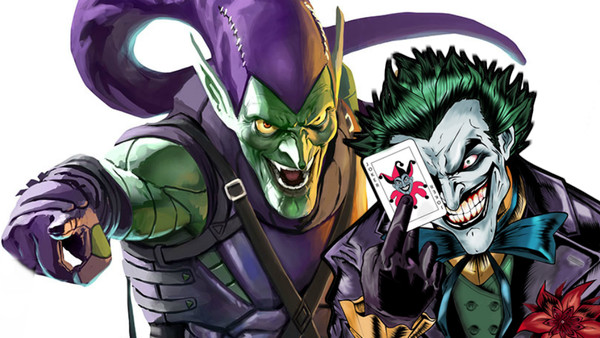
The Green Goblin might be a fantastic character, but it's fair to say he shares more than a little in common with DC's Clown Prince of Crime, the Joker. Yes, Goblin has managed to distinguish himself from the clowning prankster in more ways than one since his debut, but the comparisons are there for all to see.
First, there's the pair's appearance. Both characters boast a green and purple aesthetic that harkens back to the court jesters of old, while Goblin's mask itself looks remarkably similar to the Joker's own face. That's kind of unavoidable, given the pointed features of most goblins, but when you take that into account along with the shared colour-scheme and that uncontrollable propensity to laugh, and it's only natural that people would draw comparisons between them.
The actual truth of the matter is that the Green Goblin is remarkably different to the Joker, and shares a markedly different relationship with his adversary than the Clown Prince does with Batman. However, both serve a very similar purpose - to introduce a little bit of anarchy into an otherwise predictable back-and-forth between hero and villain.
7. Norman And Harry Weren't The Only Goblins

The Green Goblin may have started out as Norman Osborn's supervillain alter-ego, but he's by no means the only person to have donned the glider and battled it out with Spider-Man. A troubled Harry Osborn would take on the identity in response to his father's death, adding a whole new kind of terror to the dynamic between the Goblin and Spidey, but that's another storyline fans will be familiar with.
To this day, Norman and Harry's time as the Goblin remains the best use of the supervillain in Marvel's history. However, even after both characters were killed off in the early seventies further figures would take on the mantle. Unsurprisingly, none managed to make the same impact.
The next person to take on the Goblin identity after Harry's demise was Doctor Bart Hamilton, who served as the younger Osborn's therapist during his time as the Green Goblin. Hamilton is later killed by Harry during a battle with Spider-Man, never to return.
After Hamilton came Phil Urich, the nephew of Daily Bugle reporter and Daredevil confidant Ben Urich. Phil recovers Harry's tools and uses the identity to become a superhero, but later retires the mantle after a battle gone wrong. A fifth Goblin was then created by Norman after his return from the dead in order to deflect suspicion from the public, but it disintegrated during a confrontation with Spider-Man.
6. That He's JUST A Spider-Man Villain

For the vast majority of fans the Green Goblin is a villain to Spider-Man and Spider-Man alone. However (and this only applies to Norman Osborn, by the way), that isn't actually the case; for the last decade, Norman Osborn has tormented the Avengers as much as he had the web-slinger.
It's a matter of opinion as to where the villain works best of course, but it would seem as though Marvel are keen on reminding everyone that Norman is as much a villain to the wider Marvel Universe as he is to Spidey specifically. That'll no doubt take some adjusting to from casual readers, but Osborn has been at the forefront of the Marvel Universe for years now, even founding his own group of Evil Avengers and ousting Tony Stark from S.H.I.E.L.D. at one point in time.
Perhaps surprisingly, it's been rumoured for a while now that Osborn will take a leading role in the Marvel Cinematic Universe's fourth phase as an overarching antagonist for both Spider-Man and the Avengers. Given the bulk of the character's most recent material has repositioned him to fill that role, it would seem as though Marvel want to erode the notion that the Goblin is a Spidey villain and a Spidey villain alone.
5. His Original Name
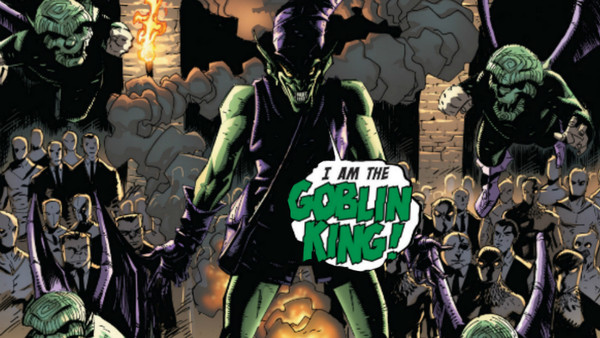
With Norman Osborn having taken on various different roles over the years it should come as no surprise to learn that he hasn't always gone by the name of the Green Goblin. In fact, Osborn has gone by several different supervillain identities over the years, with the aforementioned (...sigh) Super-Adaptoid being just one.
In the years since his resurrection, Osborn has gone by the name of the Iron Patriot - during which time he possessed one of Iron Man's armours - the Goblin King, Overlord, and even the Red Goblin. It is the last name that brought about the most dramatic change to Osborn's character, showcasing the longtime Spidey adversary bonding to the Carnage symbiote whilst retaining all the traits of his Goblin persona.
Point being, Osborn hasn't been known as 'the Green Goblin' for a long time now, and with him now incarcerated in Ravencroft, it could be longer still until he takes it up again.
4. His Role In The Clone Saga
Gerry Conway and Gil Kane's the Night Gwen Stacy Died is one of the most important Spider-Man stories of all time, and it culminated in the death of Norman Osborn. He impales himself on his own glider when Spider-Man goes to confront him, and he managed to stay dead for a further 30 years. Norman had seemingly managed to buck the most frustrating cliché of all - that of the forced resurrection.
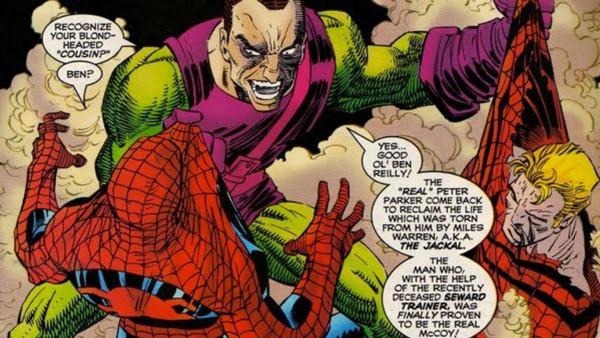
That was, sadly, until the nineties came around. The introduction of the Clone Saga caused several huge rifts in Spidey's life for the majority of the decade, with it first being revealed that Miles Warren - the Jackal - had been cloning Peter and his closest companions, only for a further twist to come later down the line that unveiled Norman as the entire saga's key architect.
What's worse, however, is that the story went even further than that. It was revealed that Norman had never passed away, and had instead been manipulating Peter's life from behind the scenes for years before that point.
It was silly, contrived, and exemplified the aimless nature of the wall-crawler's books during that decade. Needless to say, there's a reason why this particular saga is as reviled as it is.
3. That Hobgoblin Pretty Much Replaced Him, And It Worked!

It could be argued that Spider-Man has way too many Goblins. There are green ones, red ones, and (in the films) even 'new' ones, but perhaps one of the more successful is that of the Hobgoblin, who was first introduced in 1983 by Roger Stern and John Romita Jr.
He was conceived as the Green Goblin's replacement by Stern, who was reluctant to reintroduce either Osborn into Spidey's books after their deaths in the previous decade. Romita Jr. then designed the character, and though it's fair to say that Green Goblin is certainly the more iconic foe, there's no denying just how menacing Hobgoblin looked when he first burst onto the scene.
The first arc that saw Hobgoblin introduced could potentially be considered as being slightly derivative of earlier Goblin-centric Spidey stories, with Stern and Romita framing the character's introduction as a mystery by refusing to unveil his true alter-ego, but it worked. Come the nineties, Hobgoblin had cemented himself as one of the web-slinger's most formidable adversaries, even being voiced by Mark Hamill in the much beloved Fox Kids Spider-Man cartoon as Spidey's first villain.
Hobgoblin has only made sporadic appearances since Norman's return, but he could've easily attained more notoriety had that not been the case.
2. He Had An Affair With Gwen Stacy

This... this is where things just get weird.
So, as most fans will probably have gathered already, the Night Gwen Stacy died is a formidable and influential Spider-Man story. Going back and fiddling with it in any particular way isn't really the best idea - but that didn't stop Marvel from doing so in 2004 with the release of the Sins Past storyline, which went back and retconned the build up to the story by revealing that Gwen and Norman had an affair, which led to the birth of two children.
No, really. This actually happened.
It turns out that Norman and Gwen had a one-night stand a couple of years before her death. She gave birth to twins during that time, managed to keep that a secret from all her friends and Peter - save for MJ - and used them as leverage to make sure Norman took care of Harry during his illness, thus adding further motive for Osborn to kill her during the aforementioned story.
MJ keeps this a secret from Peter until Gwen's children literally come back to murder who they think is their real father. The cherry on top is that readers are also shown Gwen and Norman's night together, and it just isn't all that pleasant.
1. His Impossible Hair
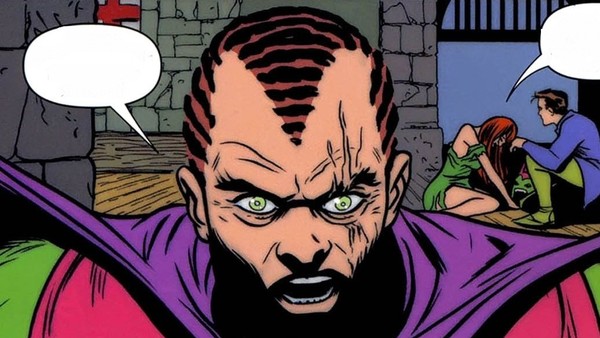
Look, okay - this is something that cannot be ignored. It's too glorious not to.
The Osborn hairline is something to behold, receding to the point where only a thin, triangular strip falls over the middle of their respective foreheads. That in itself is pretty weird, but then you get to the actual hair itself and... it... just... doesn't... make any sense?
No one's saying that Norman or Harry have to change their style or anything, because to be honest the look is pretty legendary; it speaks for itself, and in the unlikely event Marvel were to opt for a completely different hairdo altogether, readers would be deprived of seeing a truly wonderful head of hair.
If anything, the most frustrating aspect of Osborn's hair is that no actor could ever hope to replicate it authentically onscreen. Willem Defoe was superb as the character, but he couldn't hope to replicate Osborn's immortal locks. The same goes for James Franco, Chris Cooper and Dane DeHaan, with none coming close to replicating the trademark Osborn hairline on the big screen.
Whether you think it's a good or a bad thing, Osborn's hair always seems to be at the centre of attention. Given it's such a distraction, though, it's understandable as to why Marvel haven't dared tried to replicate it for mainstream audiences.