10 Superhero Resurrections That Actually Worked
Jason Todd, eat your heart out.

It may be the oldest trope in the book when it comes to comics, but there's no denying that, more or less, everyone enjoys a good old fashioned superhero resurrection. Of course, some have worked better than others, and, while it's possible to argue that constant returns from beyond the grave diminish the emotional weight of a comic book death, it's not as frequent an occurrence as some would imagine.
In fact, the likelihood of a hero and/or villain staying dead for a long period of time is, in actual fact, much higher than either receiving their own veritable rebirth. Poor old Vic Sage (The Question), for instance, is still chilling in Nanda Parbat. And despite subsequent reinterpretations of the character in DC's multiverse, the OG hero is still very much dead, succeeded by Renee Montoya, the second Question.
In this sense, one of the most difficult issues to address with any superhero death is the matter of the character's legacy. More often than not, a replacement is lined-up to replace the recently deceased, and, seeing as how DC is pretty big on that whole legacy thing, character revivals can pose big questions for writers at odds with what to do with their heroes; especially when they’ve gone on to develop their own, equally impressive fanbases.
While we all love to poke fun at the various rebirths and returns of star-studded comic book characters, the nuances of the trope must surely be considered. Particularly so, given how, y'know, writers love using it so much.
10. Hal Jordan/Green Lantern

Hal Jordan is one of the most beloved characters in the DC Multiverse. As Earth's OG Green Lantern, the character boasts a massive history, from taking part in the founding of the Justice League, to hitting the road with perennial best friend and verbal sparring partner Green Arrow, Hal has travelled quite a distance as a Lantern, both literally and figuratively.
He also killed the entire Lantern Corps. Like, all of them - even Killogwog - during the character's nineties phase. Driven mad by the destruction of Coast City, Hal attempted to reshape the universe in his image, and it took the entire League to stop him. Coming to his senses after going on the most horrifying murder spree in the DCU, Hal sacrificed himself to save the world from a dying sun, resurrecting Ollie Queen in the process before departing to become the spirit of vengeance itself, The Spectre.
As The Spectre, Hal would make attempts to atone for his sins, before ultimately being reborn in Geoff Johns' Green Lantern: Rebirth. Forgiven (somehow) for his sins during the events of Zero Hour, Hal was reinstated as Earth's GL and would take part in Johns' famous run on the character, one that would feature the critically lauded Sinestro Corps War among other storylines.
There are plenty of reasons why Hal's resurrection worked as well as it did, despite the fact that the other lanterns of the time - John Stewart, Guy Gardner and Kyle Rayner - had each developed their own loyal fan followings. Chief among the story's success was its dissection of Hal's character prior to his notably uncharacteristic attempts to end the multiverse. It might take a leap of faith to believe that everyone - even Batman, eventually - would forgive Jordan, but the stuff that Johns did with the character after his return makes it one worth taking.
9. Colossus

As far as comic book deaths go, Colossus' hit fans particularly hard. Having sacrificed himself to ensure the survival of both the mutant and human race, fans suspected that this was one death that, despite the plethora of resurrections that had preceded it, Piotr Rasputin wouldn't be walking away from.
Enter Joss Whedon, who, having only recently made waves on TV with Buffy, turned his attention to a burgeoning career in comic book writing with Astonishing X-Men, a book that, along with Grant Morrison's New X-Men, defined the mutants during the millennium era. One of the key changes that the book made to the X-mythos involved the resurrection of Colossus, who'd actually been revived by a sinister corporation looking to create a 'mutant cure'.
Piotr's return worked mainly because of his relationship with Kitty Pryde, who have to be the biggest power-couple in the X-Men (sorry Scott and Jean). The book 'earned' the return, so to speak, because it took the time to explore the emotional consequences of the character's death and revival. Indeed, during a period where resurrections were very much off the cards for Marvel, Colossus' return was made all the more potent. More importantly, however, it made sense, and set a precedent for subsequent revivals in the Marvel Universe in its wake.
8. Steve Rogers/Captain America
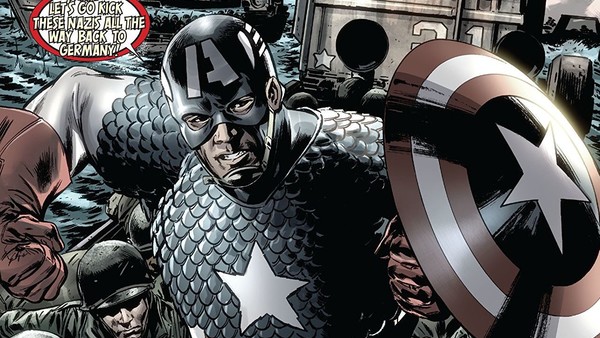
While that return did go slightly awry in Secret Empire (catastrophically, is perhaps the better term), Ed Brubaker's decision to resurrect the character he'd killed off in the aftermath of Civil War made for one of the most engaging storylines of the last decade, even if it did echo some of the beats made by Grant Morrison's stint on Batman during the same period.
Cap's death off the back of his arrest in Civil War was the most prominent the medium had ever seen, with multiple news outlets having fixed their attention to the storyline and in particular the symbolic value of seeing an American icon perish on the page. Cap's longtime ally and BFF Bucky Barnes later succeeded Steve as the star-spangled man with a plan, pushing the series in a fresh and exciting direction that was as much about Bucky himself as it was a dissection of the nature of the Captain too. It was later revealed that Steve's conscious was lost in time, but still, his presence was duly missed on the page as well as off it.
Despite this, Bucky's stint as Cap ranks among the highest points of Brubaker's long period spent writing the character, and, while Steve's return did initially feel bittersweet - as it seemingly ended Buck's time as the Captain - it made sense in the long run, as it allowed Brubaker to further analyse the wartime friendship that had come to define his run on the character.
Steve's post-rebirth stint as the hero has, as we all know, suffered greatly, but here's hoping that Mark Waid and Chris Samnee's imminent arrival does Cap right.
7. Barry Allen/The Flash

As far as legacy characters go, they don't get any more prolific (or legacy-y) than The Flash. With a grand total of four flashes having taken on the main mantle at some point or another, the identity has the biggest lineage to boast in DC's library, with the most famous of the four being Barry Allen.
While fans of the character from the early 2000s will maintain that Wally West is very much their Flash (a trend exaggerated by the character's turn on Justice League), for the greater part of the hero's history the main Flash has been Barry, the second iteration of the character, and the successor to Jay Garrick. Barry famously sacrificed himself during the mind-bending Crisis on Infinite Earths Storyline, becoming one with the Speed Force after having disrupted the Anti-Monitor's plan to destroy the multiverse as it then existed.
The character would have to wait a full twenty years before his resurrection in Final Crisis, however, where, in one of the coolest returns in the medium, he's found outrunning death himself, the Black Racer. Barry, along with Wally and Jay, would later lead the racer to Darkseid, who, having already been weakened by a god-killing bullet fired by Batman, died as a result.
Praise be to Morrison that he came up with such a batsh*t brilliant way of resurrecting character, but Geoff Johns too deserves some credit, as it was his second 'Rebirth' storyline that really reinstated the character's presence in the DCU. With over twenty years spent on the sidelines, Barry's return felt more than deserved, and, as the character's popularity looks set to continue with a resurgent presence on TV and cinema too, it's one that DC themselves will surely be thankful for.
6. Hawkeye/Mockingbird

While Hawkeye and Mockingbird didn't exactly die together, or indeed, get revived together, it makes sense that their own comic book revivals are mentioned together, seeing as how they were an item and all.
Two famous Avengers and two famous lovers to boot, Clint Barton and Bobbi Morse have commanded books as a team and on their own over the years, but both have - rather tragically - also faced the writer's axe.
Though Bobbi technically never died, having only been replaced by a Skrull, her ex-husband most certainly did, on two occasions, no less, during the infamous House of M storyline. Clint would later return under the identity of Ronin, before going on to resume his mantle as Hawkeye and partake in a stellar series by Matt Fraction and David Aja. Which, as far as justifications for resurrections go, is a pretty good one.
5. Peter Parker/Spider-Man

Poor old Peter Parker can't seem to catch a break most days, what with all those deaths, crises and a whole manner of other issues pervading most Spidey storylines.
Back in 2013, in the Dying Wish arc, writer Dan Slott seemingly killed off Pete by having Doctor Octopus swap his conscious with Peter's, placing everyone's favourite wall-crawler in Otto's dying body and having the Doctor take over as a new, 'superior' Spider-Man. With a plan to outdo Peter as the web-slinger, and in an attempt to clear his conscious, Otto set about doing all the heroic things the Spidey of old did, albeit in a brasher, more egoistic way.
Peter found his way back to his old body at the end of the series, however, completing what many see as a clear highlight of Slott's run on the character. Things haven’t been as good since, but Peter’s return as Spidey - complete with the addition of Miles Morales in mainstream Marvel continuity - have ensured that Spider-Man’s in a really interesting place right now.
4. Oliver Queen/Green Arrow
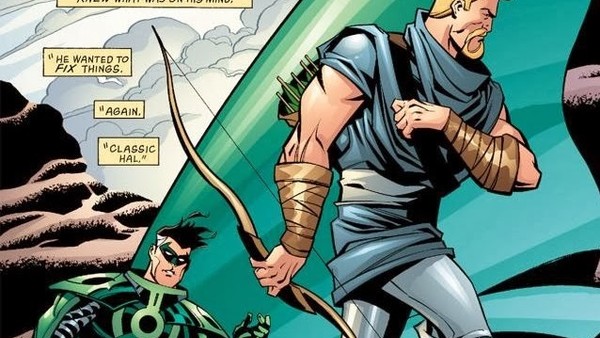
Oliver Queen's return as Green Arrow marked the beginning of a defining period for the character, with both Kevin Smith and Brad Meltzer producing some really seminal material in the wake of his resurrection, something Smith himself had orchestrated.
Killed off while attempting to stop a terrorist attack in Metropolis, the majority of the nineties saw Ollie's son, Connor Hawke, as the main Green Arrow. 2000's Quiver storyline would later resurrect the character, with Smith in particular placing a massive emphasis on the hero's history pre-Mike Grell. Later, Meltzer wrote The Archer's Quest, a book that analysed the trope of comic resurrections and delved deep into Ollie's history. It's a series that every comic book fan (new and old) should read, and one that exemplifies all the best things about even the medium's most mocked cliches.
Connor may have been a worthy replacement for GA, but there's only one Ollie, and he's too valuable a part of the DCU to be axed off permanently.
3. Bruce Wayne/Batman
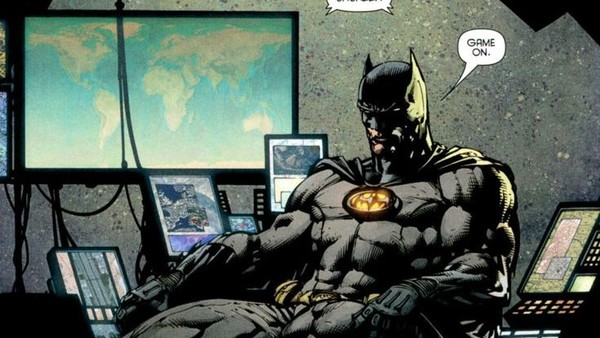
While it was a move that literally everyone saw coming, given the ending of Final Crisis, it was the journey behind Bruce Wayne's resurrection that made this storyline so worth it - not the revelation that preceded it.
For those unfamiliar with the events of Final Crisis, Bruce Wayne was one of those heroes unfortunate enough to seemingly perish at the hands of Darkseid's forces. The character didn't half leave a mark before he departed though, having fired the god-killing bullet that weakened Darkseid enough for Barry Allen and the three Flashes (great band name, by the way) to leave him at death's door. Bats couldn't outrun Darkseid's omega beams, sadly, which resulted in the character being project thousands of years into the past, subsequently jumping through time all the way up until his eventual return in 2011.
What makes this revival so special is how delicately Morrison wove his Bat-run. Bruce's absence paved the way for a whole new wave of Bat-titles, and a new duo in Dick Grayson and Damian Wayne. This period - dubbed Batman Reborn - galvanised and altogether reinvented the Bat-mythos, concluding with the equally ambitious Batman Incorporated, which really played into the symbolism behind the character and Batman's place in modern mythology.
Plus, Bruce's return came complete with a brilliant reinvention of the Bat-suit, which, until Rebirth's came along, had to be the coolest looking one we'd seen yet.
2. Kal-El/Superman
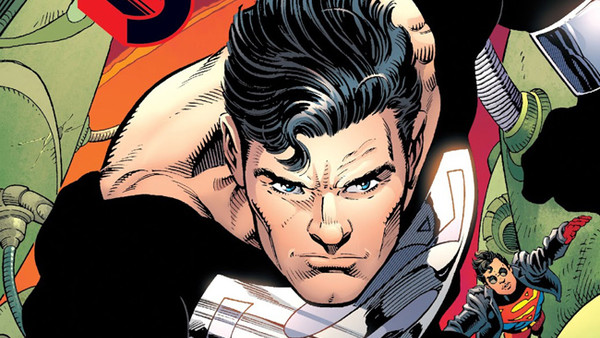
There are few storylines more famous than 1992's The Death of Superman, a story that saw Clark Kent go toe-to-toe with Doomsday and, well, die.
DC made a massive event out of the arc, even having the entire Justice League attend Kal's funeral in the heart of Metropolis. A massive memorial was soon erected, and a new crop of heroes inspired by the Man of Steel all took to defending Metropolis, most famously John Henry Irons' Steel. All wasn't as it seemed however, and Kal's body was actually regenerating in the Fortress of Solitude all along.
The new Superman emerged from stasis having regained many of his pre-crisis powers, complete with a mullet and a snazzy black and silver suit. It remains the only time the Man of Steel has been killed off in mainstream continuity, and continues to be one of the most significant events in the history of the industry. Most important of all, however, was that it fundamentally reset the character, and brought together both pre and post-crisis interpretations of the last son of Krypton in line with each other.
You may not fancy the mullet, but Supes' return from the grave is still the most iconic of all.
1. Bucky Barnes/Winter Soldier

Before Ed Brubaker took over the reigns of Captain America in 2005, Bucky Barnes was thought of as being nothing more than Cap's sidekick during his World War II years, and a victim of the conflict himself.
Previously thought to have died in a plane crash near the war's end, Barnes had actually been located by a Soviet submarine and, upon his arrival at Moscow, was subsequently conditioned and trained to become one of the world's deadliest assassins. Periodically released from cryogenic sleep throughout history, Bucky would influence the events of the Marvel Universe decades before his path would cross with Cap again. Once they met, however, things were really kicked up a notch, leading the character down a path that would eventually see them take on the mantle of Captain America himself, and even become a leading Avenger.
Brubaker's resurrection of Barnes remains one of the key highlights of his run on Cap, and indeed, that of the modern age of the medium. It's also - in no small way - the most influential resurrection to have taken place thus far, with the Marvel Cinematic Universe having taken heavy inspiration from Brubaker's narrative in their construction of Bucky Barnes' big screen persona.
Bucky's return may not be the most high profile resurrection in the medium, but it's undoubtedly its best.
-
Were there any resurrections that you enjoyed? Or would you prefer comic book characters to just stay dead? Be sure to let us know in the comments below!