Theres never been a better time to be a comic book fan then now. Hollywood is unleashing wave after wave of comic book films each year, and even our television screens are no longer immune as Arrow, Flash and Gotham look set to dominate airtime come fall. But even with the genres soaring popularity and the rise of geek chic culture, there is still a stigma around those who read comics. You know those people, the ones who read the comics religiously, dress up for cons and collect the memorabilia. The ones who the average person may frown upon for being weird or immature, because comics are for kids, right? Recently, WhatCulture.com looked at the comics that made us shake our heads, grumble under our breath and want to tear the pages from the book in rage. Those are the comics we want to keep locked away for no one to see, and unfortunately, those comics are always brought up and thrown in our face. Fortunately, its not all doom and gloom for comic fans. For every slap in the face that strikes when you turn the page, there comes a story that fans treasure stories that amaze us and shake us to our very core, stories that are so good that even the most highbrow literacy snob couldnt deny their quality. For every Spider-Man: Sins Past, theres a Spider-Man: Blue, for every All-Star Batman & Robin, theres a Killing Joke around the corner. These are the comics that make us proud to be fans, the comics that make it okay for us to deal with the rubbish because the rewards are far greater than we could ever hope. Now, as said in Monty Python: lets look on the bright side.
10. The Walking Dead
The Walking Dead is an ongoing black and white comic that follows the story of Rick Grimes, a sheriffs deputy who wakes from a coma to see his world devastated by the undead. He sets off on a journey to find his wife and son in the hopes they are still alive. At first glance, this is just a comic book about zombies, but once you get past the first page its so much more. The series has a similar approach to the genre as Danny Boyles 28 Days Later; its not about the destruction and how the infection incapacitated an entire population - its about human survival. Rather than research the zombie genre, creator Robert Kirkman chose to research into World War II and the Holocaust because that was the most modern equivalent of what it would be like to survive in an apocalyptic setting. This series was never about the gore or zombies; its always the people and the relationships that are formed in the worst of circumstances. Rick Grimes with his trademark sheriff hat has become an iconic hero fans will follow to the end, while Kirkman has also introduced some of the most vile characters weve ever seen in The Governor and Negan. The Walking Dead is a story on how these ordinary people hold on to their humanity (or lose it) while theyre constantly at war (very similar to what soldiers experienced in WWII). Its the ongoing theme of fear and uncertainty that builds tension and makes it impossible to put the book down. The success of The Walking Dead and its television adaptation changed a lot of old-fashioned opinions on comics and brought an element of cool to the genre. Fans are slightly hipster in their we read it before it was cool approach, but the truth is theyre right.
9. All-Star Superman
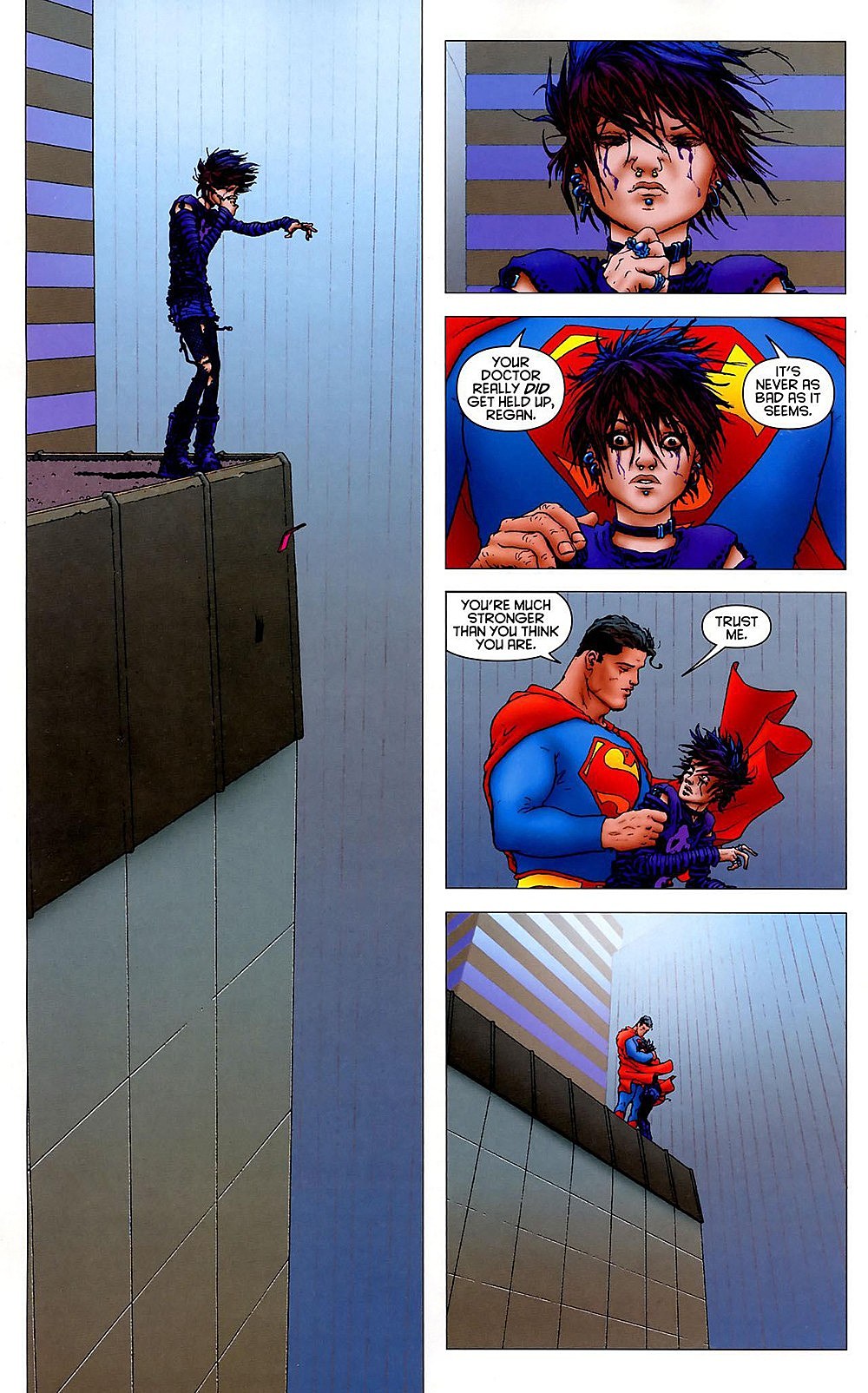
DC ComicsLets face it; Superman suffers from an extreme condition that is called being boring. The Man of Steel can do everything, from heat vision to ice breath, and a glowing green rock aside, is indestructible. Nonetheless, Superman is the worlds first superhero and something fresh needed to happen to Batmans favourite boy scout, and that something was Grant Morrison and Frank Quitelys All-Star Superman. Morrison to counteract his predictability problem adds an element of vulnerability to Superman that isnt kryptonite, but his own mortality. Arch-nemesis Lex Luthor manages to expose Superman to a lethal dose of radiation and our hero is given no more than a year to live. Superman puts his affairs in order and reveals his true identity to Lois Lane (which was masterfully hidden, we must say) so the two can finally be together. As Superman and Lois spend his final days together you truly understand the sense of loss looming over Metropolis and Lois with Supermans impending death. All-Star Superman also lays claim to having the most powerful page in all of Supermans 75+ year history when he talks down a young girl from committing suicide and embraces her in a hug. Its the series shining moment, where Superman displays his humanity and love of life perfectly. Quitelys artwork is at its best here, where the lasting image of Superman holding Regan in his arms brings life to his pages. Its a truly emotional scene, one only rivalled by Lex Luthors heart-stopping moment of realisation when he finally sees the world through Supermans eyes and is reduced to tears. All-Star Superman is considered one of the Big Blue Boy Scout's greatest stories, and for anyone who is a fan of the Man of Steel, this is the perfect story for you.
8. Astonishing X-Men: Joss Whedon/ John Cassaday Run
The problem with comics having such a rich and long history is it makes the task of writing something new and refreshing very difficult. Yet, if you were searching for one word that could describe Whedon and Cassadays run on Astonishing X-Men, refreshing is certainly it. Joss Whedon is one of those names that can do no wrong in the eyes of comic fans and combine his writing with the tremendous artwork of John Cassaday, you have an instant winner. The series is full of great moments from Wolverine and Cyclops fight over Jeans death, Beast dealing with his own animalistic insecurities, and even the Danger Room developing a conscience. The stand-out scene of the series is Colossus heart-breaking return from death, who when finally released from his captors crumbles into Kittys arms and begs her to tell him hes finally dead. In an industry known for its overtly sexual tones and misogyny, it is a welcome sight to see Kitty Pryde the breakout star of the series. No longer is she the moody, nervous teenager but now a confident, inspiring woman who becomes the heart and soul of the team. The story begins with Kitty and unfortunately in heroic fashion, it ends with her in a moment that broke even the most diamond of hearts. If theres one thing Joss Whedon understands its relationships and he presents the X-Men as more of a dysfunctional family rather than a team. The comic shares the same charm and humour that made The Avengers such a hit, and focuses heavily on character development. For any X-Men fan, this astonishing story is a must have.
7. Marvel: Secret Wars
Secret Wars is the first of its kind, and like Steven Spielbergs Jaws is the original Hollywood blockbuster, this comic is the original mega crossover that changed the industry, ushering in the event comics we have come to know and love. For those of you not in the know, the Beyonder (a cosmic entity who observes the universe) is fascinated by the concept of superheroes on Earth and transports those heroes and a handful of villains to a distant planet, pitting them against one another with the victors being granted all that they desire. Unlike the other mentions in this list, the plot isnt anything special and certainly isnt a stretch of the imagination, but thats unimportant. What is important is seeing the heroes work together and how they all interact with each other. Its a fascinating concept and Marvel portrays this ultimate war of good versus evil with care. Most importantly, Secret Wars gave us Venom, which is more than enough reason to love this comic. Spider-Mans symbiote suit makes its famous debut within these pages and would go on to become one of the most important players in Spider-Mans canon, giving birth to the villains Venom and Carnage. For that reason alone, it will always be dear to fans hearts. The artwork is the best of that era, the action is absolutely packed and the characters are compelling as always. Secret Wars still stands out to this day as a milestone in the comic industry - it was a huge gamble for Marvel but its one that paid off.
6. Marvels
Marvels is a beautiful story that follows Phil Sheldon, an ordinary man who witnesses the birth and rise of superheroes (or Marvels as theyre called here) and documents how it all becomes a huge part of their everyday lives. Its an interesting concept to see the biggest and most iconic events in the Marvel universe through the eyes of the average citizen. When the Secret Wars happens, everyone wonders where all the heroes have gone, when the X-Men arrive they form an angry mob and when the spectacularly-drawn Galactus arrives to Earth, they all just watch, simply waiting to die in stunned silence. The Marvels appear godlike in their eyes, and Sheldon is constantly looking up at them from down below, really bringing forth the idea that they all feel like ants under a microscope. We witness Sheldon go through all whole range of emotions as he tries to understand the Marvels, from humiliation of feeling less of a man, to fear when hes caught up in the anti-mutant hysteria and finally respect, something that isolates him from society. He dedicates his life to trying to understand them and goes as far as to investigate Captain George Stacys murder, with the hope of vindicating prime-suspect Spider-Man. Hes the last person Gwen talks to before shes abducted and killed by the Green Goblin in a wonderful representation of Marvels most famous tragedy. He just helplessly watches on in horror and mirrors the exact feelings (and possibly words) that readers had when they first read The Night Gwen Stacy Dies He failed. Marvels is a terrific story, an unofficial history book with some of the most beautiful artwork you will ever see in a comic. Its a fascinating take on the genre and Sheldon plays the role excellently as the audience hangs on his every word. His words come across as bold and haunting at times, especially when he resents society for the way they treat the heroes - It would have served us right if they never returned. We didnt deserve them.
5. Batman: The Killing Joke
In the late 80s the darker Batman was making a comeback and one of the defining comics of that era was Alan Moores Batman: The Killing Joke. The comic starts like any Joker story, he escapes from Arkham Asylum and is on a rampage, but rather than hold the city ransom, he kidnaps Commissioner Jim Gordon to prove that deep down everyone is just like him. This leads to one of the most shocking scenes in comic history when The Joker breaks into Gordons house and shoots his daughter Barbara (Batgirl), crippling her before going one step further and undressing her. Its a brutal, senseless act of violence that really strikes Batman and the reader to their core. Its a fascinating story that really dives into Jokers psychological state of mind. Moores work helped revolutionise his relationship with Batman and rather than make them bitter enemies, he writes them as lost souls, both victims of that one bad day far beyond their control that shaped the rest of their lives. Theyre destined to fight forever, both so trapped in this never-ending cycle that Joker says it wont end until one is dead, while Batman is on the verge of snapping (or possibly already did). Combine Moores writing with established artist Brian Bolland, then DC have an instant classic. You need a great artist to get the most from Moores unique writing and like Gibbons for Watchmen, Bolland was the right man for the job. Its one of the best, yet ugliest Batman stories ever told, with an ending so ambiguous that fans are still debating over the events to this day. Although Alan Moore has since decided he didnt like his work on The Killing Joke (if Moore isnt given something to complain about hell find it himself), it must still go down as one of the greatest and most popular Batman stories ever told.
4. Spider-Man: Blue
The team of Tim Sale and Jeph Loeb is the dynamic duo of comics, producing some of the finest work the industry has seen in the past few decades. Spider-Man: Blue is the latest addition to their untitled Marvel colour series and is one of the best Spider-Man stories weve had the good grace to read. The story begins with Peter Parker recording a message to the deceased Gwen Stacy, recounting the first days he met her and what a wonderful time it was. There isnt anything huge in play here, no big twist or dangerous villain in the background, its just one man still dealing with a tragedy he is certain could have been avoided, one that still haunts him to this day. Loeb picks Peters words wonderfully and you truly feel Peters heart ache with each sentence he records for Gwen. The last few panels where Peter explains his blue mood around Valentines Day without Gwen are brilliantly constructed - added to immensely by Mary Jane who overhears Peter, walks in and asks him to tell Gwen she misses her too in a touching and perfect moment. The comic is wonderfully illustrated, with Sale having a notable and unique style that fits the story, clearly paying homage to Steve Ditko while also adding his own flair. The impact of Gwen Stacys death on not only Peter and Mary Jane, but also the whole industry, should not be underestimated. Its one of the most iconic moments seeing Spider-Man clutching Gwen's corpse and cursing the Green Goblin. Its a story that should really be left alone and if brought up, should be handled with nothing but respect (unlike Sins Past, which the less said about the better) and Loeb does just that. Much like with Marvels, Spider-Man: Blue handles the story of Gwen with delicacy and care - its a sensitive subject for fans - and the respect shown should be commended. Peter Parkers life has always been full of tragedy and its how he picks himself and carries on in the name of those he has lost that makes him a hero. Spider-Man: Blue is Loeb and Sales love letter to Stan Lees classic wall-crawler, its storytelling at its finest and itll take the coldest of hearts to finish this book and not shed a tear for Peter and Gwen.
3. Watchmen
If you asked the average fan what the most iconic comic is, the most likely answers youd get is Alan Moores Watchmen. Alan Moore and Dave Gibbons released the 12 issue series in 1986 and to this day it still stands as an absolute must have for any comic fans collection. Watchmen redefined the superhero genre and re-introduced comics to the adult audience, proving once again stories told with images dont have to be for children (at least this one certainly isnt). Moores creation Rorschach is the star of the series; a sociopathic vigilante whose words guide the story while his dry and dark humour offers an interesting juxtaposition on proceedings (whether he meant it or not). The Comedian is also another standout character whose death ignites the events of the comic; you cant help but wonder if hes a play on a Captain America who lost it, and decided to go over the edge in a big way. Hes as far away from a hero as you could get, yet somehow, Moores excellent storytelling make us understand and feel for this character, even with his myriad flaws. Moores words would mean nothing if there wasnt someone qualified to bring life to them, and Dave Gibbons is just that. His unique artwork for Watchmen is realistic and insanely detailed; no one else could have drawn the series. Gibbons constructs the book with the aim of its pages being uniquely identifiable as from the Watchmen and very few would argue that he didnt achieve that. Although Alan Moores plot seems to deviate from the murder mystery it started with to something else entirely, its an excellent story. Full of metaphors and symbolism, it strips away the very fabric of what makes a superhero story as we spiral down to the darkest depths of these characters minds plummeting faster than The Comedian when he was thrown out the window.
2. Batman: The Dark Knight Returns
The Dark Knight Strikes Again may have made it onto our ashamed list but its predecessor rightfully deserves its place here. If any comic deserves the right to say it completely revolutionised the genre, its Frank Millers The Dark Knight Returns. Naturally, that makes the sequel all the more disappointing, but we press on. Bruce Wayne is retired and Gotham is worse than ever, their streets overrun by a deadly gang that refers to themselves as mutants. As Gotham (and the world) creeps ever closer to a dystopian future, Bruce becomes Batman once more. The Dark Knight Returns was released the same year as Watchmen (what a time for comic fans) and dealt with similar themes from the government rejecting costume vigilantism to the tension and fear spurred on by The Cold War. The artwork is even similar to Watchmen; its dark, gritty and almost claustrophobic. Millers portrayal of Gotham is spectacular and as cliché as it sounds, he brings life to the pages. Most importantly, Frank Miller answers the oldest question in comics that is Who would win in a fight, Batman or Superman? and its Batman. Miller tackles the complexity of the fight excellently, building tension in the early pages as Bruce prepares for battle and those around him worry his mortality laid bare for all to see. In the end, Batmans famous contingency plans and intellect is also laid bare, and it overcomes Supermans brawn in a stunning sequence. Its a thunderous fight scene brought to life by Millers excellent artwork and dialogue, and is cleverly constructed to come across as real and authentic, the outcome certainly giving Ben Affleck the edge heading into the Batman vs. Superman film. It reignited the industry and gave comics a much-needed spark. Miller stripped away the campiness and immaturity that had plagued Batman for so long and gave us the Batman we wanted. Despite already being on the path back to his darker roots, Miller gave him the final push he needed and cemented the Batman we all know. Although Millers famous quote I gave Batman his balls back is up for debate (and maybe a little over the top), he certainly gave the character some much-needed direction. It is arguably the best Batman story every told.
1. Maus
Art Spiegelmans incredible take on the Holocaust is a regular feature in greatest comic book lists and rightly so - anyone with an interest in comics or world history should give this compelling book a read. This haunting story follows the life of Spiegelmans father, a Polish Jew and concentration camp survivor during World War 2, while also dealing with Spiegelmans own sense of second generation survivors guilt. The book is most famous for its striking depictions of humans as animals the Jews are depicted as mice and the Nazis are cats, while Dolphins represent the British, the non-Jewish Polish are pigs and Americans are dogs. Even with the animals portraying the characters, this is deep down a story about people; there are no heroes and villains or costumes, just a family who have been through hell. As one of the darkest moments in mankinds history, the Holocaust has always been a sensitive subject and Spiegelman brings that moment to life, forcing the reader to experience this terrible ordeal alongside his family. The desperation and struggle to survive, not only during the Holocaust but afterwards is almost overwhelming at times - afterwards Spiegelmans father hoards food and money as he knows what true deprivation is like, while his mother (who is the very heart of this story) unfortunately takes her own life. Like the reader, Spiegelmans trouble is trying to understand the torment his family went through, and we join him on this journey of discovery in one of the most deeply moving experiences you could ever get from a graphic novel. Maus has shaken off its comic label and proves that not all stories told with images are for children and incapable of artistic merit or adult values. Alongside Dark Knight Returns and Watchmen, it defined the term graphic novel and brought a whole new understanding and respect to the medium. By the time Maus was hitting the shelves, Marvel and DC were a dominate force with their superhero titles, but Maus broke the mould to become the first graphic novel to win a Pulitzer Prize, and is arguably the finest piece of literature out there. This isnt just a comic; its a work of art.